Human-centric lighting standards organizations and industry consortia accelerated work on performance metrics, data interfaces, and cybersecurity frameworks in early 2026, aiming to support broader adoption across healthcare, education, retail, and office environments. Recent pilot projects reported measurable benefits while standards groups clarified requirements to comply with new regulations.
Background
Human-centric lighting (HCL) replicates natural daylight patterns to support circadian rhythms, employing tunable-white LEDs that adjust correlated color temperature (CCT) and illuminance throughout the day. Previous studies associate HCL with productivity gains, reduced fatigue, and enhanced visual comfort in workplaces[1]. However, adoption has lagged due to inconsistent metrics and limited interoperability between vendors.
In Europe, LightingEurope urged the European Commission in January 2025 to expedite harmonized cybersecurity standards under the revised Radio Equipment Directive (RED), scheduled to take effect on August 1, 2025[2]. Standards committees, including CEN-CENELEC's JTC 13, are aligning cybersecurity and privacy requirements for industrial and connected lighting systems[3].
Details
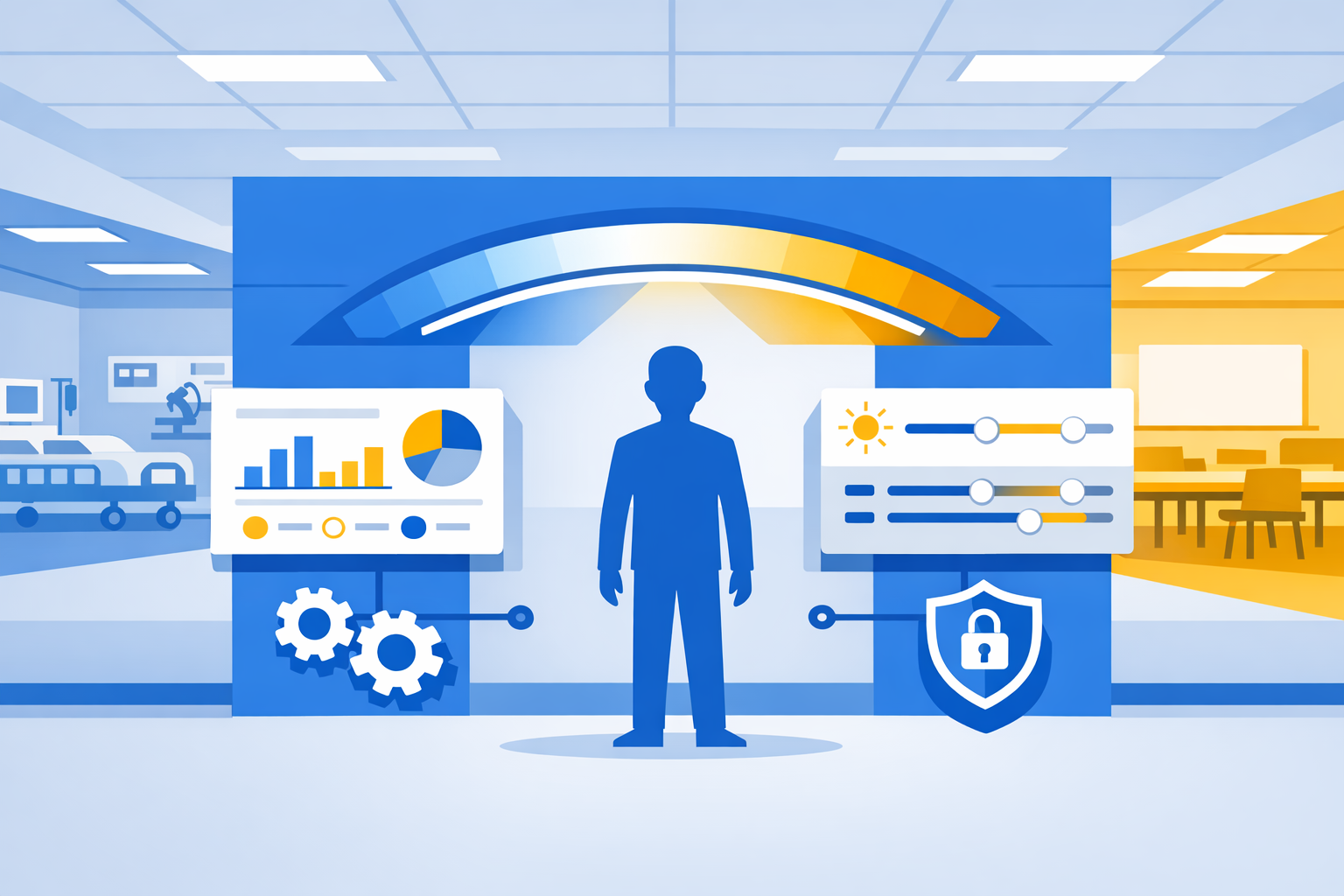
VDE, the German Association for Electrical, Electronic & Information Technologies, introduced a test specification for HCL systems that addresses metrics such as the melanopic to photopic luminous flux ratio, CCT range, flicker, glare, dimming, and photobiological safety. These evaluations reference standards like CIE S 026 and DIN SPEC 5031-100[4]. The certification uses a star-rating scheme to indicate HCL performance across varied applications including offices, schools, and hospitals.
Pilot installations have demonstrated clear outcomes. At a German university hospital, HCL was installed in an intensive care unit to simulate natural light cycles. After one year, patient recovery post-surgery accelerated by 22%, delirium episodes dropped by 26%, and sleep quality improved by 31%. Medical staff also reported improved night-shift satisfaction[5]. In a dementia care facility, dynamic lighting in communal spaces reduced nighttime restlessness by 38%, supported daytime routines, and lowered nighttime falls by 15% by improving orientation[5].
On the cybersecurity front, Signify's Interact cloud-based wireless lighting solution achieved DEKRA certification under IEC 62443-3-3 for industrial control system security, demonstrating compliance with requirements for access control, system integrity, and data confidentiality[6]. The company maintains conformance with IEC 62443-4-1 and ISO 27001 to ensure alignment with established cybersecurity practices[6].
Outlook
Standards bodies and regulators anticipate publishing harmonized testing methods and cybersecurity specifications in 2026 to fulfill RED requirements and streamline certification. Lighting designers and facility managers are expected to specify VDE-tested HCL systems for health-critical environments. As interoperability and security standards progress, cross-vendor deployments and lighting-as-a-service models may expand throughout healthcare, education, and commercial building sectors.