Executive summary. AI-enabled facility management is shifting from point solutions to integrated platforms that unify robotics, analytics, and building data into comprehensive services. Initiatives like SoftBank Robotics' SmartBX model and recent equity moves in Asia-Pacific demonstrate how robotics vendors are advancing into facilities services, prompting scrutiny of interoperability, vendor lock-in, and procurement strategies. This article examines a scenario where SoftBank Robotics America acquires a U.S. janitorial provider such as Green Clean Commercial to launch a Smart Building X (SBX) platform, analyzing the implications for building operators, system integrators, and procurement teams.
Note: As of March 28, 2026, no public announcement confirms an acquisition of Green Clean Commercial by SoftBank Robotics America. The analysis below leverages documented SoftBank initiatives (e.g., SmartBX and SoftBank Robotics Connect) and current M&A trends to explore the possible impact if such a transaction were to occur.
1. Market context: AI platforms are reshaping facilities services
The facility management (FM) and building automation sector is being transformed by AI, robotics, and data platforms.
The global AI in facilities management market was valued at approximately USD 3.4 billion in 2022 and is projected to reach about USD 25.8 billion by 2030, signaling a compound annual growth rate (CAGR) near 30%.[1]
North America accounts for around 38% of this AI FM market, driven by robust smart-building programs and early adoption of IoT and analytics in commercial portfolios.[1]
Traditional FM software is also consolidating:
- Global FM software revenues are projected to rise from about USD 6.0 billion in 2026 to over USD 14.5 billion by 2035, with leading vendors controlling more than half the market.[2]
- The broader FM services market is forecast to reach about USD 94.8 billion by 2028, fueled by IoT and AI in maintenance, energy management, and workplace services.[3]
These developments indicate a foundational shift: AI is now central to facility operations, audits, and optimization. M&A in FM increasingly targets digital expertise, data platforms, and integrated services rather than geographic expansion.[4]
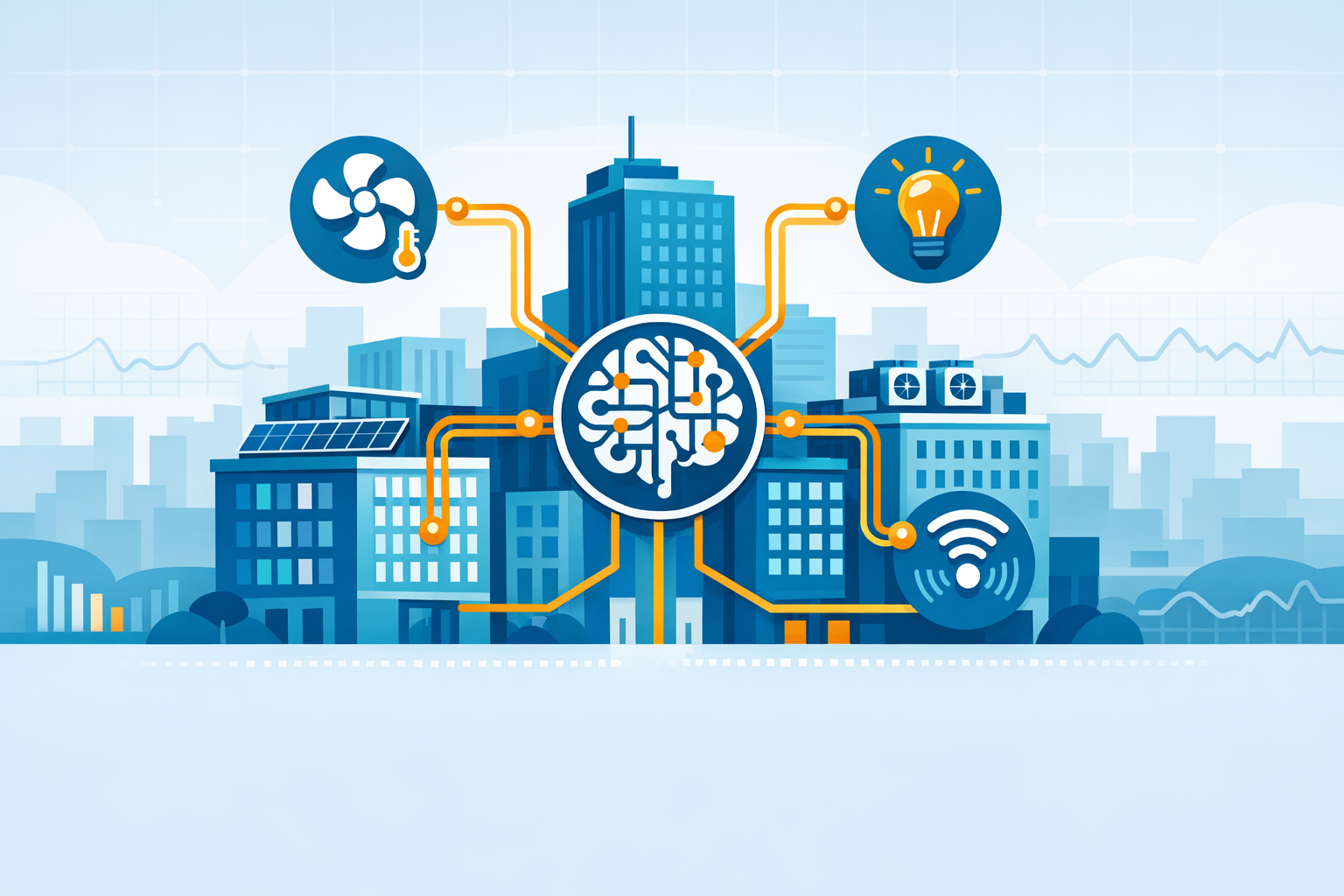
For electrical engineers, building automation specialists, and facility managers, the key issue is not whether AI-enabled platforms will be added, but how they will integrate with existing building management systems (BMS), safety infrastructure, and OT/IT governance.
2. SoftBank's platform play: From point robots to SmartBX-style ecosystems
2.1 SoftBank Robotics Connect: Heterogeneous fleets, unified data
In June 2025, SoftBank Robotics America introduced SoftBank Robotics Connect, a cloud platform for managing multi-vendor fleets of cleaning robots across large portfolios.[5]
Flagship Facility Services reportedly deployed over 100 autonomous cleaning robots across nearly 15 locations in six months, employing SoftBank Robotics Connect as the central monitoring and optimization hub.[5]
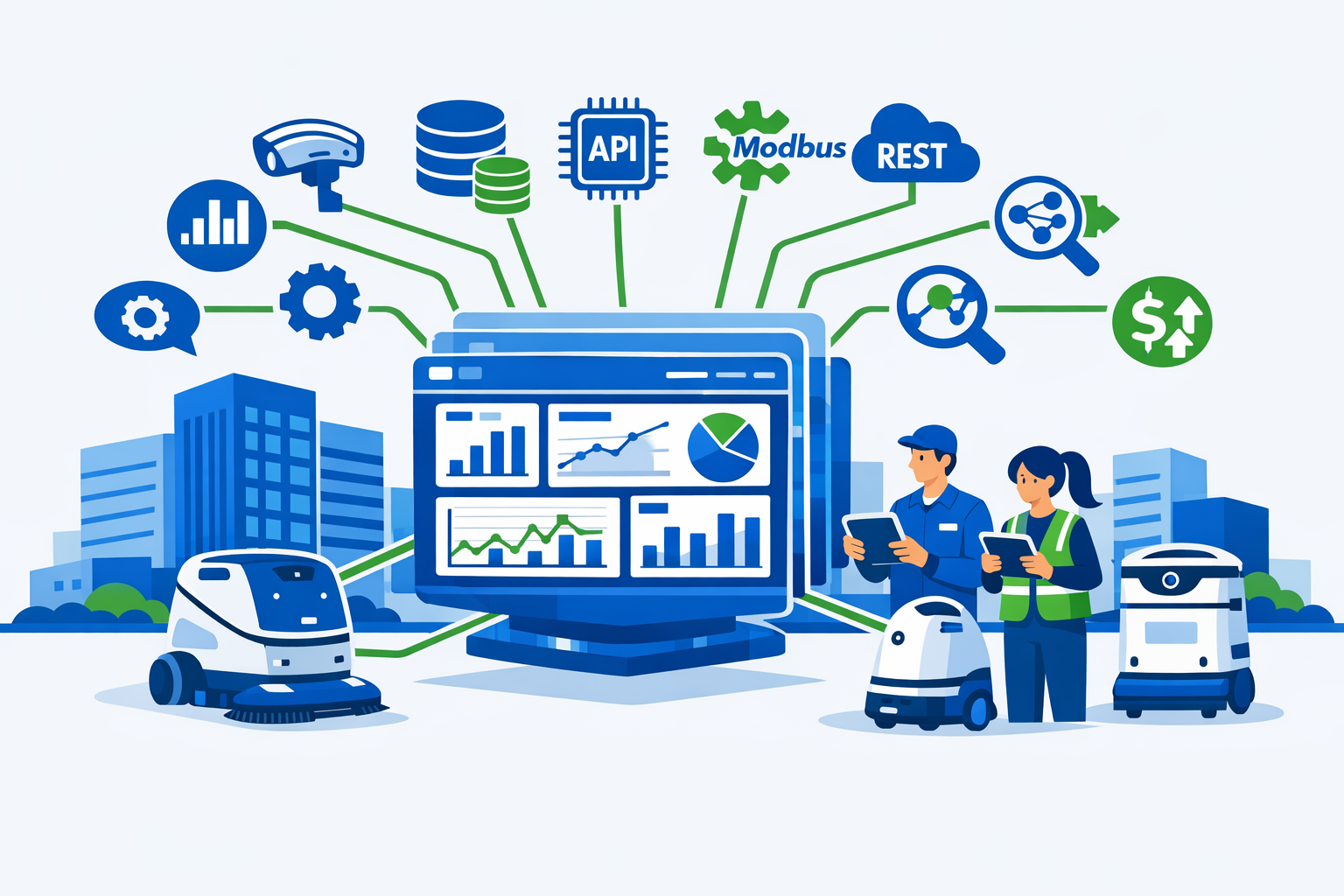
Connect's core features for smart-building professionals include:
- Unified dashboard for utilization, coverage, and exception alerts across various robots
- Route and schedule management by zone, site, and portfolio
- Near real-time telemetry supporting SLA reporting and continuous improvement
Although Connect centers on cleaning, its data aggregation architecture parallels that of modern BMS and Integrated Workplace Management Systems (IWMS), which unify data from BACnet, Modbus, and other subsystems.[6]
2.2 SmartBX: Transforming janitorial contracts into smart-facility services
Globally, SoftBank is evolving beyond robots to provide facility services through SmartBX, which combines staff, robots, and AI-driven workflows.[7]
In February 2024, Conrad Maintenance in Singapore brought in SoftBank Robotics Singapore as a shareholder to convert its traditional cleaning contracts into a SmartBX-branded smart facility management service.[8]
This model involves:
- Equity plus technology. SoftBank acquires a stake in the FM service provider and overlays SmartBX workflows, AI scheduling, and reporting on existing operations.
- Service outcomes over devices. Contracts focus on outcomes such as uptime and cleanliness rather than on per-robot usage.
- Data-centric operations. The integration of occupancy, cleaning logs, incidents, and robotic telemetry into a data platform supports predictive staffing and maintenance.
For stakeholders, SmartBX represents a vertically integrated FM offering resembling an IWMS and smart-building bundle delivered as a managed service.[9]
2.3 A hypothetical SBX acquisition in the U.S. market
Green Clean Commercial is a nationwide U.S. janitorial provider serving sectors including healthcare, retail, hospitality, and corporate offices.[10]
If SoftBank Robotics America acquired Green Clean to launch a North American Smart Building X (SBX) platform, the approach would likely reflect the Conrad/SmartBX structure:
- Leverage Green Clean's multi-site footprint as the delivery channel.
- Embed robotics, AI-driven scheduling, and Connect-style analytics in daily operations.
- Expand scope beyond cleaning to maintenance dispatch, security rounds, and energy workflows.
From an engineering and systems standpoint, this consolidation would raise three main questions:
- How open would SBX be to third-party systems and data sources?
- Would SBX integrate with existing BMS/IWMS stacks or operate in parallel?
- How can customers avoid long-term vendor lock-in?
The following sections explore these points in detail.
3. Interoperability: Can integrated platforms avoid becoming new silos?
Consolidating around AI-enabled suites introduces a known risk: fragmenting the landscape with distinct, potentially proprietary stacks.
3.1 Open protocols vs. proprietary data models
For decades, building automation has prioritized open communication protocols such as BACnet, Modbus, and KNX to minimize dependency on individual vendors.[6]
However, proprietary extensions and tools remain common, leading to new lock-in at integration or management layers-even in BACnet-based systems.[11]
An SBX-like platform would function as:
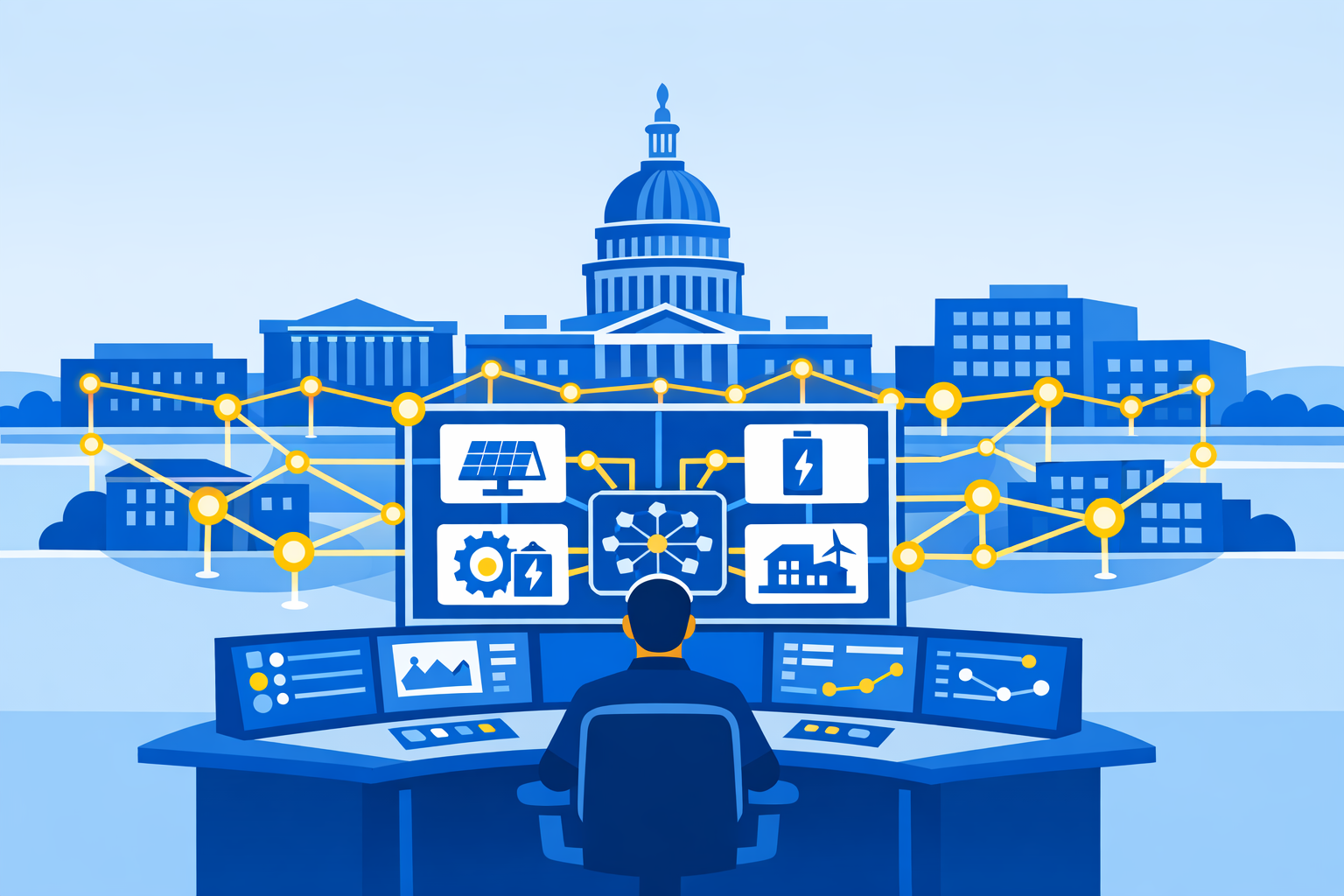
- A data aggregation hub for cleaning robots, IoT sensors, and potentially BMS points
- A workflow engine for task assignments, SLAs, and incident routing
- A reporting layer for ESG metrics, compliance, and benchmarking
Key interoperability concerns include whether SBX would:
- Enable data and control access via open APIs (REST, MQTT, BACnet/SC) for integration with CMMS, IWMS, or analytics platforms, or
- Rely on a closed data model restricting insight and control within SBX
For building owners, open APIs support modular architecture; closed models risk creating new "mega-silos."
3.2 Data ownership and portability
Multi-site operators are increasingly embedding explicit data-ownership terms in BMS and IoT contracts.[12]
For SBX-type arrangements, key data sets would include:
- Cleaning and maintenance audit trails by space or asset
- Occupancy and traffic patterns for AI-driven scheduling
- Robot location and utilization logs
- Security video analytics events (for SBX variants with advanced security features)[13]
Interoperability requirements include:
- Contractual rights to export all data in standard formats (JSON, CSV, time-series)
- Support for standard ontologies or structured tagging to enable integration with BIM or digital twin environments[14]
Without these provisions, AI models for optimization would become tightly coupled to the SBX provider, complicating future migrations.
3.3 Integrated suite vs. best-of-breed: a comparison
| Dimension | SBX-style integrated suite | Best-of-breed ecosystem |
|---|---|---|
| Integration effort | Lower; single vendor manages robotics, AI, dashboards | Higher; requires middleware and custom APIs |
| Interoperability | Depends on API openness; closed models are a risk | Potentially higher with open protocols |
| Time to value | Faster with pre-integrated workflows | Slower; requires data alignment |
| Vendor lock-in risk | High without data export or third-party access | Moderate; standard-based tools can be swapped |
| Lifecycle flexibility | Platform roadmap dictates features and changes | Greater flexibility for new tools |
| Governance complexity | Simpler vendor management, but centralization vs. autonomy debates | More complex contracts, clearer responsibilities |
Most organizations adopt a hybrid approach, treating SBX as a domain-specific service layer while retaining a vendor-neutral BMS/IWMS as the primary system of record.
4. Procurement strategies for an AI-first facilities stack
4.1 How consolidation is changing FM deal structures
Recent FM M&A shows buyers seeking digital capability-including analytics, energy dashboards, and IoT-in addition to geographic reach.[4]
In an SBX scenario, contracts would likely blend:
- Traditional FM services (janitorial, maintenance, porterage)
- Robotics capacity (robots-as-a-service, usage-based models)
- Platform access (SBX dashboard, reporting, and API licensing)
Procurement teams should evaluate and benchmark each cost layer separately: services, devices, and software.
4.2 Guardrails against vendor lock-in
To balance integration and flexibility, FM and procurement leaders can include several safeguards in SBX-style contracts:
- Data portability clauses
- Ensure access to historical data for the lifecycle of assets (10-15 years)
- Test export formats during pilots
- Open-protocol requirements
- On-prem devices should support open protocols such as BACnet/SC, Modbus, KNX, or OPC UA[15]
- Avoid reliance on proprietary fieldbus or cloud-only APIs with no fallback
- API and integration rights
- Grant rights to connect SBX to existing BMS, IWMS, and enterprise data lakes
- Document integration limits, authentication, and update policies
- Exit and substitution options
- Establish provisions for replacing services or hardware with retention of platform data and workflows during transition
- Plan for phased de-commissioning to protect critical integrations
These measures build on established practices for minimizing BMS vendor lock-in and are increasingly standard for smart-building procurements.[16]
4.3 Sector-specific considerations: healthcare, education, hospitality
Sectors with heightened regulatory or safety requirements face additional complexities:
- Healthcare. AI-based cleaning and maintenance must comply with infection control and medical equipment standards. Maintenance data for critical systems should integrate with hospital CMMS and compliance tools.[17]
- Education. Occupancy analytics and security features must adhere to privacy policies. Data minimization, on-premises storage, and robust access controls are necessary.[18]
- Hospitality. Guest-experience metrics intersect with revenue. Integrated suites should clarify data treatment for guests, CCTV, and robot telemetry.[19]
Cross-functional input from safety, IT security, and risk management is recommended before committing to platform-oriented FM models.
5. Risk management: Single platforms, many failure modes
5.1 Platform outages and single points of failure
Combining cleaning, ticketing, and security analytics in a single SBX platform can centralize risk. If the platform is unavailable, operations may lose visibility over robots, tasks, or security events.
Risk reduction measures:
- Local fallback for robots and controllers (scheduled routes, on-device logs)
- Defined graceful degradation plans ensuring core operations via BMS or local tools
- Service-level agreements for uptime, recovery time objectives, and regional redundancy
5.2 Cybersecurity and safety
Building systems remain prime targets for cyberattacks, especially via BMS or vendor-managed remote access.[20]
Claroty's 2025 report found that roughly 75% of organizations run BMS devices with known exploited vulnerabilities.[20]
SBX-type platforms must be appraised as critical infrastructure, adopting:
- Network segmentation between SBX, IT, and life-safety networks
- Zero-trust principles for vendor staff access
- Regular penetration testing and patch management for gateways and robots
5.3 Regulatory alignment and AI governance
Industry studies show AI in facilities management can reduce unplanned downtime by about 30% and extend asset life by 25% in many cases.[1]
As AI takes on decision-making-reassigning tasks or tuning building systems-organizations must:
- Document decision logic and override controls
- Ensure actions are explainable, especially for safety-critical processes
- Align with regulatory frameworks on AI governance, including audit and periodic validation[21]
6. Early ROI signals from AI-enabled facility platforms
AI-driven FM platforms are already delivering measurable operational benefits.
- AI in facilities management may yield up to USD 55 billion in annual operating cost savings by the mid-2020s.[22]
- Roughly 72% of facility managers report using AI tools daily, citing average first-year ROI near 25%.[1]
Key observed outcomes include:
- Predictive maintenance. AI forecasting reduces HVAC and equipment downtime and increases asset lifespan.[23]
- Cleaning optimization. Using occupancy data for task scheduling reduces labor in low-use areas and elevates standards in high-traffic zones.[24]
- Energy and comfort optimization. AI-enhanced BMS and digital twins support energy efficiency and stable indoor conditions, particularly in large facilities.[25]
In an SBX-style SoftBank-Green Clean deployment, these benefits could be captured within a single contract-assuming interoperability and data governance are established from the outset.
7. Actionable conclusions and next steps for building stakeholders
Building professionals can apply the following steps when evaluating integrated AI FM platforms:
1. Map the current systems landscape.
- Inventory BMS, fire, security, CMMS/IWMS, and robotics/IoT platforms
- Identify authoritative sources for asset data, alarms, and work orders
2. Define a target architecture.
- Decide SBX's placement: central FM suite versus domain-specific service layer
- Set clear boundaries among SBX, BMS, and IT
3. Set interoperability requirements before procurement.
- Demand open protocols, data exports, and API access
- Require proof-of-concept integration with at least one BMS and enterprise system
4. Quantify ROI conservatively.
- Use baseline metrics (downtime, cleaning hours, energy consumption, incidents)
- Compare against industry benchmarks (e.g., 20-30% downtime reduction, 20-25% asset life extension), adjusting for site complexity and data quality[1]
5. Develop a joint governance model.
- Form a cross-functional steering group across FM, IT/OT, finance, and safety
- Define change-management procedures for AI updates and integrations
Well-managed consolidation of AI-enabled platforms can streamline operations, improve resilience, and enable advanced data capabilities. Poor management risks replicating historical vendor lock-in, but scenario planning-such as exploring a SoftBank-Green Clean acquisition-enables informed design for interoperability and governance ahead of major platform changes.
Frequently Asked Questions
How would an SBX-type platform interact with existing BMS and SCADA systems?
An SBX suite would typically layer above existing BMS and SCADA, consuming data (e.g., temperatures, occupancy, alarms) and issuing non-safety-critical commands (e.g., cleaning schedules). Open-protocol gateways (BACnet/SC, Modbus, KNX, OPC UA) or REST/MQTT APIs are essential to prevent tight coupling to proprietary control systems.[6]
Does adopting an integrated AI FM platform mean abandoning best-of-breed tools?
No. Many organizations maintain specialized tools-such as a preferred CMMS or energy suite-while using SBX for cleaning or soft-services orchestration. Insist on open APIs and data exports, allowing SBX to feed other platforms rather than supplant them.[9]
What are the main cybersecurity concerns with AI-enabled FM platforms?
Attack surfaces expand to include SBX cloud services, on-prem gateways, and BMS/IT integrations. Risks include exposed APIs, weak protocol authentication (e.g., unsecured BACnet), and vendor-managed remote access. Mitigation should adopt zero-trust principles, using network segmentation and ongoing vulnerability management.[20]
How can facility teams quantify the ROI of AI and robotics in cleaning and maintenance?
Begin with baseline data: current labor hours, equipment downtime, energy use, and incident counts. Compare post-pilot results to these metrics as well as to industry benchmarks, where AI often yields 20-30% downtime reduction and notable asset and labor gains.[1]
Are smaller portfolios at a disadvantage when negotiating with integrated platform providers?
While smaller operators may have less pricing power, they can influence terms by standardizing requirements-particularly around data ownership and interoperability-and by referencing industry norms (e.g., BACnet/SC, open APIs, exit clauses). Limited-scope SBX deployments can provide a practical test before large-scale commitments.[26]