Enterprise energy management has long suffered from a fundamental architectural flaw: the tools needed to pay bills, procure clean power, track carbon, and report to regulators have rarely lived under a single roof. That fragmentation is now the direct target of the most significant consolidation move the sector has seen this year.
On May 1, 2026, Washington D.C.-based Arcadia announced a definitive agreement to acquire ENGIE Impact[1], the Utility Expense and Data Management (UEDM), Energy Procurement, and Sustainability Advising arm of French multinational ENGIE. The transaction combines two of the sector's most recognized names into what both parties describe as a single, end-to-end energy intelligence platform for enterprise customers globally.
Deal Overview: Scale and Scope
The combined platform will serve more than 1,500 enterprise customers - including approximately 25% of the Fortune 500 - and manage over 4.5 million meters globally, processing more than $30 billion in annual utility payments. J.P. Morgan Securities LLC acted as exclusive financial advisor to Arcadia; financial terms were not disclosed.
| Metric | Combined Scale |
|---|---|
| Enterprise Customers | 1,500+ |
| Fortune 500 Coverage | ~25% |
| Meters Managed Globally | 4.5 million+ |
| Annual Utility Payments Processed | $30 billion+ |
| ENGIE Impact Track Record | 30 years |
| Financial Advisor (Arcadia) | J.P. Morgan Securities LLC |
| Deal Value | Undisclosed |
The strategic transaction combines ENGIE Impact's global operational scale and 30-year track record with Arcadia's AI-powered utility data platform. During the integration period, customers of both companies will continue to receive uninterrupted service while gaining access to an expanded suite of capabilities.
Strategic Rationale: Addressing Fragmented Energy Operations
The core problem both companies have independently identified - and the deal's primary strategic thesis - is the fragmentation of enterprise energy management. Arcadia stated the acquisition expands its ability to address fragmented energy management systems that enterprises currently rely on, which often require separate tools for billing, procurement, and sustainability reporting.
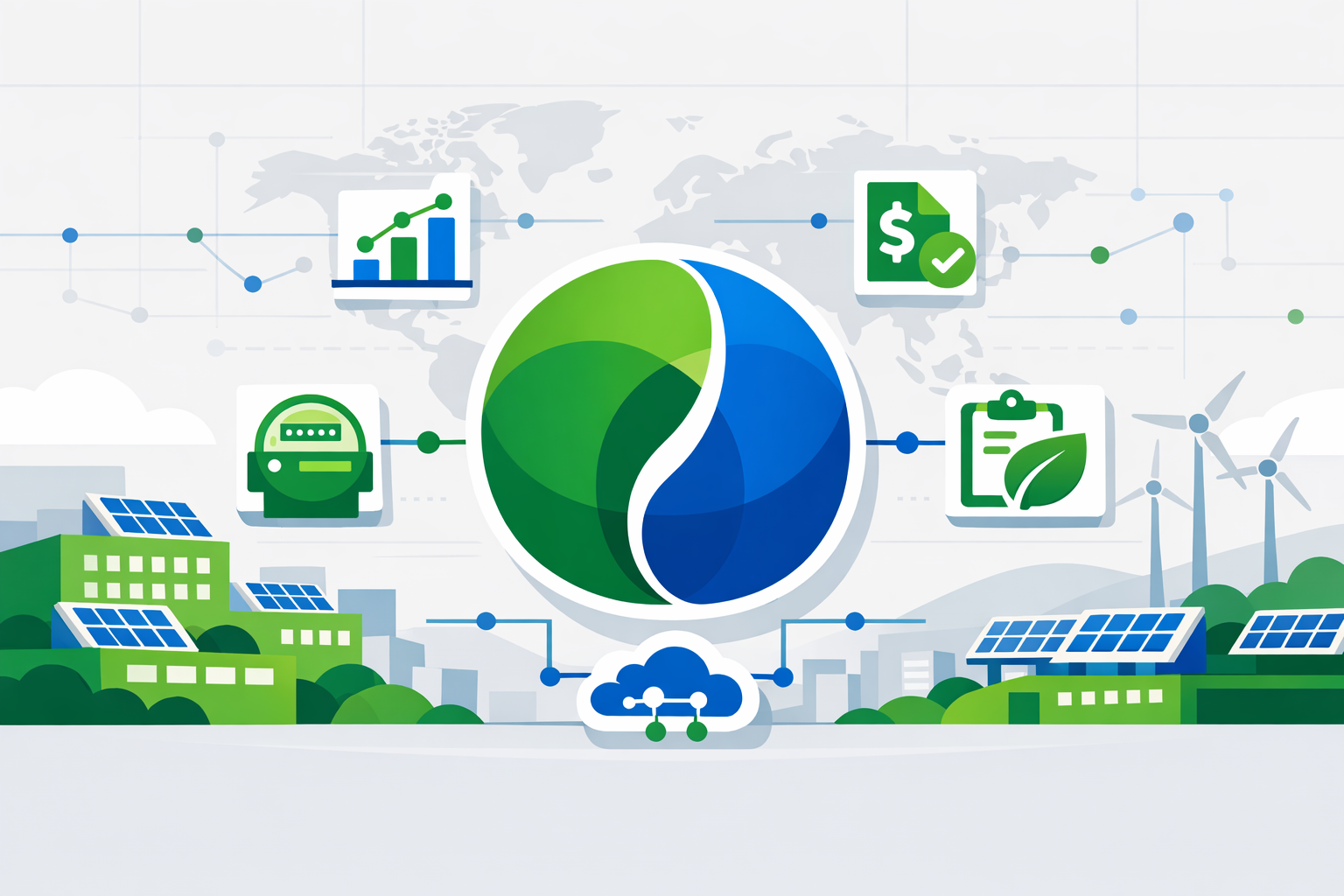
Arcadia CEO Kiran Bhatraju pointed to rising energy-market volatility and increasing corporate focus on cost control and emissions tracking as key demand drivers for integrated solutions. The acquisition will integrate utility data management, energy procurement, sustainability advisory, and bill payment workflows into a unified system designed to support enterprises managing complex, multi-site energy operations across global markets.
ENGIE Impact CEO Paige Janson described the combination as bringing together "software capabilities and operational infrastructure at scale," positioning the merged entity to deliver a level of transparency previously out of reach in energy management.
For facility managers and energy directors operating multi-site portfolios, the implication is significant: rather than reconciling outputs from separate UEDM, procurement, and carbon accounting tools, a consolidated platform could provide a single, authoritative data layer for all energy and sustainability workflows.
Interoperability and Data Standards: What Buyers Need to Watch
The transaction's most consequential technical dimension is data architecture. Arcadia's existing platform uses advanced AI algorithms to standardize diverse inputs, fill data gaps, and reconcile anomalies to create a definitive source of truth. ENGIE Impact brings deep operational expertise in multi-commodity tracking - spanning energy, water, waste, telecom, and carbon - and an established client base familiar with its Ellipse platform, used for GHG emissions recalculation and sustainability reporting.
The critical near-term question for buyers and system integrators is whether the merged platform will maintain or enhance API openness and standards-based data exchange. Enterprise environments rarely operate in isolation: ERP systems (SAP, Oracle), building management systems (BMS/BAS), and procurement tools must exchange interval data, tariff structures, and emissions factors without re-keying or manual reconciliation.
Key interoperability considerations for procurement and specification teams:
- API continuity: Will existing Arc platform and Ellipse integrations remain functional through the transition?
- Data model alignment: How will the two platforms' energy data schemas be harmonized, and on what timeline?
- ERP compatibility: Does the unified platform support pre-built connectors to major ERP environments for automated cost allocation?
- Protocol support: Does the platform support industry-standard interfaces such as ESPI (Energy Services Provider Interface) and Green Button data formats?
- BMS/BAS integration: Can interval meter data flow directly from building-level systems into the enterprise analytics layer without middleware re-engineering?
These challenges mirror the interoperability issues analyzed in federal EMIS deployments, where procurement documents must explicitly specify standards-based interfaces and open API requirements to avoid vendor lock-in.
Capability Comparison: Before and After the Deal
| Capability | Arcadia (Pre-Deal) | ENGIE Impact (Pre-Deal) | Combined Platform |
|---|---|---|---|
| Utility Data Aggregation | ✅ AI-powered, 9,500+ utilities | ✅ Multi-site bill ingestion | ✅ Unified, global-scale |
| Energy Procurement | ✅ Supply evaluation & PPAs | ✅ Full-service advisory | ✅ End-to-end software + advisory |
| Sustainability & Carbon Reporting | ✅ Compliance & ESG integration | ✅ GHG accounting, Scope 1-3 | ✅ Integrated carbon accounting |
| Bill Payment & UEDM | ✅ Automated bill workflows | ✅ Utility Expense & Data Mgmt | ✅ Single-platform bill-to-report |
| Managed Advisory Services | ⚠️ Limited | ✅ Extensive subject-matter expertise | ✅ Full managed + self-serve model |
| Resource Management (Water, Waste, Telecom) | ❌ | ✅ Multi-commodity tracking | ✅ Expanded beyond energy |
| API & ERP Integration | ✅ Arc platform APIs | ⚠️ Platform-dependent | ✅ Broader interoperability roadmap |
Market Dynamics: A Consolidation Signal
The Arcadia-ENGIE Impact deal does not exist in a vacuum. The global energy management systems market is projected to grow from approximately $49 billion in 2025 to $84 billion by 2029, representing a CAGR of 13.8%. Within that expanding market, analysts note a clear trend toward platform consolidation: the EMIS market is expected to consolidate further, with larger players acquiring smaller companies to expand their product offerings and geographical reach.
In 2024, over 40% of commercial buildings globally were equipped with some form of energy management system, up from just 27% in 2019. As adoption broadens, competitive advantage increasingly lies not in point solutions but in the ability to unify data across the full energy value chain - from meter to boardroom sustainability report.
For smaller EMS vendors, the deal raises competitive pressure on two fronts. First, the combined entity's customer base - covering a quarter of the Fortune 500 - will set expectations for platform depth that niche providers will struggle to match. Second, the managed-services layer ENGIE Impact brings to Arcadia's software infrastructure creates a hybrid model that pure-software vendors cannot easily replicate without significant operational investment.
Market implication: Energy procurement, utility bill management, and sustainability reporting are converging into a single platform category. Vendors that cannot credibly cover all three will face accelerating margin pressure and customer attrition in enterprise accounts.
Regulatory Context: Raising the Compliance Bar
The regulatory tailwinds behind this deal are substantial. Jurisdictions including New York City, Washington State, and California have enacted net-zero building codes starting as early as 2026, with New York's Local Law 97 requiring facilities over 25,000 square feet to cut emissions 40% by 2030, with steep fines for non-compliance.
Beyond building-level energy codes, enterprise buyers face intersecting demands: Scope 3 supply-chain emissions disclosure, demand response participation requirements, and increasingly granular carbon accounting under evolving GHG Protocol guidance. A platform that ingests utility data at meter granularity, maps it to GHG emissions factors, and produces audit-ready outputs aligns directly with what compliance teams must now deliver.
For public-sector buyers and procurement officers navigating sustainability reporting mandates, consolidation into a single platform also simplifies vendor management and reduces the audit surface area associated with multi-vendor data pipelines.
What Buyers Should Evaluate Now
For energy managers, facility directors, MEP consultants, and procurement teams currently assessing or re-tendering energy management platforms, the Arcadia-ENGIE Impact deal introduces both opportunity and caution.
Questions to put to the combined entity and competing vendors:
- Integration continuity: Will existing Arcadia Arc or ENGIE Impact Ellipse workflows face disruption during platform harmonization, and what is the published integration timeline?
- Data portability: Can the full normalized energy dataset - meter-level interval data, GHG factors, tariff histories - be exported in open formats, regardless of contract status?
- API and BMS connectivity: What specific BAS/BMS protocols and ERP connectors are supported out of the box, and what is the roadmap for standards compliance (ESPI, ASHRAE 201, etc.)?
- Advisory service continuity: Will ENGIE Impact's subject-matter advisory teams remain available under the combined entity, or will capabilities shift exclusively toward a self-serve software model?
- Competitive alternatives: How does the combined platform's total cost of ownership (TCO) compare to best-of-breed combinations, particularly for organizations with existing ERP-native energy modules?
Buyers mid-contract with either party should review change-of-control provisions and confirm that service levels, data access rights, and integration commitments are contractually preserved through the transition period.
Conclusion
The Arcadia-ENGIE Impact acquisition is the clearest signal yet that enterprise energy management is entering a platform consolidation phase. The combination of AI-driven utility data infrastructure with deep operational services and 30 years of sustainability advisory expertise creates a formidable offering for large, multi-site organizations navigating rising energy costs, decarbonization mandates, and increasingly complex reporting obligations.
For the broader market, the deal validates the end-to-end platform model as the dominant commercial architecture for enterprise energy intelligence - and pressures both incumbent building automation vendors and specialist EMS software providers to demonstrate comparable integration depth. Buyers, specifiers, and system integrators should monitor the platform's integration roadmap closely and use this moment of market transition to define and enforce interoperability requirements in new procurement instruments.