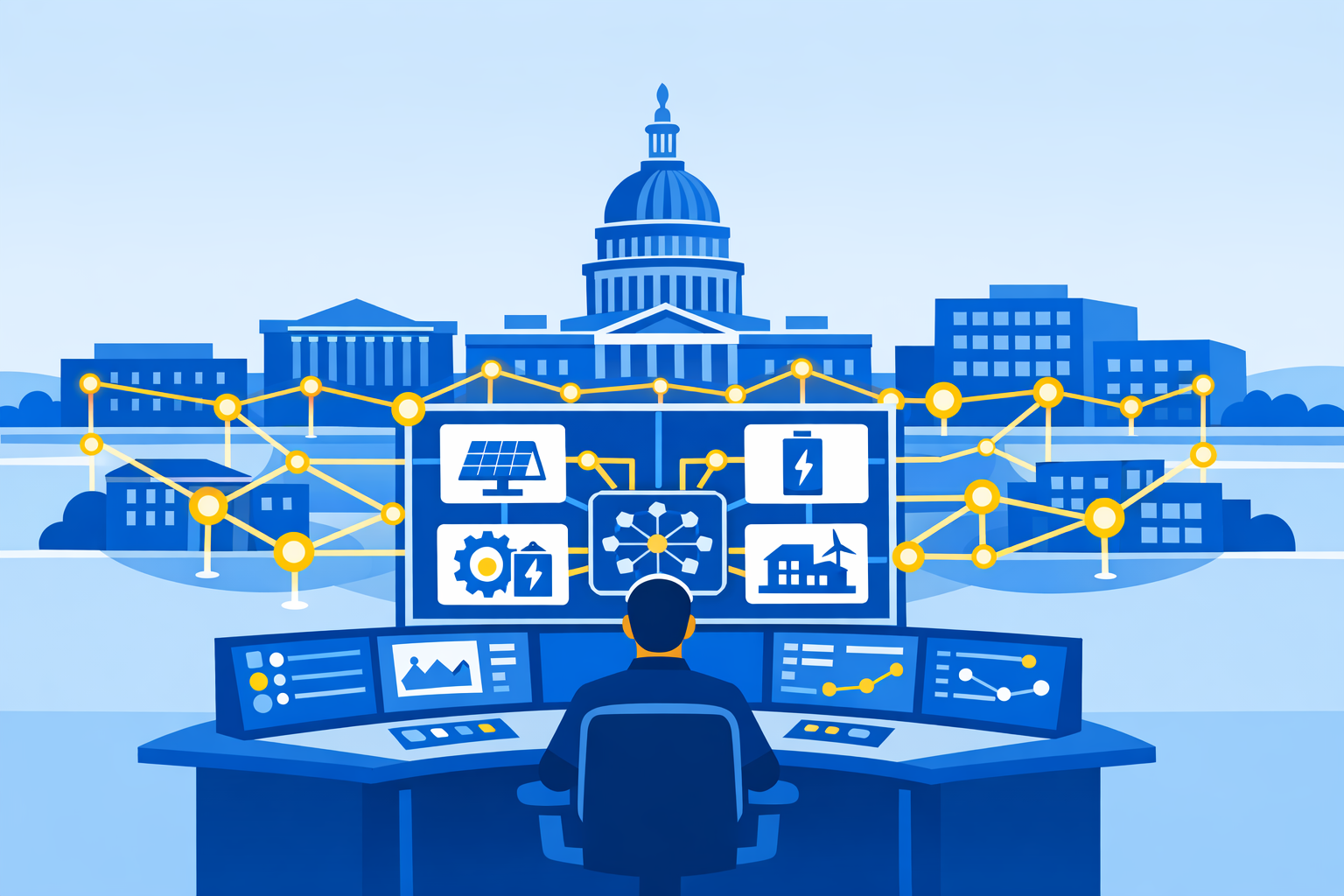
U.S. federal agencies are deploying interoperable, open-data energy management systems (EMS) to orchestrate distributed energy resources (DERs) in real time across approximately 1,200 facilities, marking a significant shift away from vendor-locked building energy platforms. The initiative, coordinated through the Department of Energy's Federal Energy Management Program (FEMP), targets simultaneous optimization of solar photovoltaic generation, battery storage, combined heat and power (CHP), and microgrid assets from a centralized, standards-based data layer. The effort reflects a multi-year federal push to move beyond siloed facility energy reporting toward dynamic, cross-agency grid coordination.
Background
The federal government operates more than 350,000 energy-utilizing buildings, with energy consumed in government facilities representing approximately 40% of total site-delivered federal energy use. FEMP has long sought to address fragmentation in how agencies track and manage those loads. Legislative mandates - including the Energy Policy Act of 2005, the Energy Independence and Security Act of 2007 (EISA), and the Energy Act of 2020 - require agencies to continuously monitor, benchmark, and reduce energy intensity across covered facilities. FEMP has set a target to realize $60 billion in taxpayer savings by 2030 through energy performance improvements across the federal estate.
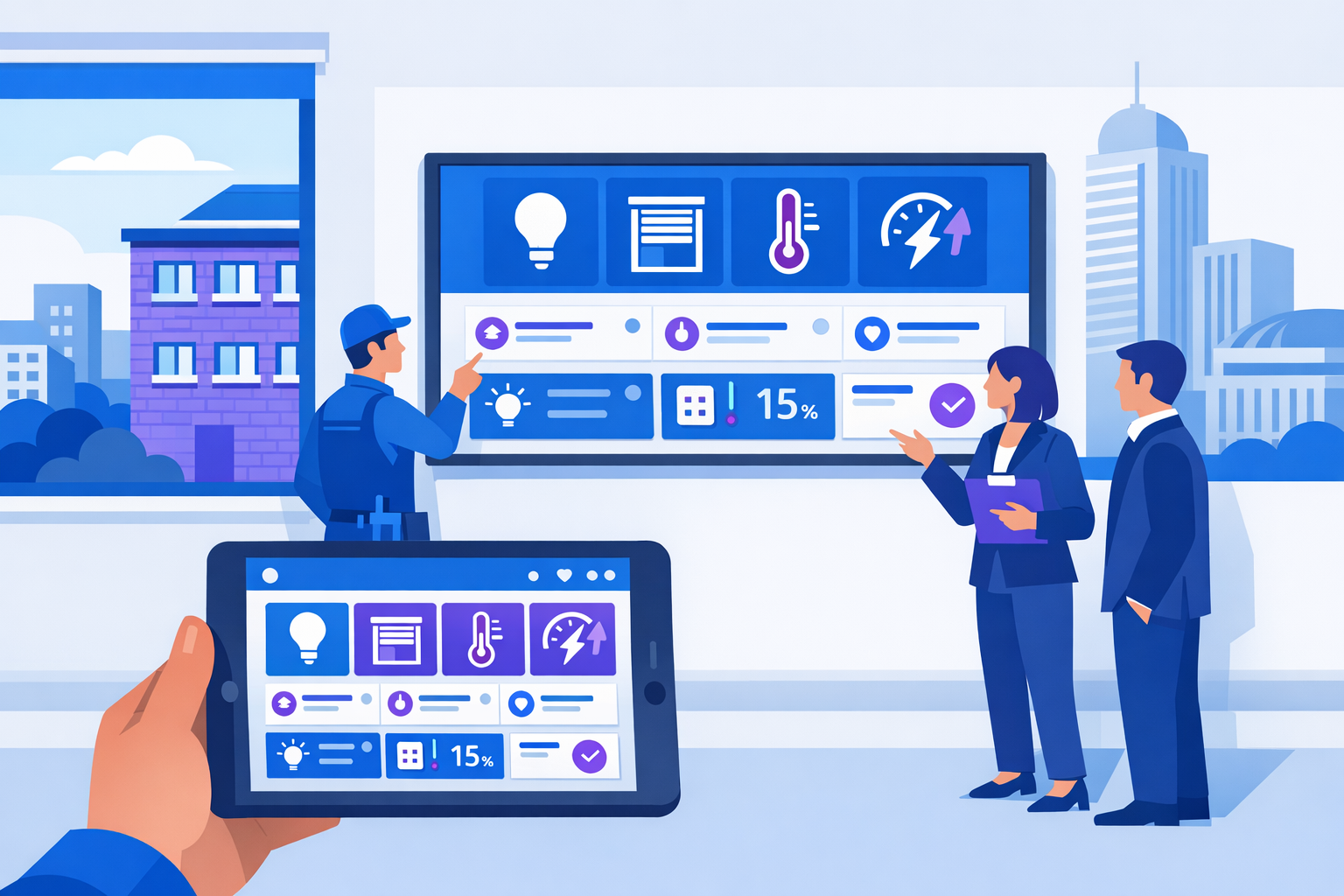
Prior EMS deployments were largely site-specific and lacked the standardized application programming interfaces (APIs) needed to share DER performance data, building load profiles, or grid signals between agencies. The current initiative requires procurement documents to specify open-data standards and pre-certified interoperability modules, prioritizing platforms that can communicate with existing building automation systems (BAS) and advanced metering infrastructure (AMI).
Details
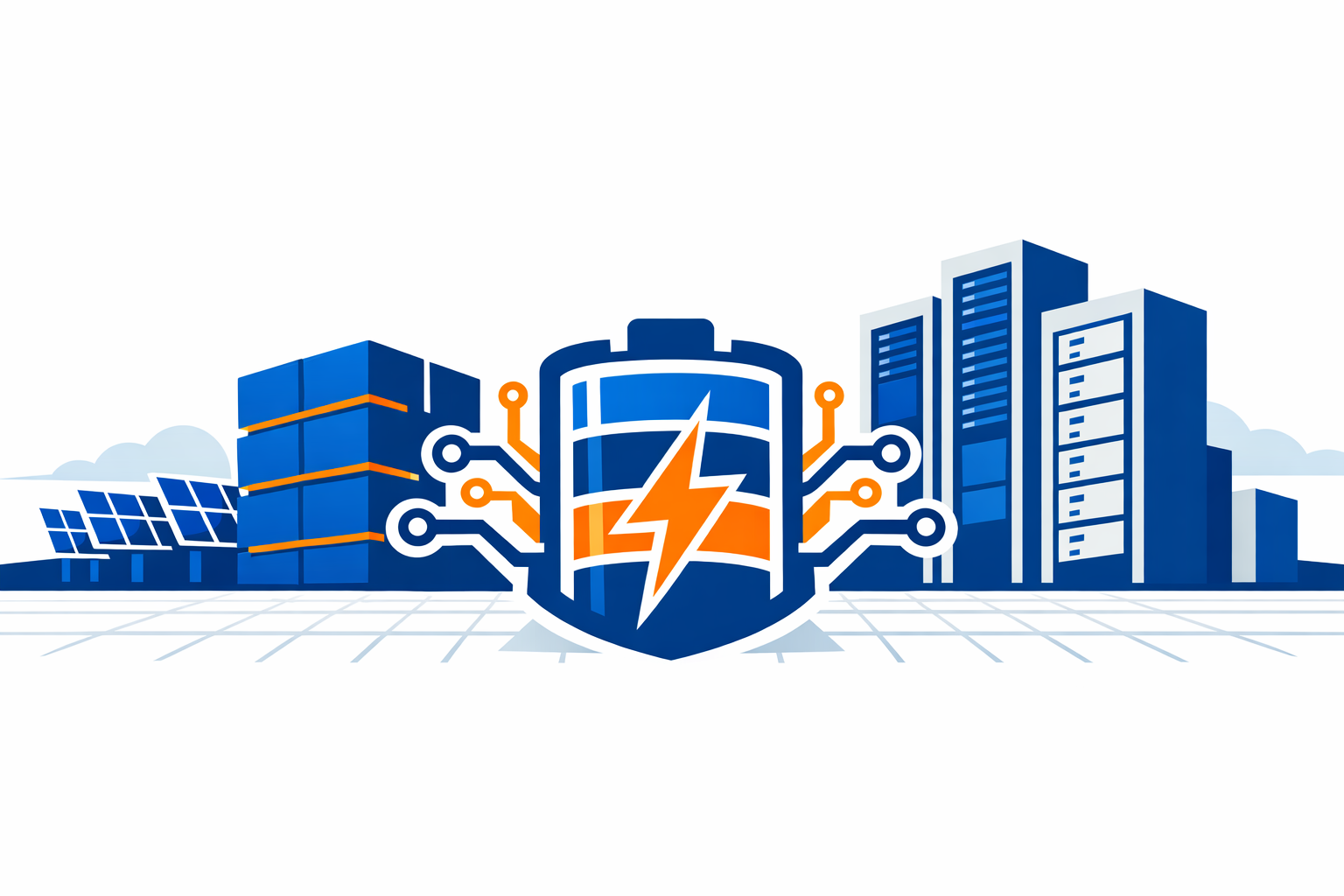
DERs - including renewable energy, battery storage, and CHP - can increase a federal site's survival time during a grid outage when fuel supplies are limited and, when grid-connected, can generate revenue streams that offset microgrid capital costs, according to FEMP's distributed energy resources resilience guidance. The open-data EMS framework is designed to expose these capabilities across facility boundaries, enabling a central EMS operator to dispatch DER assets at multiple campuses in response to utility grid signals, price spikes, or resilience events.
Demand response participation is a central use case. Curtailment Service Providers (CSPs) operating under Master Service Agreements with the U.S. Defense Logistics Agency (DLA) can currently aggregate federal DERs and building loads for wholesale demand response markets, according to FEMP training materials. For the 2026-2027 program year, capacity payments in the PJM market are capped at $329.17 per megawatt-day, translating to a gross of approximately $120,147 per megawatt per year before CSP fees and performance adjustments, the same materials indicate.
On the cybersecurity front, FEMP and Pacific Northwest National Laboratory (PNNL) have developed a Facility-Related Control System Cyber Toolkit (FRCS Cyber Toolkit) that applies the NIST Cybersecurity Framework, the FISMA Risk Management Framework, and DOE's Cybersecurity Capability Maturity Model (C2M2) to facility operational technology networks. The open-data EMS rollout mandates alignment with these frameworks, including zero-trust architecture principles. Connecting EMIS to building automation and utility control systems introduces physical assets that could cause harm if compromised by malicious actors or human error, per FEMP's EMIS cybersecurity best practices, making secure API gateway design a procurement prerequisite.
The DOE's 2025 Open Data Plan, issued in compliance with OMB Memorandum M-25-05, also underpins the initiative. The plan outlines DOE's current and planned efforts to ensure that the Department's data assets are accessible and usable by the public, establishing a governance baseline for cross-agency data-sharing obligations. A new FY 2025 electricity reporting process now requires all grid-supplied electricity consumption to be collected using an upload template organized by site, ZIP code, and utility provider - a structural change that creates the machine-readable data layer open-data EMS platforms require.
Industry observers note that successful scaling demands standardized data models, such as CIM (Common Information Model) or ASHRAE 201 (Facility Smart Grid Information Model), to ensure DER telemetry from disparate vendors can be ingested and acted upon by a single EMS orchestration layer. Critics warn that accountability frameworks for cross-agency data sharing remain underdeveloped, particularly where multiple departments share campus infrastructure.
Outlook
FEMP is expanding pilot programs to additional agencies following early Grid-Interactive Efficient Buildings (GEB) deployments, with standardized metrics under development to measure operational reliability, energy cost savings, and grid coordination performance. DOE's Clean Energy Rule requires new federal construction and major renovations to eliminate 90% of fossil fuel use between FY 2025 and FY 2029, and 100% from FY 2030 onward, which will drive further DER installations and heighten the operational urgency of real-time EMS orchestration. Private-sector portfolio owners - particularly those managing large commercial campuses with complex DER mixes - are monitoring the federal program closely as a potential benchmark for open-standard EMS procurement specifications.
For background on federal EMIS adoption trends, see our earlier coverage: Federal Agencies Accelerate Adoption of EMIS Across Portfolios and Federal Expands Grid-Interactive Buildings Pilot to More Agencies.