The U.S. Department of Energy's Federal Energy Management Program (FEMP) is advancing a broad federal push into AI-powered building energy optimization. Building on outcomes from the concluded Federal Smart Buildings Accelerator (FSBA), the effort extends smart building and grid-interactive technologies across dozens of agencies. The initiative targets cross-vendor building automation system (BAS) interoperability, operational technology (OT) cybersecurity baselines, and scalable procurement as central pillars for the next phase of federal smart building deployment.
Background
Launched in alignment with the Energy Act of 2020, FEMP's Federal Smart Buildings Accelerator (FSBA) was introduced at Energy Exchange 2022 and concluded in September 2024. The program provided education and technical assistance at participating federal facilities, promoting adoption of grid-interactive efficient building (GEB) technologies - defined as energy-efficient buildings that use smart technologies and on-site distributed energy resources to optimize energy cost while providing demand flexibility to the grid.
The accelerator's conclusion surfaced structural barriers to scale. FEMP Smart Facilities program lead Jason Koman stated that "funding and resources pose barriers to wider adoption," adding that "ongoing investment will be critical to achieving our energy efficiency and resilience goals." Agencies of all sizes reported limited staff capacity for technology adoption. Most interest centered on energy management information system (EMIS) software, on-site generation, and electric vehicles, according to DOE findings.
The General Services Administration (GSA), which manages the largest federal building portfolio, has separately directed that all new networked federal building monitoring and control systems promote interoperability through open-protocol systems. The GSA also requires systems to implement cybersecurity best practices including cyber supply chain risk management (C-SCRM) principles, and that all new networked federal BMC systems be IPv6 capable - with IPv4 disallowed for new projects as of July 2023.
Details
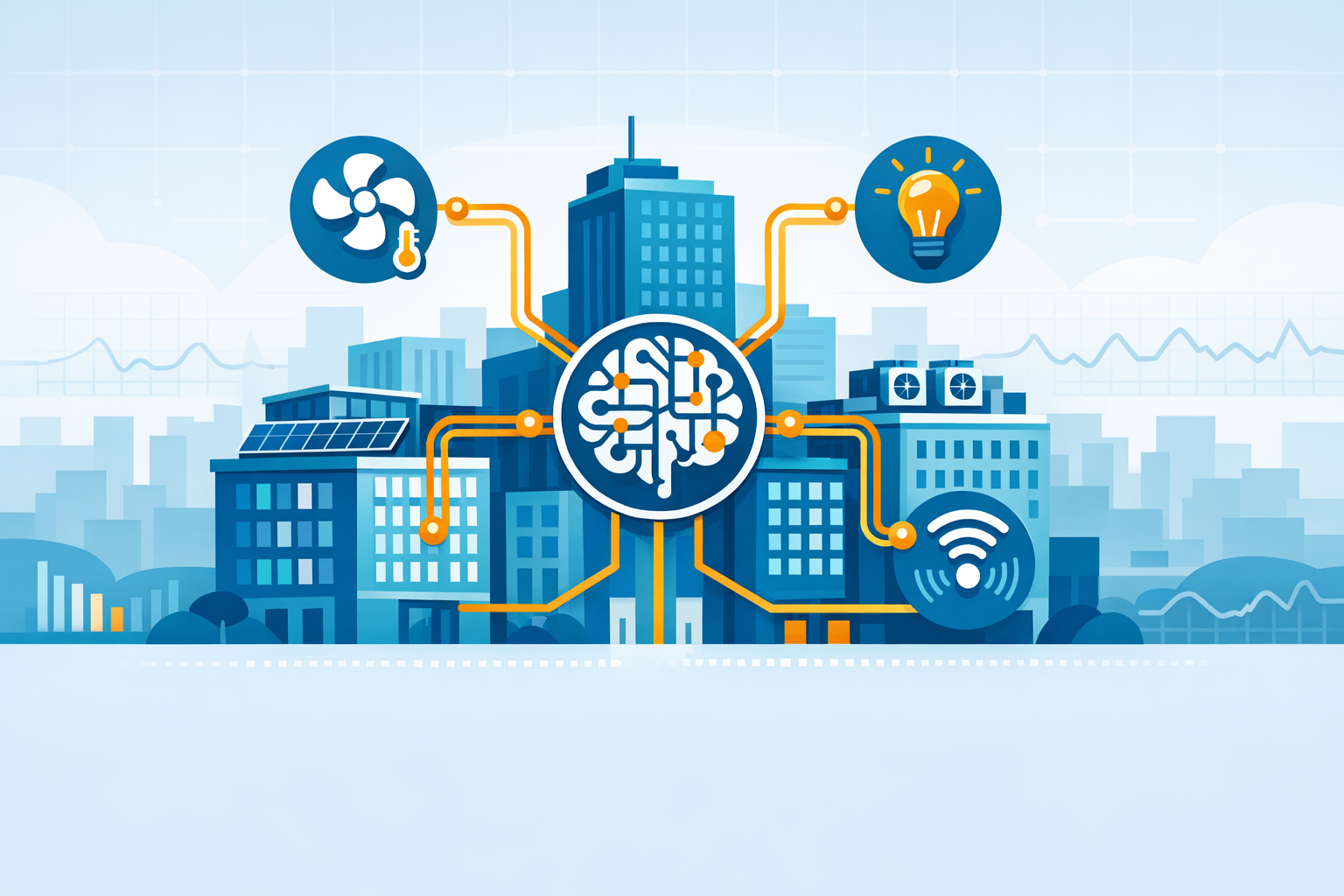
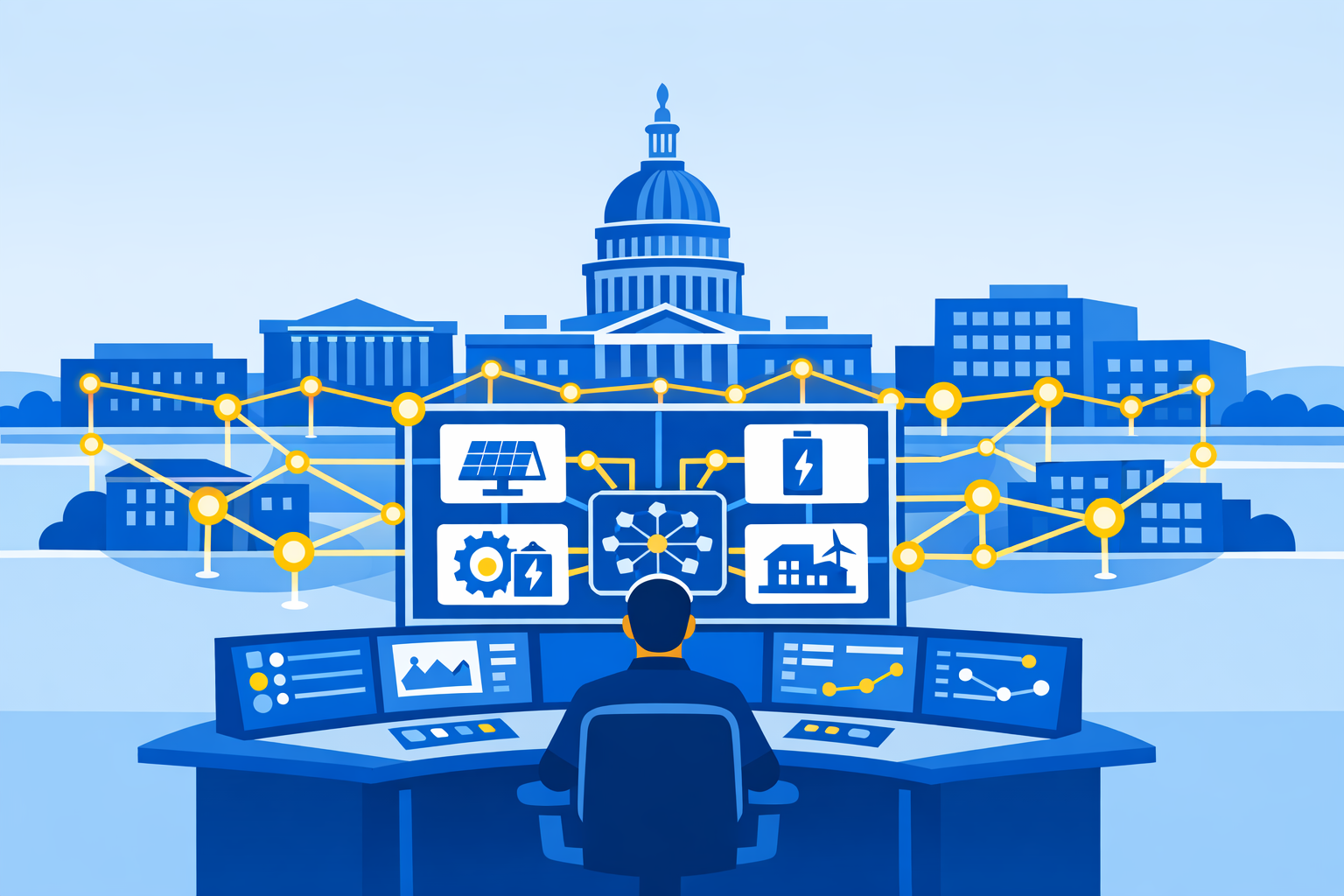
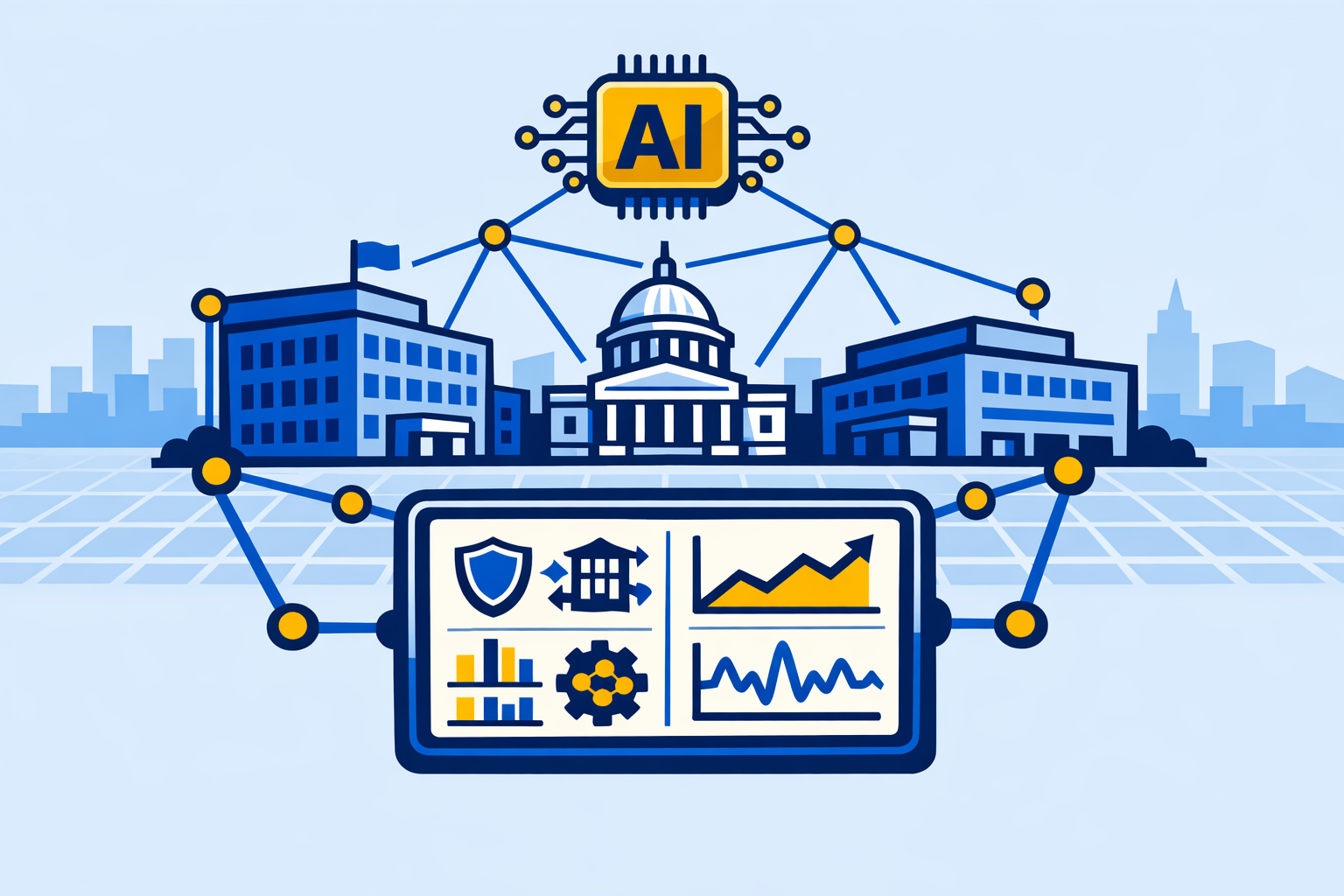
The next phase of federal smart building activity centers on deploying AI-capable EMIS platforms that go beyond metering and fault detection to include predictive analytics, automated demand management, and supervisory control. FEMP's EMIS initiative supports capabilities including portfolio-wide energy benchmarking, automated fault detection and diagnostics, artificial intelligence for predictive analytics and control, and supervisory control enabling automated system optimization. These platforms aggregate data from BAS, IoT sensors, and grid signals to enable real-time, cross-system optimization - a step-change from the rule-based controls installed across much of the federal estate.
Independent research supports the performance case. According to the American Council for an Energy-Efficient Economy (ACEEE), organizations that deploy building energy management and control systems (BEMCS) can reduce energy use by 10-25% and enhance operational efficiency. AI-driven BEMCS use advanced analytics, predictive modeling, and automation to identify patterns and anomalies that traditional systems might miss, enabling dynamic responses to environmental changes.
Data portability and supplier diversification are emerging as priority concerns for program managers. Proprietary data formats in incumbent BAS platforms limit agencies' ability to switch vendors or aggregate data across a mixed-supplier estate - a direct barrier to competition in federal procurement. The GSA's building technologies guidance already mandates open-protocol systems and prohibits vendor-provided intermediary hardware from connecting to GSA networks without agency-furnished equipment, according to published GSA directives.
OT cybersecurity remains a critical constraint. Research from Claroty analyzed more than 467,000 building automation systems across 529 organizations and found widespread exposure to known exploited vulnerabilities, particularly in building management systems and automation controllers. FEMP has addressed this through the Facility-Related Control System (FRCS) Cyber Toolkit, developed with Pacific Northwest National Laboratory, which applies the NIST Cybersecurity Framework and risk management frameworks specifically to federal OT environments. Separately, a cybersecurity executive order issued on June 6, 2025 requires agencies to integrate AI vulnerability assessments and IoT Cyber Trust Mark labeling into federal systems by January 4, 2027.
Outlook
Agencies entering the next phase of smart building deployment face the task of translating pilot-stage interoperability standards and cybersecurity baselines into procurement vehicles that support multi-site, multi-vendor rollouts. FEMP's EMIS and GEB programs are positioned to provide technical assistance and scalable contracting frameworks - including energy savings performance contracts (ESPCs) and utility energy service contracts (UESCs) - to fund retrofits where capital budgets fall short. FEMP has projected that its resources and assistance will help the federal government realize $60 billion in taxpayer savings by 2030. How agencies balance AI-driven performance goals against OT security requirements and aging infrastructure constraints will determine the pace of adoption across the federal estate.