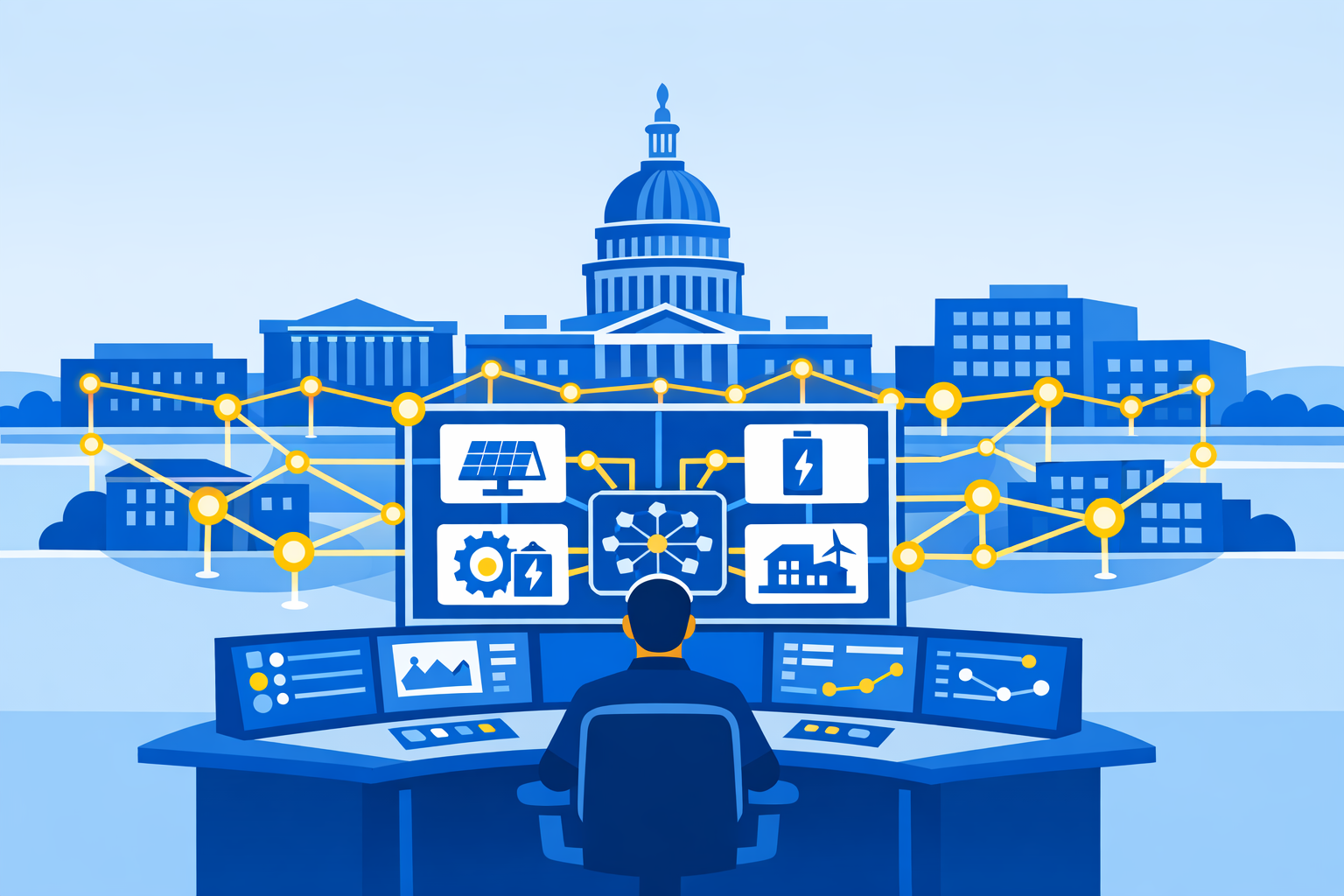
Federal agencies expanded the Grid-Interactive Buildings (GIB) pilot in early 2026, adding more departments and facilities to advance interoperability, demand-response, and integration of energy management systems (EMS) with existing building automation systems (BAS) and IT infrastructure. The initiative, led by the U.S. Department of Energy's (DOE) Federal Energy Management Program (FEMP), underscores federal efforts to modernize infrastructure and better manage peak electricity demand across government property portfolios.
Background
The Grid-Interactive Efficient Buildings (GEB) initiative, launched in 2018 by DOE's Building Technologies Office, aims to transform buildings into responsive grid assets using smart controls, distributed energy resources, and energy efficiency measures[1]. FEMP has issued resources such as the "Guide for Grid-Interactive Buildings for Federal Agencies" and practical toolkits to facilitate retrofit planning, cybersecurity, and performance contracting[2]. The Federal Smart Buildings Accelerator (FSBA), started under the Energy Act of 2020 and completed in September 2024, guided agencies in evaluating GEB opportunities and establishing best practices[2].
Details of Expansion
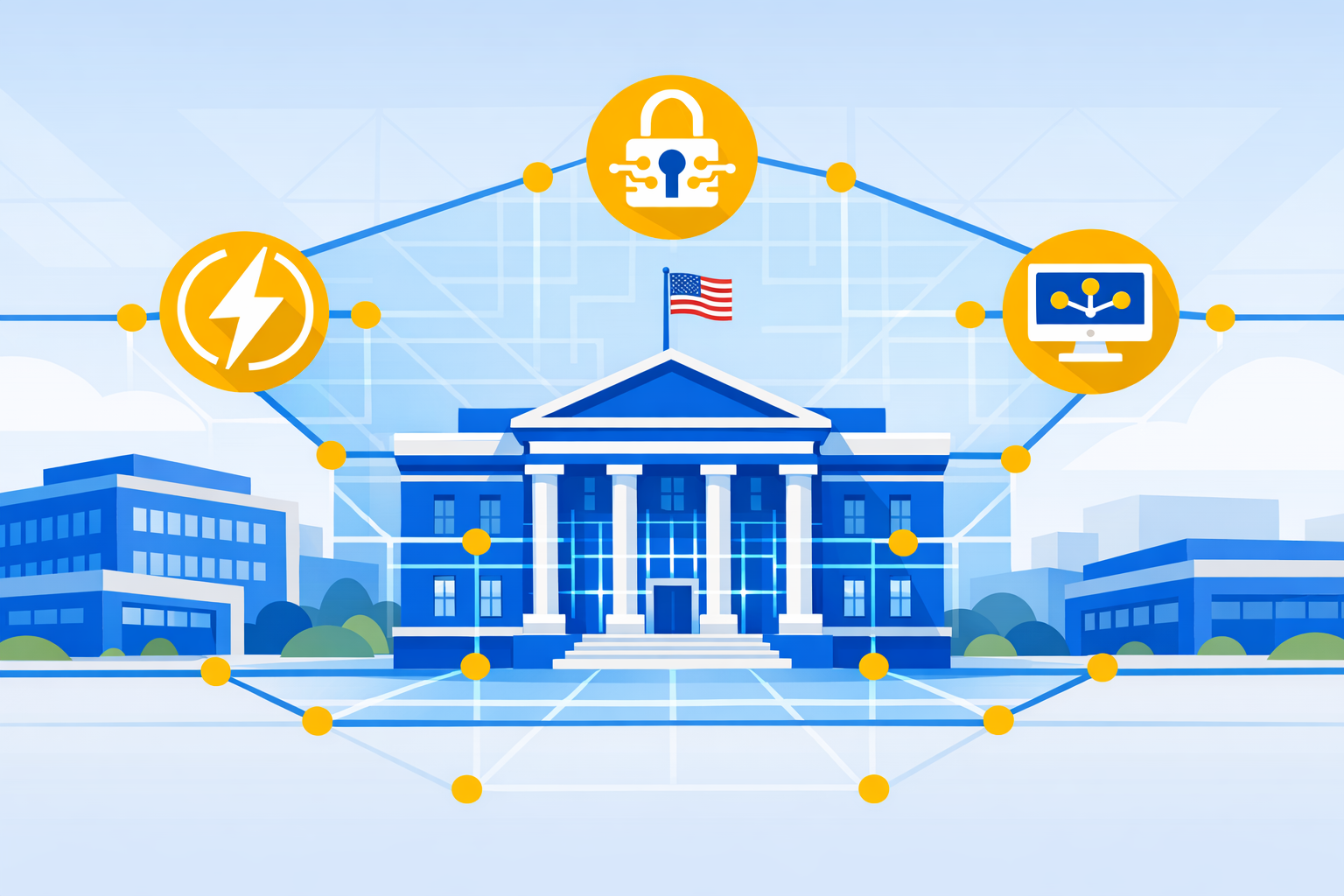
FEMP's 2026 expansion includes additional federal agencies and building types, such as institutional campuses, office complexes, and research facilities, in the GIB pilot. The initiative now prioritizes EMS integration with BAS and IT systems, promoting standardized interoperability, scalable demand-response, and centralized performance metrics tracking. The expansion addresses cybersecurity and sets funding protocols across agencies, as detailed in DOE internal briefings. Independent analysis from the Electric Power Research Institute (EPRI) will verify performance and assess demand flexibility outcomes.
DOE's Connected Communities initiative, which deployed smart building upgrades-including campus-scale projects with solar, chiller plant integration, and electric vehicle (EV) charging-serves as a model for this expansion[3]. Under Connected Communities, DOE allocated over US$61 million to ten projects, funding deployments that showcase GEB functionality through integrated heat and power infrastructure, solar arrays, and multiple energy systems[3].
Outlook
FEMP and DOE anticipate the expanded pilot will generate detailed metrics on energy load flexibility, cost savings, and grid responsiveness by late 2026. Results will inform updated guidance, support potential inclusion in performance contracting, and shape future federal budgeting for smart building modernization.