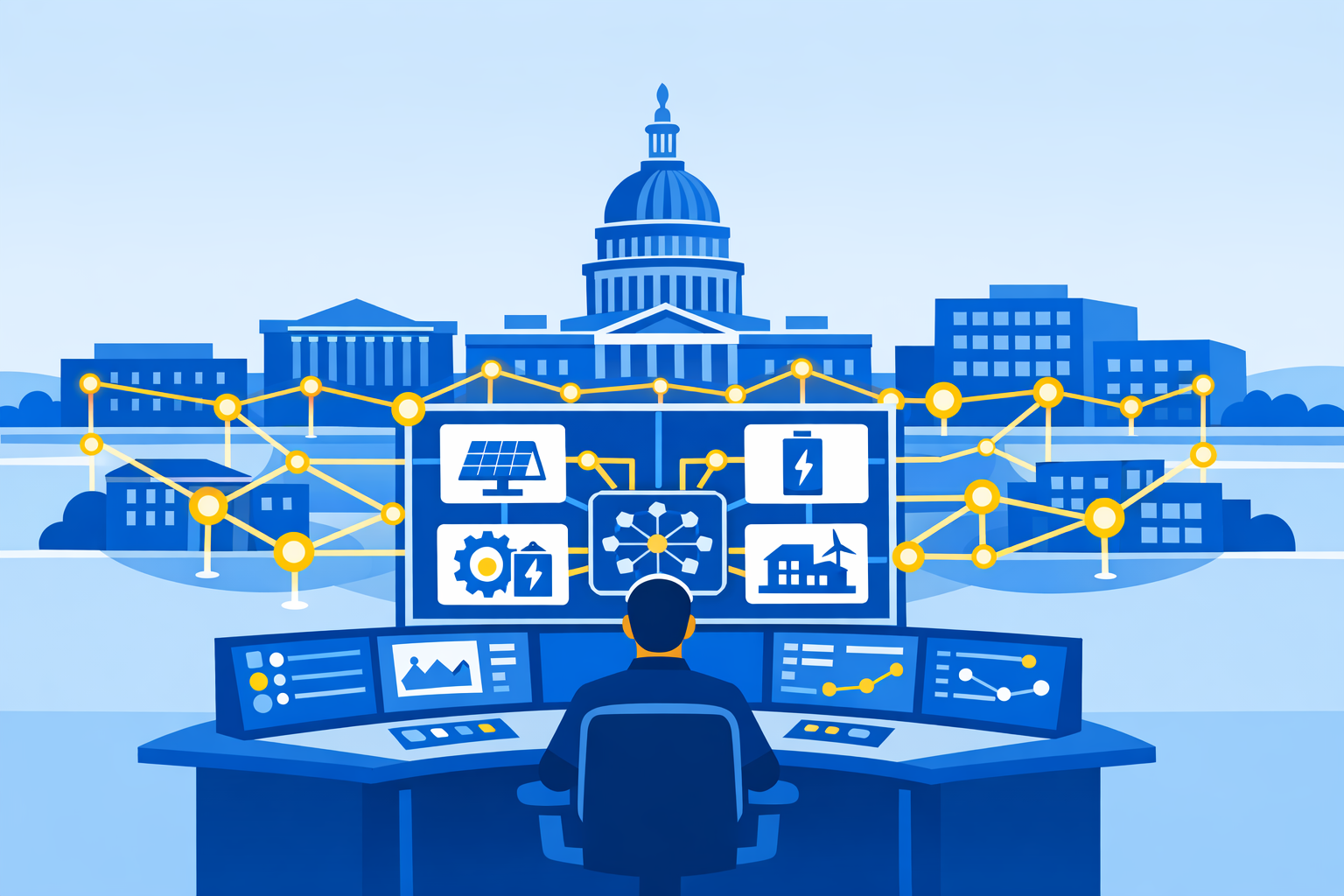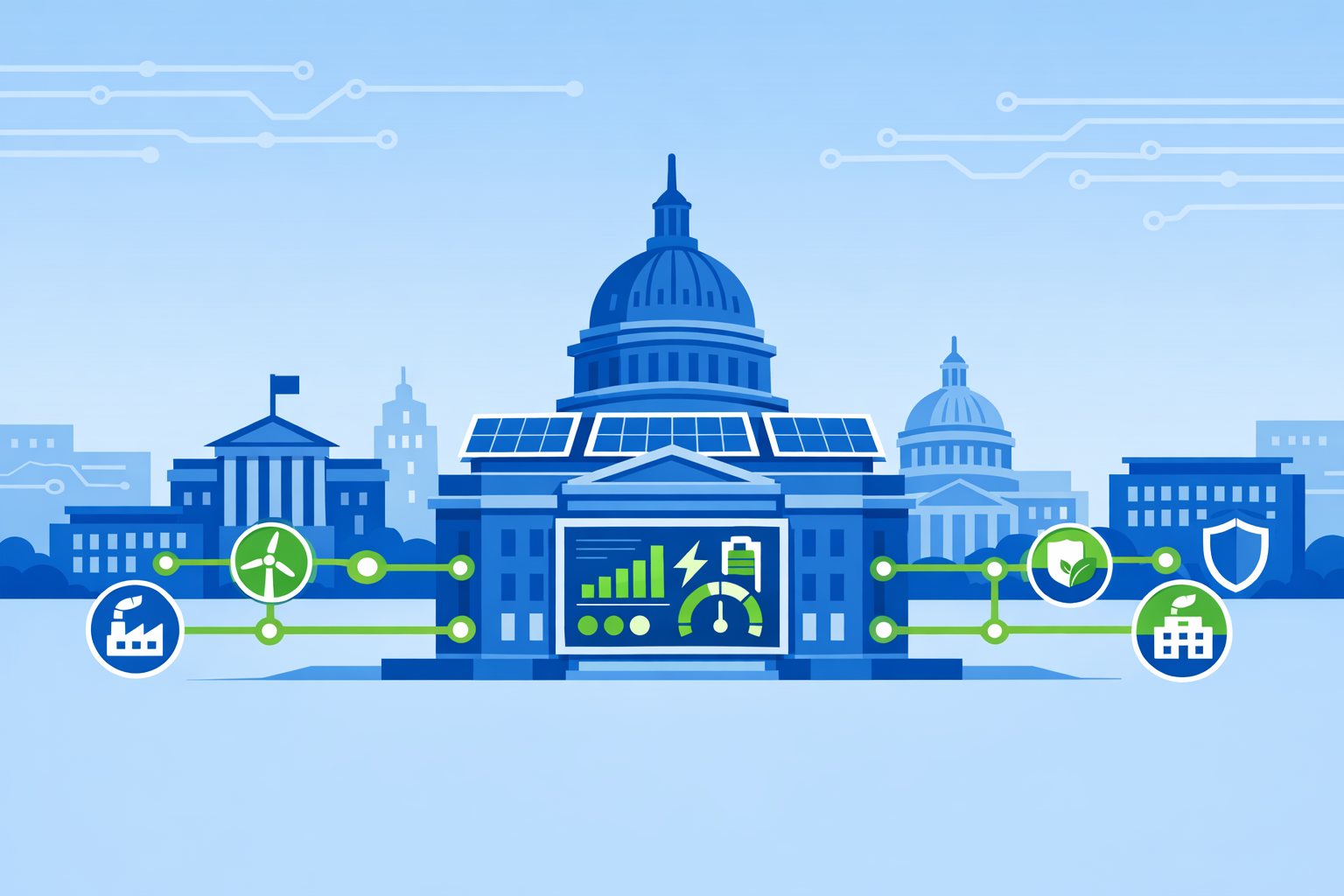
The U.S. Department of Energy's Federal Energy Management Program (FEMP) expanded its Grid-Interactive Efficient Building (GEB) pilot this week to include more federal agencies, targeting scaled, enterprise-level deployment of energy management systems (EMS) across government facilities. The move extends the pilot to broader agency portfolios and aligns with federal efforts to standardize procurement, enhance cybersecurity and privacy, and support mandates for decarbonization and smart energy governance.
Background
The GEB pilot operates under the Federal Smart Buildings Accelerator, led by FEMP to help federal sites adopt grid-responsive technologies through specialized tools, training, and implementation plans. The accelerator was launched in response to the Energy Act of 2020 and executive orders advancing resilience, renewable energy integration, and decarbonization within federal infrastructure. The pilot aims to enable demand flexibility, increase use of renewables, and optimize building loads through connected, smart technologies.FEMP's Federal Smart Buildings Accelerator supports adoption of smart building and grid-interactive technologies across government agenciesThe initiative emerged under the Energy Act of 2020 and Biden's decarbonization directives According to DOE documentation, GEB technologies enable buildings to interact with the grid by leveraging distributed energy resources (DERs) and smart controls.A GEB combines energy efficiency, DERs, and grid-responsive controls to optimize building-grid interactions
Details
The expanded pilot brings in additional federal agencies beyond the General Services Administration (GSA), though specific agencies have not been disclosed. FEMP outlined objectives to scale EMS across government portfolios, streamline procurement, and address cybersecurity and privacy risks associated with grid-interactive infrastructure. FEMP will develop tools and workshops focused on identifying GEB opportunities, planning deployments, and conducting operational training.FEMP will develop tools, training, and deployment guides for GEB implementation across federal facilities Cybersecurity and privacy remain central to the expansion, with a focus on secure data sharing and access controls among agencies.
This initiative is aligned with ongoing federal standards, including the GSA's P100 Facilities Standards, which were updated in August 2024 to integrate net-zero targets, low-carbon materials, and energy systems.GSA updated its P100 Facilities Standards in August 2024 to include net-zero, low-carbon and energy system integration criteria The expanded pilot is intended to implement these criteria through practical deployments of EMS and grid-interactive technologies.
Outlook
Participating agencies are expected to create implementation plans detailing schedules and budgets, while FEMP will collect lessons learned to guide broader federal adoption. The focus on standardized procurement and cybersecurity may drive private-sector uptake of interoperable EMS in smart buildings. Continued policy reviews could lead to new mandates or incentives for GEB technology deployment in both public and commercial markets.