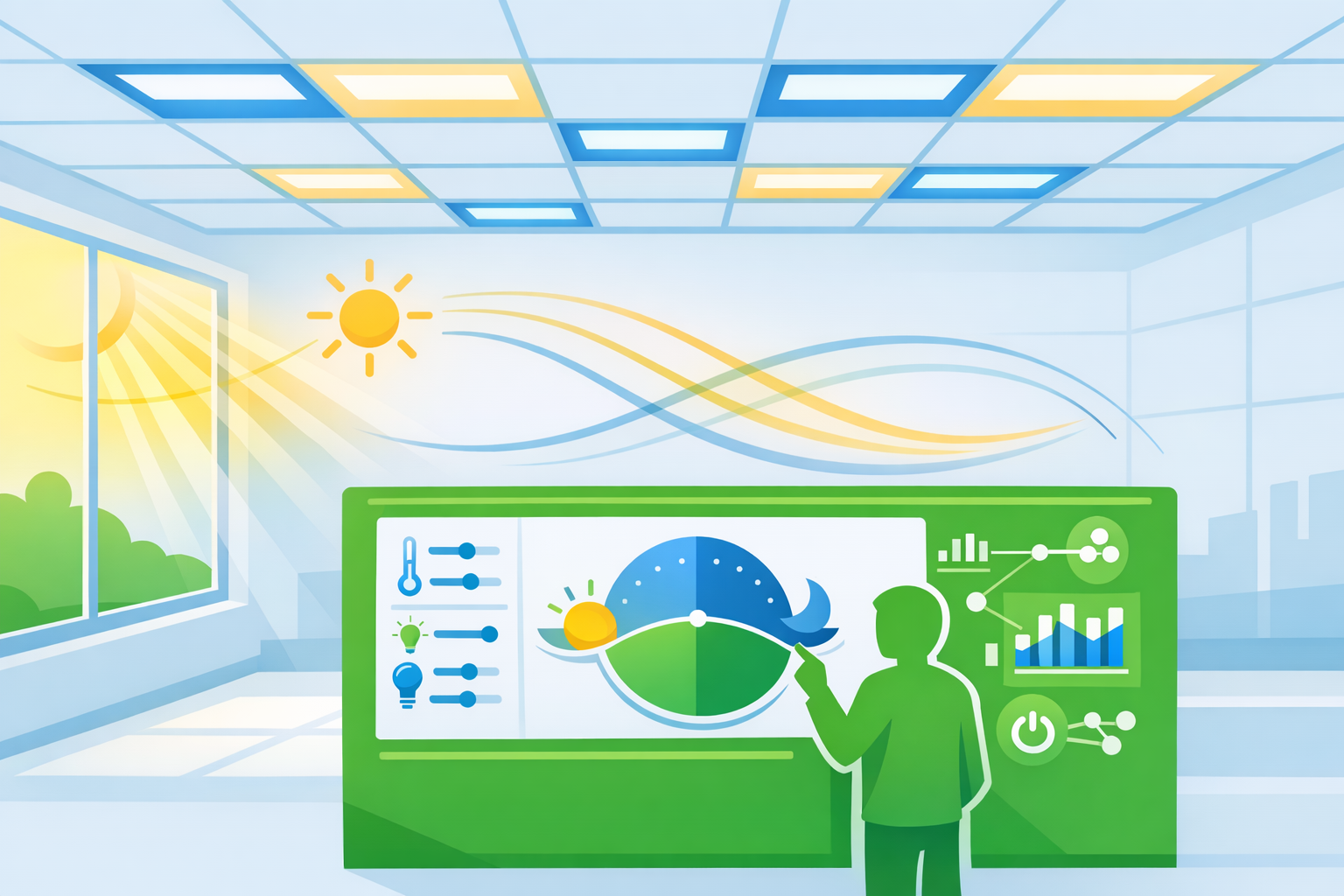
Human-centered lighting is emerging as a key component of energy-efficient smart buildings. By integrating circadian-aware illumination, daylight harvesting, and adaptive controls, these systems enhance occupant well-being and productivity while supporting energy reduction goals. Building management systems (BMS) now routinely oversee dynamic lighting schedules aligned with human circadian rhythms, using tunable white LEDs and occupancy-based sensors to adjust color temperature and intensity based on real-time occupancy and available daylight. This approach is being adopted across commercial campuses, healthcare facilities, and educational environments, where lighting performance is increasingly seen as a strategic asset in both design and operations.
Background
Human-centered lighting (HCL) refers to illumination strategies that address biological, emotional, and visual needs by aligning spectral content and intensity with natural daylight cycles. By synchronizing lighting to the body's circadian system, through controlled shifts in color temperature and brightness, HCL supports alertness and comfort. The DIN SPEC 67600 guideline establishes planning standards for biologically effective lighting, aiming to stabilize circadian rhythms and improve concentration and mood in offices, schools, and healthcare spaces[1]. Building certification frameworks, including WELL, now require specified melanopic lux levels, making circadian lighting a performance criterion in green building standards[2].
Details
HCL adoption is accelerating globally. Over 62% of modern commercial spaces now feature human-centric lighting for comfort and alertness, with nearly 55% of healthcare facilities and 48% of educational institutions implementing circadian lighting in new projects[3]. LED-based HCL technologies hold more than 70% of the market, driven by their energy efficiency and low maintenance requirements[3]. In Europe, networked systems that combine LED fixtures and smart sensors have achieved up to 49% energy savings compared to basic LED retrofits, while improving occupant wellness metrics[4].
Recent studies highlight measurable productivity improvements. For example, CBRE's Amsterdam office reported an 18% productivity increase after installing a time-controlled, tunable white lighting system, with 71% of users feeling more energetic and 76% reporting higher happiness[5]. Other research shows productivity can rise by up to 22% with circadian-friendly lighting, though wider deployment faces challenges around cost and standards[3]. Advanced lighting controls, such as occupancy sensing and daylight harvesting, have delivered up to 45% energy savings in commercial retrofits, with adaptive lighting accounting for about half those savings[6].
Outlook
Ongoing development of standards addressing circadian metrics and system interoperability will influence future adoption. The market is expected to expand as falling LED prices facilitate retrofits and as combined wellness and energy narratives support green building financing. With more projects specifying HCL systems, integration with BMS, energy analytics, and workplace experience platforms is poised to accelerate.