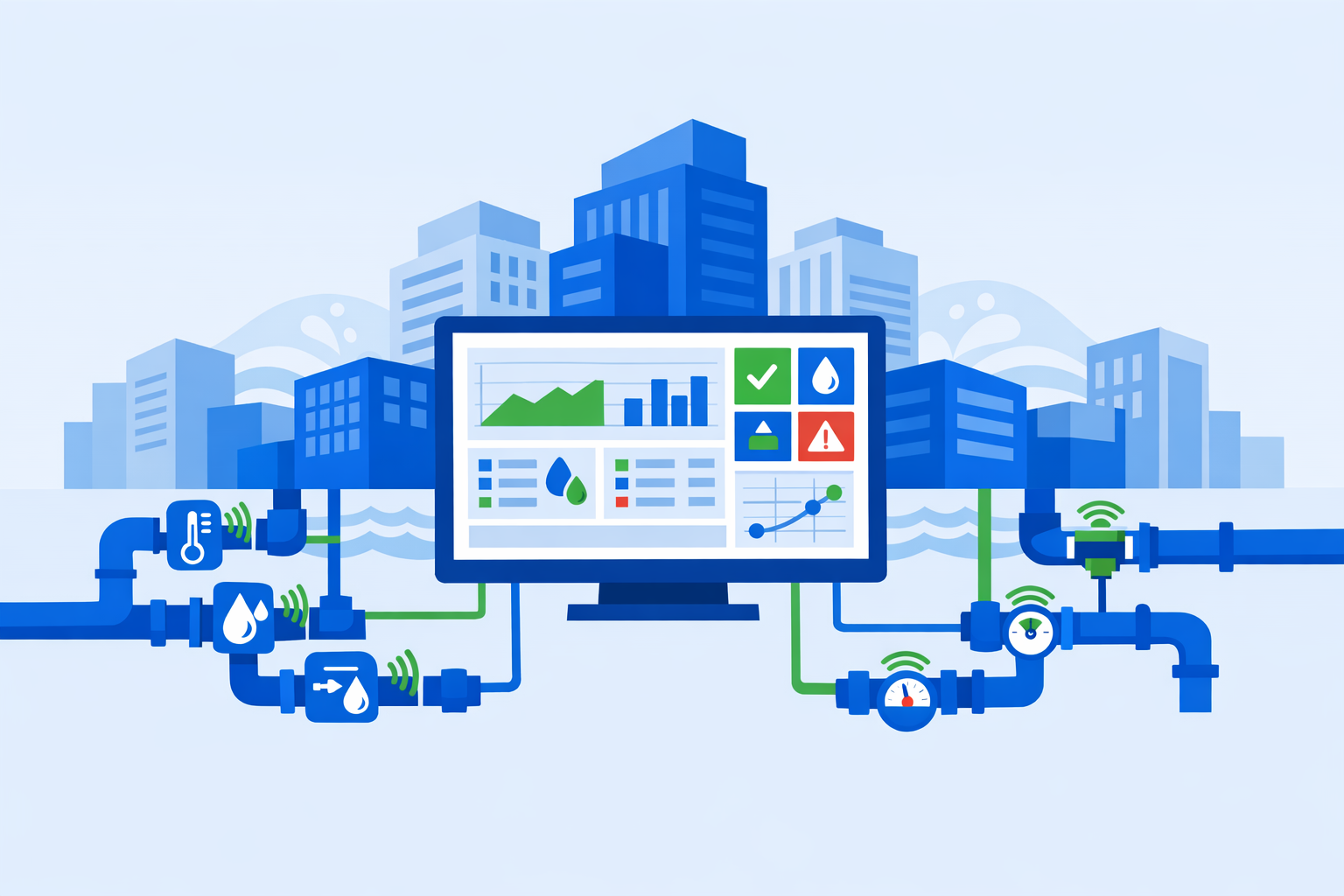
Portfolio owners and regulators are converging on IoT-enabled water quality governance frameworks - often referred to under the "WaterGuard" model - to standardize Legionella risk management and water hygiene compliance across multi-site commercial building estates. The shift is accelerating as disease case counts and regulatory expectations rise, pushing facility managers toward continuous sensor monitoring, automated anomaly detection, and centralized compliance dashboards.
Background
Reported cases of Legionnaires' disease in the United States increased ninefold from 2000 to 2018, according to research published in PNAS Nexus, and the CDC confirms the upward trend resumed after a pandemic-related dip in 2020. Legionnaires' disease carries a fatality rate of approximately 10-25% and a hospitalization rate of around 95%, making it the leading cause of drinking water disease outbreaks in the U.S., according to peer-reviewed research. Outbreaks in 2024 included a cluster at an assisted living facility in Albany County, New York, resulting in three deaths, 10 confirmed cases, and 20 hospitalizations, according to industry reporting.
The regulatory landscape reinforces the urgency. ASHRAE Standard 188 defines Water Management Program (WMP) requirements specifically to reduce Legionellosis risk in building water systems, while the Centers for Medicare & Medicaid Services (CMS) requires healthcare facilities to actively control Legionella risk under directive QSO-17-30. In the United Kingdom, ACoP L8 and HSG 274 establish mandatory monitoring and testing obligations. The World Health Organization published its Water, Sanitation, Hygiene and Waste Strategy 2026-2035 in early 2026, outlining a ten-year agenda linking infrastructure investment with stronger governance, regulation, and risk management, according to Smart Water Magazine.
Despite this framework, managing Legionella risk across large, fragmented building estates using manual checks and paper logs remains time-consuming, inconsistent, and prone to human error, according to compliance specialists. Facilities relying on spot checks risk missing early warning signs, and fragmented compliance delivery across multiple sites leaves portfolio-level oversight gaps, as noted by building water safety providers.
Details
WaterGuard-style programs address these gaps by deploying networks of IoT sensors at critical points throughout a building's domestic hot- and cold-water systems, cooling towers, and associated infrastructure. Smart sensors measure parameters including temperature, pH, oxidation-reduction potential (ORP), conductivity, and flow rates continuously - in some implementations, every 15 minutes, according to water compliance platforms. Data transmits via secure wireless protocols such as LoRaWAN to cloud-based platforms, where AI-driven anomaly detection algorithms flag deviations before they become compliance failures.
Legionella bacteria actively grow between 77°F and 113°F (25°C-45°C), particularly in stagnant water with biofilm present, according to TRC engineering consultants. Aging infrastructure and low-flow plumbing systems - often installed for energy efficiency - can unintentionally create ideal growth conditions. IoT monitoring provides continuous visibility across these risk zones, replacing manual monthly checks that compliance providers describe as inadequate for detecting emerging threats.
Centralized dashboards aggregate sensor data across entire building portfolios, giving senior facilities managers and property directors real-time, estate-wide compliance status. IoT-based monitoring solutions can reduce the need for flushing operations by up to 95%, according to one provider, saving thousands of liters of water annually, while simultaneously improving documentation quality. All readings, alerts, and responses can be automatically recorded, creating a defensible evidential trail for regulatory inspections, according to building water safety providers. Platforms also support digital audit trails, automated compliance reporting, and integration with Integrated Facility Management (IFM) systems.
The approach aligns with the WHO's broader governance shift. The WHO 2026-2035 WASH strategy positions monitoring and data as "essential enablers" of risk-based management, emphasizing that infrastructure investment value will increasingly be measured by safety, reliability, resilience, and data-backed performance, according to Smart Water Magazine's reporting on the strategy.
Outlook
Regulatory pressure is expected to intensify as municipal and federal agencies move toward requiring documented, technology-supported Water Management Plans as a baseline compliance standard - not just for healthcare facilities, but across commercial, hospitality, and institutional building sectors. Portfolio owners and MEP consultants should evaluate centralized water monitoring platforms now, particularly given the GSA's recent update to its Drinking Water Quality Management Order (PBS 1000.7B), which integrates CDC Legionella resources and adheres to EPA thresholds for Public Water Systems across federally controlled buildings, as published by the GSA. System integrators embedding water hygiene governance into broader building management system (BMS) architectures are well positioned to address this growing compliance and health safety requirement across commercial real estate portfolios.