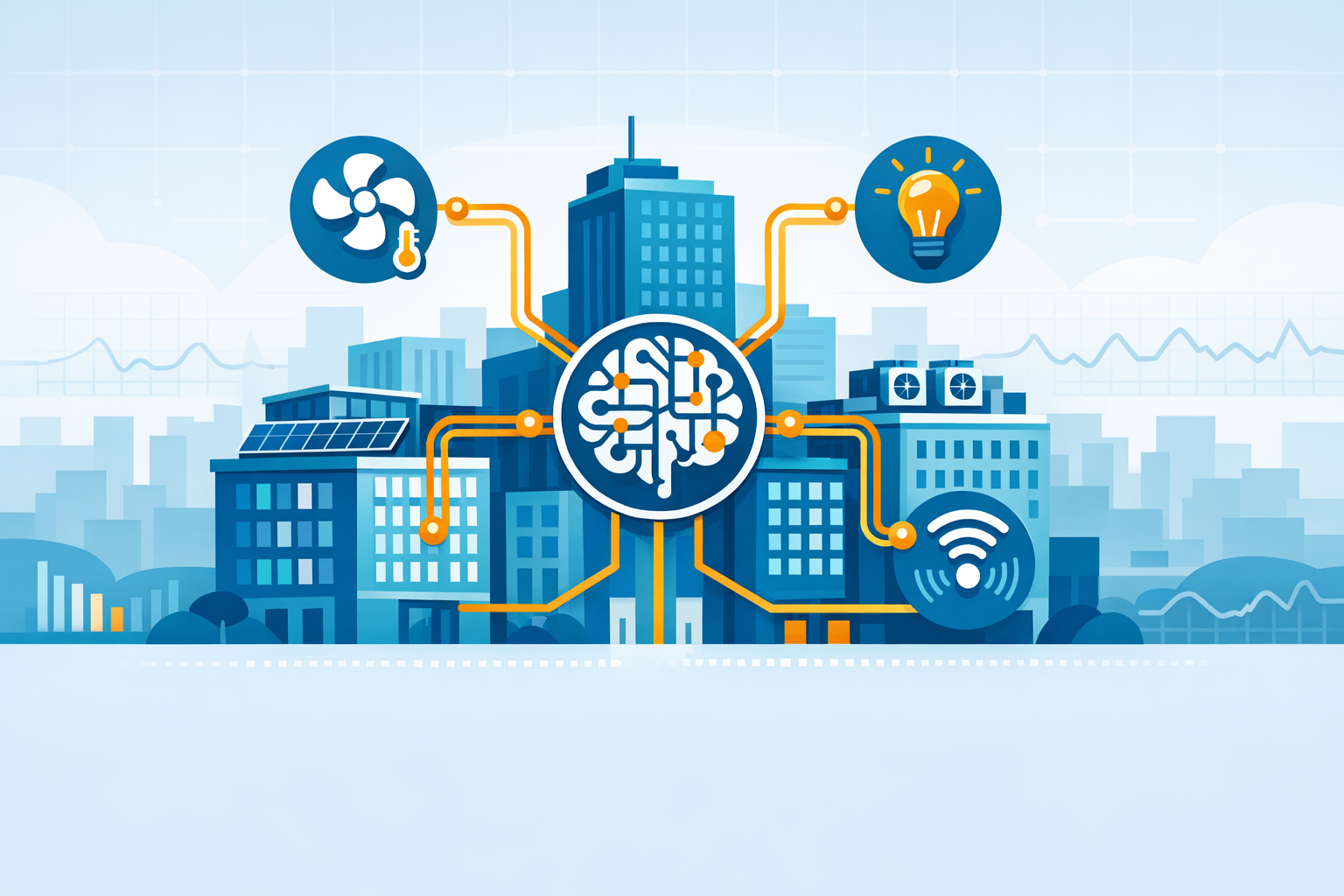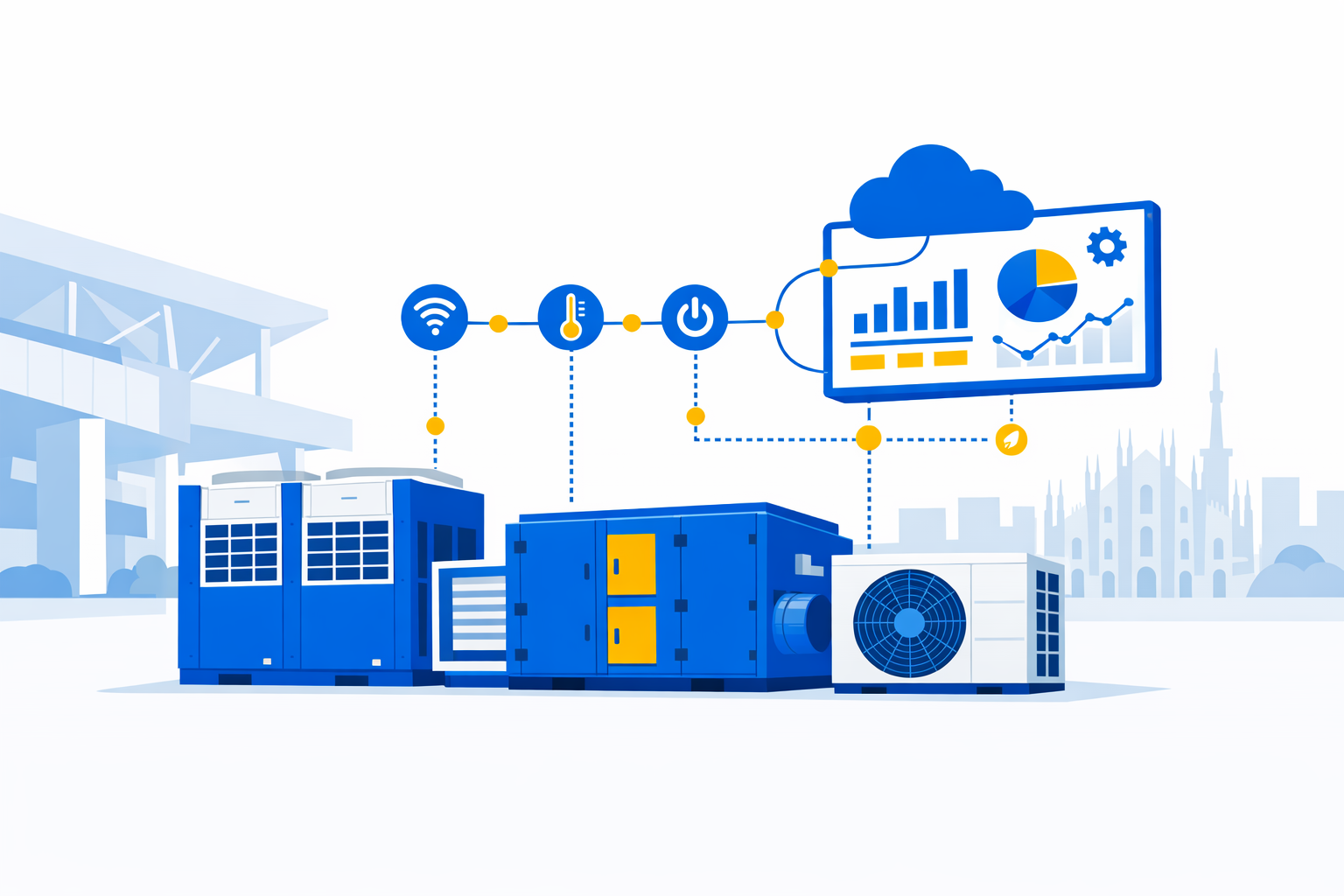
Samsung's presence at MCE 2026 marks a key juncture for European commercial buildings, as decarbonization, electrification, and digitalization converge. The company's expanding HVAC and controls portfolio-supported by recent acquisitions and cloud platforms-demonstrates how modular, electrified, IoT-integrated systems are transforming design and operations for complex facilities.
For building engineers, facility managers, and system integrators, the central consideration is not only Samsung's MCE showcase, but also how these technologies align with new regulations, interoperability standards, and evolving service-based business models.
MCE 2026: A Focal Point for Europe's Decarbonizing Building Stock
MCE 2026 runs from 24-27 March at Fiera Milano and is positioned as a leading international exhibition for HVAC+R, renewable energy and water technologies.[1] The event serves as an indicator for manufacturers' strategies in support of Europe's climate and energy goals.
Buildings in the EU account for about 40% of final energy consumption and roughly 36% of energy-related greenhouse-gas emissions.[2] This impact keeps the sector central to the European Green Deal, REPowerEU, and national decarbonization agendas.
The recast Energy Performance of Buildings Directive (EPBD), adopted in 2024, makes "zero-emission" the standard for all new buildings and mandates the EU building stock become zero-emission by 2050. National renovation plans now include roadmaps to phase out fossil-fuel boilers.[3] These policies directly influence design requirements, prioritizing electrified HVAC, low-GWP refrigerants, and advanced automation.
Key policies shaping HVAC specifications for commercial projects include:
- Stricter national EPBD implementations, including minimum energy performance standards.
- Local bans or phase-outs of fossil-fuel boilers in commercial buildings.
- Incentives for heat pumps, energy recovery, and high-efficiency chillers under EU and member-state programs.
- Emphasis on continuous commissioning, smart readiness, and data-centric operation in green certifications.
In this context, MCE 2026 provides a platform for OEMs to present integrated system architectures beyond individual products.
Samsung's Expanding HVAC Footprint in Europe
From Comfort and Connectivity to Integrated Platforms
Samsung has previously positioned its climate portfolio around comfort and connectivity at European fairs. At MCE 2024, Samsung Electronics Air Conditioner Europe (SEACE) introduced solutions for residential and tertiary markets, focusing on user comfort and connected control across HVAC+R systems.[4]
The company has since accelerated its expansion into building-scale platforms:
- At AHR 2026, Samsung launched SmartThings Pro HVAC within an AI-driven IoT platform, enabling remote management, monitoring, and optimization of HVAC portfolios for contractors, service organizations, and owners from a single interface.[5]
- Samsung's b.IoT (building Internet of Things) platform delivers integrated management for HVAC, power, lighting, and other subsystems with AI analytics and remote monitoring to enhance energy efficiency and reliability.[6]
For commercial stakeholders, these developments indicate a shift from stand-alone comfort devices to vertically integrated stacks connecting field devices, controllers, and cloud services.
Extending into Applied HVAC via FläktGroup
Samsung has also expanded into applied and industrial HVAC.
In 2025, Samsung Electronics agreed to acquire FläktGroup, a European leader in energy-efficient ventilation and precision-cooling, for €1.5 billion. The transaction integrated FläktGroup and its subsidiaries into Samsung.[7] This provides access to a broad portfolio including air-handling units (AHUs), air distribution, and data-center cooling technologies.
Implications for European building projects include:
- A comprehensive offering spanning VRF (variable refrigerant flow), packaged systems, AHUs, and precision cooling within one group.
- Enhanced presence in non-residential and mission-critical sectors where air quality, redundancy, and serviceability are priorities.
- Closer integration between plant-side equipment and Samsung's SmartThings Pro and b.IoT platforms.
Modular, Inverter-Driven Equipment as a Decarbonization Tool
Samsung's new product releases reflect the broader shift to modular, inverter-driven, retrofit-capable equipment.
The Samsung Hylex™ heat pump-a hybrid, inverter-driven outdoor unit designed to work with existing indoor coils-was named a Green Builder Sustainable Product of the Year for 2025. Its compact, modular design targets ease of installation for new builds and retrofits.[8] Its compatibility with existing piping and control wiring illustrates how modular electric systems support phased decarbonization without full system replacement.
Industry trends show engineers specifying modular chillers, VRF blocks, and rooftop units that can be added or reconfigured as loads or budgets change.[9] This approach is particularly suited for large campuses and multi-tenant buildings with staged renovation programs.
MCE 2026 as a Launchpad
Samsung Electronics Air Conditioner Europe will exhibit at MCE 2026 and plans to officially launch important HVAC products previewed at earlier events.[10] Although detailed SKUs are pending, the strategic emphasis is on modular, electrified equipment with integrated IoT capabilities.
For specifiers, the core question is deploying these systems to align with national decarbonization targets and existing automation strategies.
What Modular, Electrified, IoT-Integrated HVAC Means in Practice
Modular HVAC for Phased Decarbonization
Modular systems-comprising multiple smaller heat pumps, chillers, and AHUs-allow stepwise replacement of legacy fossil-fuel equipment.
Key advantages include:
- Phased replacement: Retire legacy equipment in stages, aligning capital spending with budget cycles, minimizing operational disruption.
- Redundancy and resilience: Achieve N+1 or N+2 configurations with modular blocks, supporting uptime in healthcare, data centers, and critical assets.
- Load matching: Inverter-driven modules adapt to part-load conditions, improving efficiency compared to oversized units.
For retrofit programs, modularity enables targeted upgrades for specific zones or uses, supporting compliance with stringent energy standards.
Electrification-First HVAC Design
Electrification of heating is central to EU climate initiatives. Heat pumps and high-efficiency chillers are replacing combustion systems, backed by grid decarbonization and carbon pricing.
IEA analysis shows heat pump deployment is a significant driver of renewable heat consumption growth in buildings through 2028, reducing cumulative heat-related CO₂ emissions.[11]
Key technical considerations for electrification-first design include:
- Electrical infrastructure: Assess feeder, transformer, and backup capacity for full-electric peak scenarios.
- Thermal storage and demand management: Apply buffers and controls to manage peak loads, especially with dynamic tariffs.
- Distribution strategy: Select between all-air, all-refrigerant (VRF), or hydronic distribution based on flexibility, refrigerant charge, and maintenance profiles.
- Integration with DHW and process loads: Ensure heat-pump solutions can meet domestic hot water and process heating requirements reliably.
Samsung's integration of inverter heat pumps, VRF systems, and FläktGroup solutions positions it to support these strategies for mixed-use and commercial settings.
IoT Integration, Analytics, and Edge Control
IoT integration enables HVAC control through data-driven optimization, leveraging occupancy, indoor air quality (IAQ), and equipment condition.
Field studies of IoT-managed HVAC in multi-space buildings report energy reductions of 10-15%, maintaining IAQ within recommended thresholds approximately 90% of the time.[12]
Predictive maintenance uses IoT sensors, BIM/digital twins, and machine learning for fault recognition, lifecycle estimation, and dynamic maintenance planning.[13]
Samsung's SmartThings Pro and b.IoT platforms offer:
- Multi-site HVAC performance visibility and alarms.
- Remote diagnostics and parameter adjustment to reduce site visits.
- Integration with broader building automation via open interfaces.
For large campuses, defining responsibility between local building management systems (BMS) and OEM clouds-including control loops and data sharing-is essential.
Interoperability and Open Protocols
Open protocols are essential for multi-vendor automation environments.
BACnet and Modbus are established open communication standards for building management, supporting interoperability for HVAC, energy, and environmental controls; BACnet is standardized as ANSI/ASHRAE 135 and ISO 16484-5.[14]
Web-oriented protocols such as oBIX and MQTT are increasingly used to connect building data to cloud and analytics platforms.[15]
Integrators assessing IoT-enabled HVAC should verify:
- Native support for BACnet/IP, Modbus TCP, or similar protocols at controller level.
- Documented REST or MQTT APIs for integration with analytics, CMMS, or digital-twin platforms.
- Clear data models and point-tagging to minimize custom mapping.
- Seamless integration options with existing BMS front-ends.
Service and "As-a-Service" Operating Models
Digitalization is shifting HVAC procurement towards service-based models.
By 2024, over 60% of commercial buildings globally had adopted IoT-enabled predictive HVAC maintenance; Europe leads in HVAC-as-a-Service models aligned with energy and emissions targets.[16]
Energy-as-a-Service contracts-where third parties finance, install, and operate HVAC infrastructure, charging for delivered performance-have funded hundreds of millions in efficiency projects.[17]
This changes focus from capex to:
- Contracted energy savings or comfort metrics.
- Shared access to performance data and dashboards.
- SLAs defining uptime and response.
SmartThings Pro platforms and modular equipment provide the necessary telemetry and control for these service models, supporting OEM-, ESCO-, or third-party-delivered contracts.
Comparing Traditional vs Modular, IoT-Integrated HVAC Architectures
| Aspect | Traditional central plant | Modular, electrified, IoT-enabled system |
|---|---|---|
| Capacity strategy | Large single chillers/boilers sized for peak | Multiple smaller modules sized for diversity and staging |
| Part-load efficiency | Often poor; cycling and oversizing common | Inverter-driven modules track load, improving seasonal efficiency |
| Redundancy | Limited; single points of failure | Built-in via multiple modules and flexible piping/ductwork |
| Retrofit complexity | Major shutdowns, structural changes | Phased replacement; limited-area interventions |
| Integration with BMS | Point-to-point integration, often proprietary | Open protocols plus APIs for analytics and cloud platforms |
| Commissioning and tuning | Manual, on-site intensive | Increasing use of remote support, analytics-driven optimization |
| Suitability for EaaS models | Harder to baseline and monitor performance | Granular metering and telemetry support outcome-based contracts |
This comparison underscores why OEMs and integrators are adopting modular, connected architectures, and why MCE 2026-alongside Samsung's exhibits-focuses on these features.
Design and Integration Implications for Commercial Projects
The move toward modular, electrified, IoT-integrated HVAC raises several design and implementation considerations:
1. Control architecture and responsibility
- Determine which control loops (e.g., safety, primary temperature/pressure) remain local versus those influenced by cloud analytics.
- Define fallback modes in case of cloud connectivity loss.
2. Data modeling and analytics readiness
- Standardize naming, tagging, and point lists for integration with analytics or CMMS tools.
- Plan data storage and retention for high-resolution time-series to support fault detection and performance verification.
3. Cybersecurity and network segmentation
- Isolate HVAC and automation networks using secure gateways to cloud services.
- Ensure vendor gateways comply with encryption, authentication, and patching policies.
4. Commissioning, handover, and lifecycle support
- Use pre-configured templates, virtual commissioning, or digital twins to reduce onsite commissioning and errors.
- Integrate remote monitoring and FDD (fault detection and diagnostics) workflows into O&M documentation and contracts.
5. Alignment with decarbonization roadmaps
- Map HVAC designs to site-specific decarbonization pathways, factoring in grid carbon intensity and policy trends.
- Prepare for future integration of on-site renewables, storage, or district systems.
Actionable Conclusions and Next Steps
For professionals assessing Samsung's HVAC strategy at MCE 2026 and beyond:
- Link policy to specifications: Align briefs with EPBD and national requirements for electrification and zero-emission standards.
- Prioritize modularity: Select modular heat pumps, chillers, and AHUs that facilitate staged decarbonization for retrofits.
- Demand interoperability: Make open protocols and APIs mandatory in RFPs and verify during acceptance testing.
- Leverage IoT for savings: Deploy IoT-enabled controls and analytics in pilot projects with defined KPIs, scaling upon verified results.
- Scrutinize service-based models: For HVAC- or Energy-as-a-Service, evaluate baselines, M&V methods, SLAs, and data access rights in detail.
As Samsung and others present modular, electrified, IoT-integrated HVAC solutions at MCE 2026, the advantage for owners and integrators will derive from translating these capabilities into resilient, interoperable building systems.
Frequently Asked Questions
How do modular HVAC systems support phased decarbonization in existing commercial buildings?
Modular systems enable staged replacement of boilers, chillers, or rooftop units. Smaller, inverter-driven modules operate alongside legacy equipment, taking on greater load as old systems are decommissioned. This approach aids compliance with tightening standards and fossil-fuel phase-outs while minimizing downtime and synchronizing investments with budgets.
What should system integrators look for in IoT-enabled HVAC equipment to ensure interoperability?
Systems must support open BMS protocols (such as BACnet/IP or Modbus TCP), offer documented REST or MQTT APIs, and use consistent point naming and tagging. Integrators should confirm compatibility with existing BMS servers and cybersecurity frameworks, ensuring data access is not confined to proprietary platforms.
How can OEM cloud platforms like SmartThings-type systems coexist with an existing BMS?
Typically, the BMS retains control over safety and primary environmental functions, while OEM clouds offer fleet monitoring, advanced analytics, and remote diagnostics. Clear delineation of responsibilities, robust fail-safes, and standardized data exchanges (e.g., via BACnet or APIs) are necessary to prevent control clashes.
What level of energy savings is realistic from IoT-integrated HVAC controls?
Research and case studies show typical savings of 10-15% when transitioning to IoT-driven, data-based control strategies accounting for occupancy, IAQ, and equipment performance. Actual results will depend on baseline conditions, building envelope, and integration of analytics into operations.
How do "HVAC-as-a-Service" or Energy-as-a-Service contracts affect lifecycle costs and risk allocation?
These models transfer capital expense to a service provider, who installs, owns, and maintains the system while the building pays for delivered outcomes. This can improve cash flow and shift technology and performance risk to the service firm, but introduces long-term obligations. Careful review of pricing, performance guarantees, termination terms, and data-sharing provisions is essential.