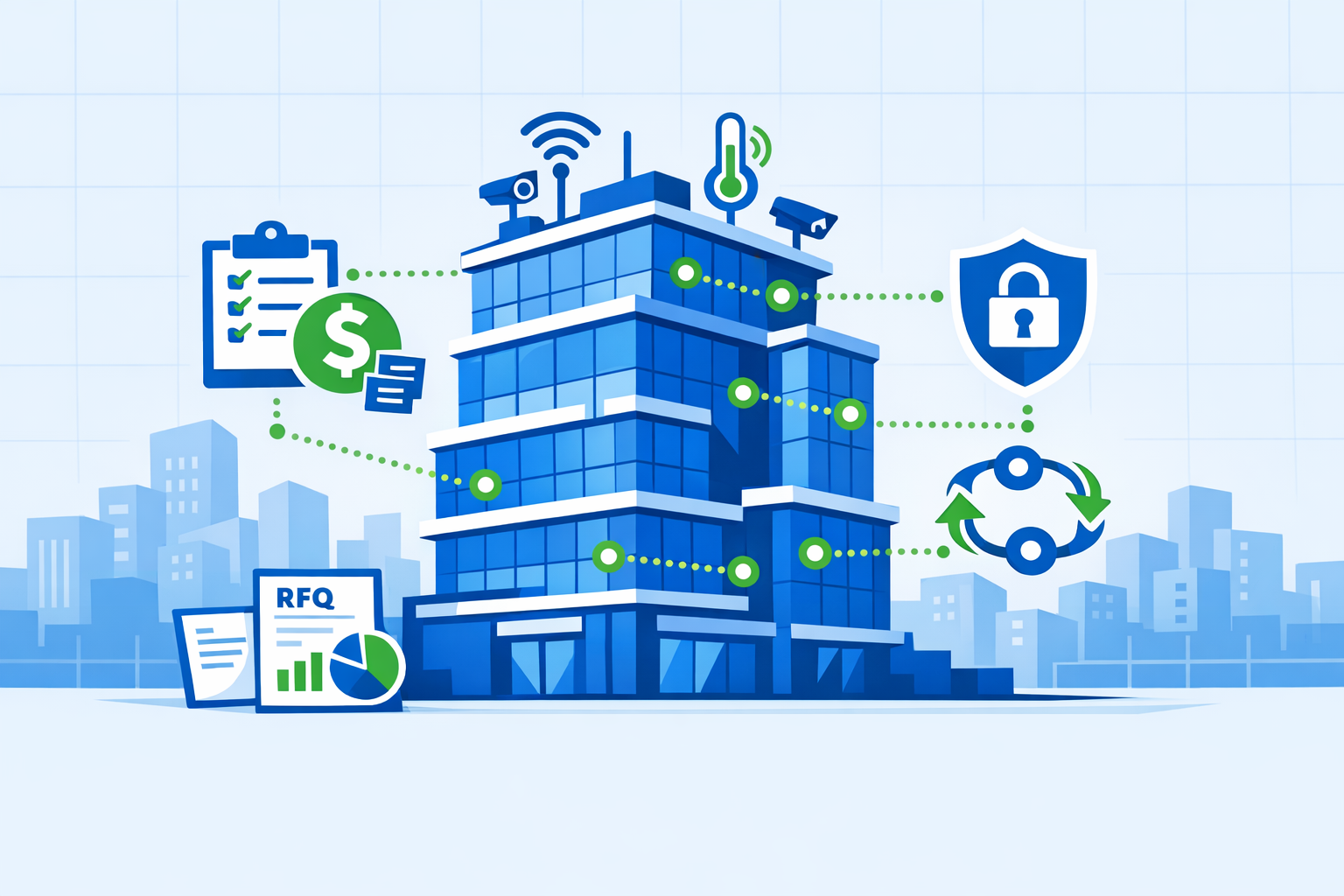
Smart-building technology adoption faces significant challenges in procurement, interoperability, and vendor integration, slowing momentum across sectors. The global Building Internet of Things (BIoT) market is projected to increase from $64.1 billion in 2024 to $101.0 billion by 2030, reflecting a compound annual growth rate (CAGR) of 7.87%. However, integration gaps and procurement obstacles are constraining near-term progress.[1]
Background
The smart-building sector is under pressure due to high expectations and recurring execution challenges. According to a 2024 Forrester-Johnson Controls study, only 13% of commercial real estate and retail leaders report fully integrated building systems. The lack of system integration is linked to reduced operating efficiency (62%), lower customer loyalty (59%), and increased regulatory penalties (57%).[2] Despite the promotion of open-system designs, modular architectures, and convergence strategies by vendors and industry analysts, integration shortcomings persist.[1]
Details
Procurement processes are increasingly complex amid fluctuating material costs, workforce shortages, and heightened cybersecurity concerns. Construction sector procurement teams are implementing predictive analytics and sustainability-linked requests for quotation (RFQs) to address supply chain risk and compliance requirements. Embedded carbon reporting and green procurement scorecards are becoming standard practice, underscoring procurement's role in sustainable smart-building implementation.[3]
Interoperability remains a critical challenge. By late 2026, experts expect it to be a key criterion in vendor selection as artificial intelligence (AI)-driven building management systems (BMS) and predictive analytics become baseline features.[4] Industry projections for 2026 suggest that convergence among AI agents, IoT sensors, and cloud platforms may address longstanding 25-35% efficiency gaps in commercial properties. Realizing these gains requires open, adaptable platforms and improved industry standards.[5]
Amid this growth, operators confront fragmented communication protocols and cybersecurity risks. Approximately 31% of facility managers identify security concerns, while legacy systems and proprietary architectures continue to impede scalable smart-building rollouts.[6]
Johnson Controls, considered an industry benchmark, recently reported a 7% year-over-year decline in building solutions orders, as order backlogs decreased due to postponed non-residential construction in North America and Europe. The company cited stable service revenues, though capital expenditures shifted toward software, contributing to a slowdown in momentum.[7]
Outlook
As the convergence of information technology and operational technology accelerates, procurement teams and integrators must prioritize open standards, cybersecurity, and interoperability. Sustainable procurement and adoption of AI-enabled platforms may help reduce adoption barriers. However, until systems integration improves and procurement ecosystems align, smart-building sector growth is expected to remain subdued.