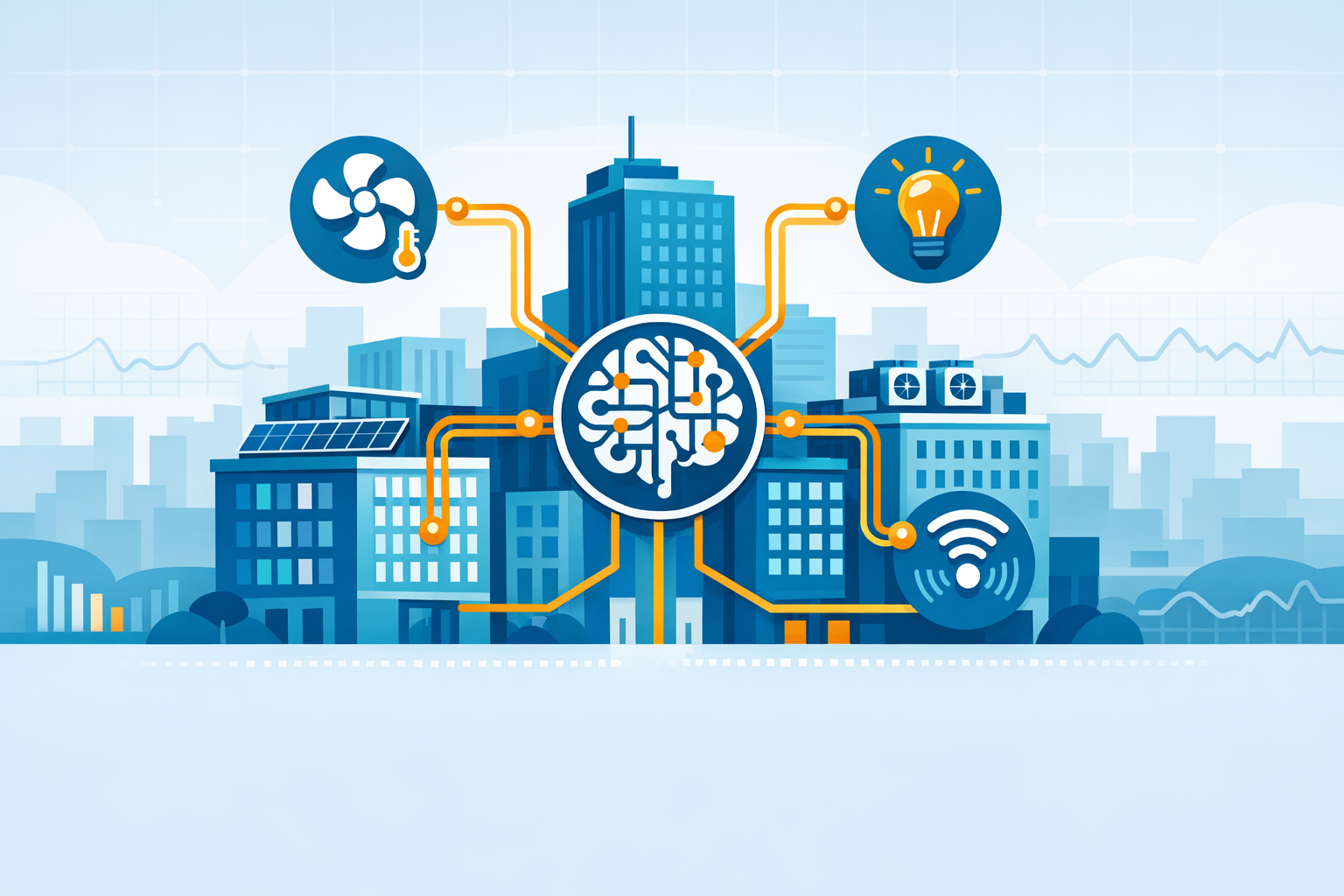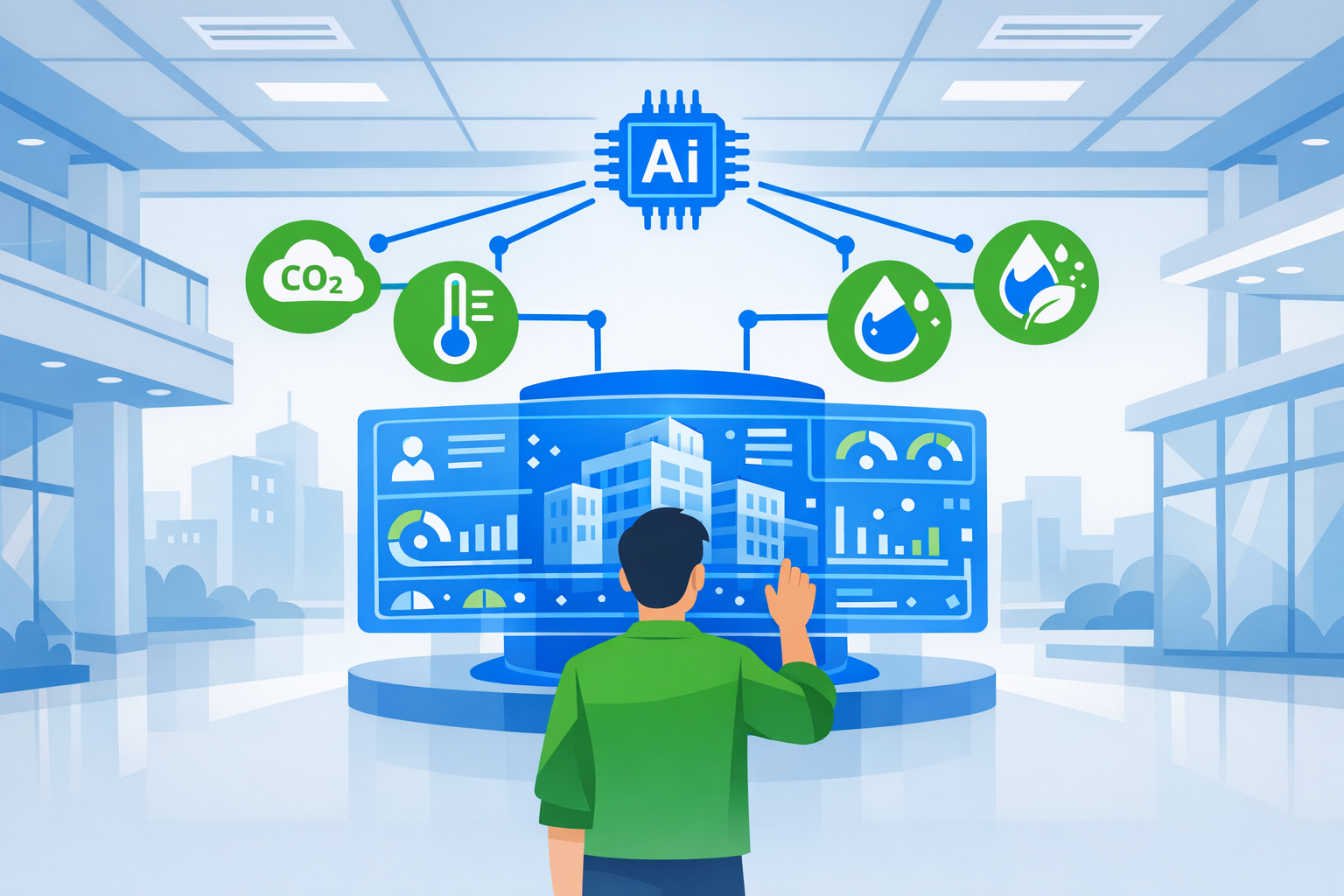
AI-powered systems that integrate occupancy sensing, predictive maintenance, automated alerts, and environmental monitoring are enhancing safety and worker well-being in smart buildings across corporate and mixed-use developments. Recent deployments report reduced incident rates, improved space utilization, and enhanced indoor air quality through integration with existing HVAC and security systems. Facility teams are noting early measurable ROI, including fewer safety incidents, significant energy savings, and optimized asset performance as these systems are scaled within digital building infrastructure.
Background
AI applications in smart buildings unify domains such as occupancy analytics, environmental quality, predictive maintenance, and safety detection into cohesive platforms. AI algorithms can forecast equipment failures, identify security threats, and adjust ventilation in real time based on air quality and occupancy data. Return on investment can vary: energy-use optimization may yield payback within 6-18 months, while predictive maintenance strategies generally reach ROI in 18-36 months. Implementation challenges persist, including privacy concerns, integration with legacy systems, data management, and cybersecurity. According to industry sources, reactive maintenance still contributes to as much as 30% of energy waste; AI-driven interventions are increasingly deployed to address this inefficiency.
Details
Leading implementations feature multi-modal IoT nodes equipped with up to 11 sensors-including CO₂, total volatile organic compounds (TVOCs), temperature, humidity, RGB cameras, and geolocation modules-running AI at the edge. These nodes detect occupancy and environmental anomalies, enabling up to 42% energy savings by minimizing raw data streaming. Some platforms operate autonomously for up to 143 hours on compact batteries.
Advanced AI solutions continuously monitor assets such as HVAC units, elevators, electrical systems, and plumbing, issuing predictive alerts weeks before potential failures. These systems cut unplanned downtime by 35-50%, lower maintenance costs by 25-30%, and extend asset lifespans by up to 40%. Select deployments have reported up to a 75% reduction in equipment-related safety incidents.
In a documented case, AI-driven control of HVAC systems achieved 15-25% energy reductions and reduced emissions by up to 40%. Occupancy-based thermal zone control and integrated system management resulted in over 30% savings in both energy and carbon emissions. Environmental sensors monitoring indoor air quality-such as CO₂, particulate matter, and VOCs-are increasingly connected via open protocols (e.g., MQTT, Modbus) to building management systems. This integration supports automated ventilation adjustments, reduces energy waste and technical faults, and helps fulfill criteria for certifications like LEED and WELL.
Outlook
Facility managers are expected to initiate high-impact pilot projects, such as HVAC predictive maintenance or air quality monitoring, before expanding AI integration across entire portfolios. Focus will remain on interoperability, robust cybersecurity strategies, and comprehensive tenant data governance to drive broader adoption. As early ROI is demonstrated, AI-driven building systems are anticipated to see accelerated uptake across commercial and institutional sectors.