Only an estimated 20% of eligible distributed energy resource (DER) devices in the U.S. are currently enrolled in Virtual Power Plant (VPP) programs - a gap that points to a fundamental problem: the software infrastructure needed to coordinate, incentivize, and financially settle distributed assets at scale has not kept pace with the hardware. San Francisco-based Grid Rails is targeting that gap directly with the launch of its enterprise-grade VPP platform, announced today.
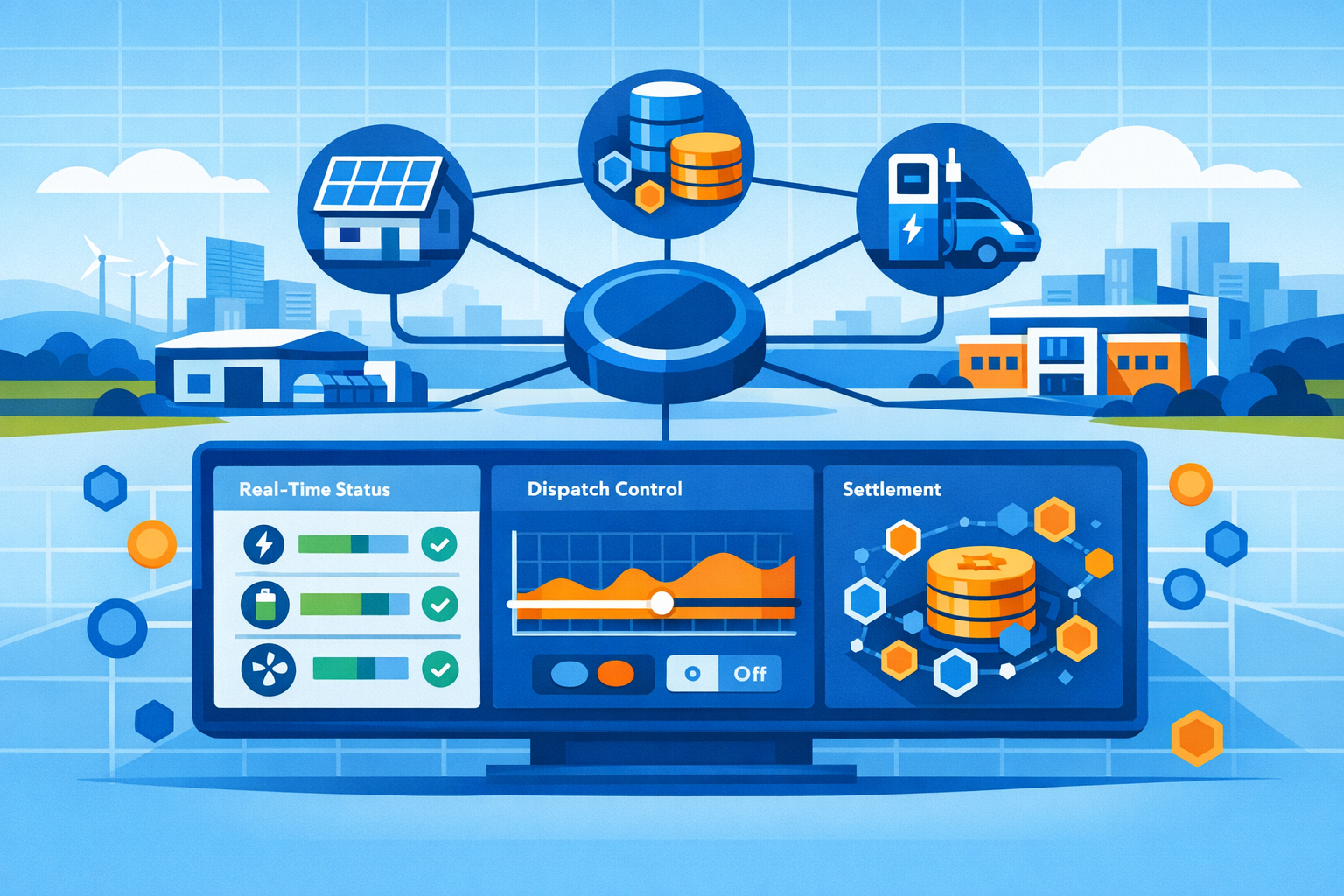
The platform gives utilities, energy suppliers, and DER operators a unified system for managing distributed assets - from rooftop solar and battery storage to HVAC systems and electric vehicle (EV) chargers - with real-time visibility, automated dispatch, and native financial settlement built in.
What the Grid Rails Platform Does
Grid Rails' enterprise VPP platform is a software solution designed to help utilities, energy suppliers, and DER operators monitor, control, and monetize energy assets at scale.
At its core, the platform addresses three interlinked challenges that have historically limited VPP adoption in commercial environments:
- Awareness: Real-time visibility into device-level behavior across a distributed portfolio
- Control: Programmable dispatch logic to optimize load, storage, and generation in response to market or grid signals
- Settlement: Automated financial coordination that eliminates delays inherent in conventional billing cycles
Together, these capabilities bring greater efficiency, participation, and responsiveness to modern grid operations.
Device Coverage and Integration Architecture
The Grid Rails platform natively supports a wide range of off-the-shelf energy devices, including electric vehicles, home chargers, HVAC systems, solar inverters, home batteries, and smart meter data. Through partner APIs, the platform also accepts custom inputs, enabling flexible deployment across diverse energy environments.
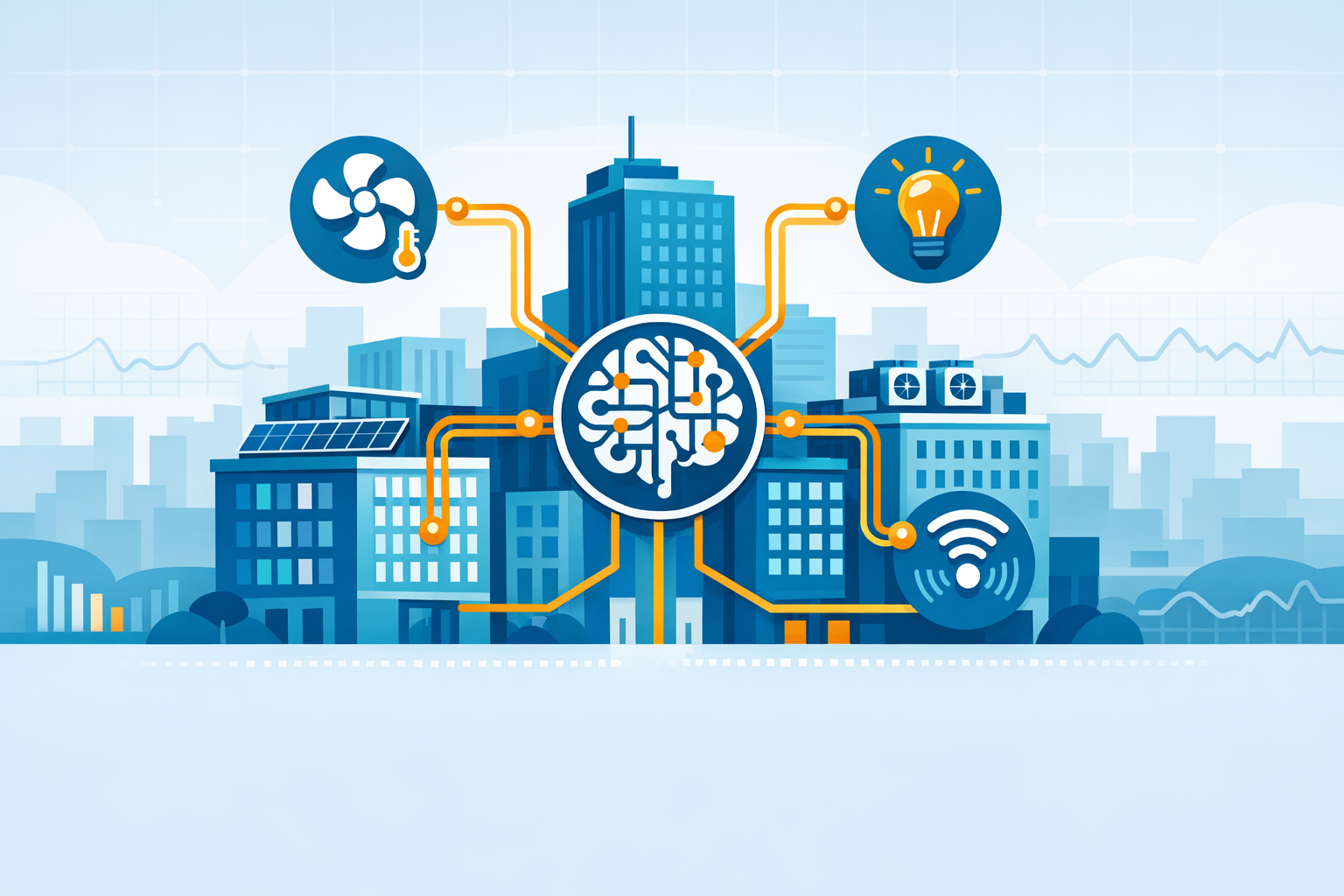
For commercial and industrial operators managing portfolios that span campuses, office complexes, or industrial facilities, this breadth of device compatibility is operationally significant. Integration with existing building automation systems (BAS) and energy management software (EMS) will be critical to successful deployment - a point covered in more detail in Electronics Insider's analysis of AI-driven EMS deployments across public buildings.
The Settlement Differentiator: Web3 Architecture
One of Grid Rails' more distinctive technical claims is its approach to settlement. By leveraging Web3 architecture and tokenized metering data, Grid Rails positions itself as the only platform delivering awareness, control, and settlement as a fully integrated, native solution.
The platform introduces real-time financial coordination through automated incentives and payments. Operators can deploy "micro-incentives" to influence behavior, manage thresholds at the device level, and streamline program administration through integrated CRM tools and customer-facing mobile experiences.
This approach enables energy providers to shift from static, batch-settlement models toward dynamic, continuous financial coordination - a change that could significantly reduce the administrative overhead of managing large, multi-site DER portfolios.
The Market Context: Why Now
The platform enters a market expanding rapidly but still underserved by enterprise-grade tooling. North American VPP capacity reached 37.5 GW in 2025, yet enrollment of eligible devices remains low and operational complexity remains high.
VPPs are at an inflection point driven by market and technical factors: increased DER adoption, improvements in device software and VPP platforms, and advancements in grid integration technology. VPPs stand to be a key near-term solution to existing energy challenges, including rising costs, interconnection backlogs, peak demand increases, and distribution system congestion.
The demand-side pressures are equally clear. By 2030, the United States will need to add enough new resources to serve approximately 200 GW of peak demand. Historically, grid operators have met rising demand by increasing centralized supply resources, but this approach faces constraints if transmission interconnections continue to experience multi-year wait times. VPPs present a more efficient alternative, managing rising demand while making electricity cleaner and more affordable.
The scale of achievable savings is well documented. Analysis suggests that a VPP composed of residential thermostats, water heaters, EV chargers, and behind-the-meter batteries could provide peaking capacity at roughly half the net cost to a utility compared with alternatives such as utility-scale batteries and natural gas peaker plants.
Platform Capabilities Overview
| Capability | Function | Primary Stakeholder |
|---|---|---|
| Real-Time Visibility | Unified device-level monitoring across enrolled DERs | Facility Managers, Energy Managers |
| Automated Dispatch | Optimizes load, storage, and generation against grid signals | Grid Operators, System Integrators |
| Market Participation | Aggregated capacity bid into wholesale markets and ancillary services | Utilities, Retail Energy Providers |
| Micro-Incentives & CRM | Device-level incentive deployment with customer-facing tools | Energy Providers, Aggregators |
| Real-Time Settlement | Web3 tokenized metering for instant financial coordination | DER Operators, Utilities |
| API Ecosystem | Native device support; custom inputs via partner APIs | Hardware Manufacturers, Integrators |
Cybersecurity and Data Governance: The Deployment Risk
Centralizing control of distributed energy assets introduces a significantly expanded cyber attack surface - a concern that cannot be treated as secondary to operational performance.
The modern smart grid relies on two-way communication between millions of heterogeneous components: advanced metering infrastructure (AMI), smart appliances, DERs, EV charging stations, and renewable generation units. Each exchanges real-time information with control centers through fog, edge, and cloud computing infrastructures. This massive expansion of connectivity enables services such as demand response, decentralized energy trading, and predictive maintenance - but it equally creates new vectors for adversarial interference.
Key Deployment Consideration: VPP operators should ensure clear architectural separation between grid operations systems and building control systems, implement role-based access controls at the device level, and apply supply chain risk management practices to hardware procurement. Regulatory frameworks such as IEC 62443 and NIST standards provide applicable guidance for multi-site DER deployments.
Current regulations like NIS2 primarily focus on traditional infrastructure, leaving a gap in oversight for decentralized systems like VPPs that increasingly influence grid stability. This regulatory lag means operators cannot rely on compliance requirements alone to define adequate security posture - particularly for portfolios that include third-party aggregators and market participants.
Data governance is a parallel concern. Where VPP deployments involve tenant-occupied buildings, consent frameworks, data ownership demarcations, and regulatory reporting obligations require careful architectural design upfront.
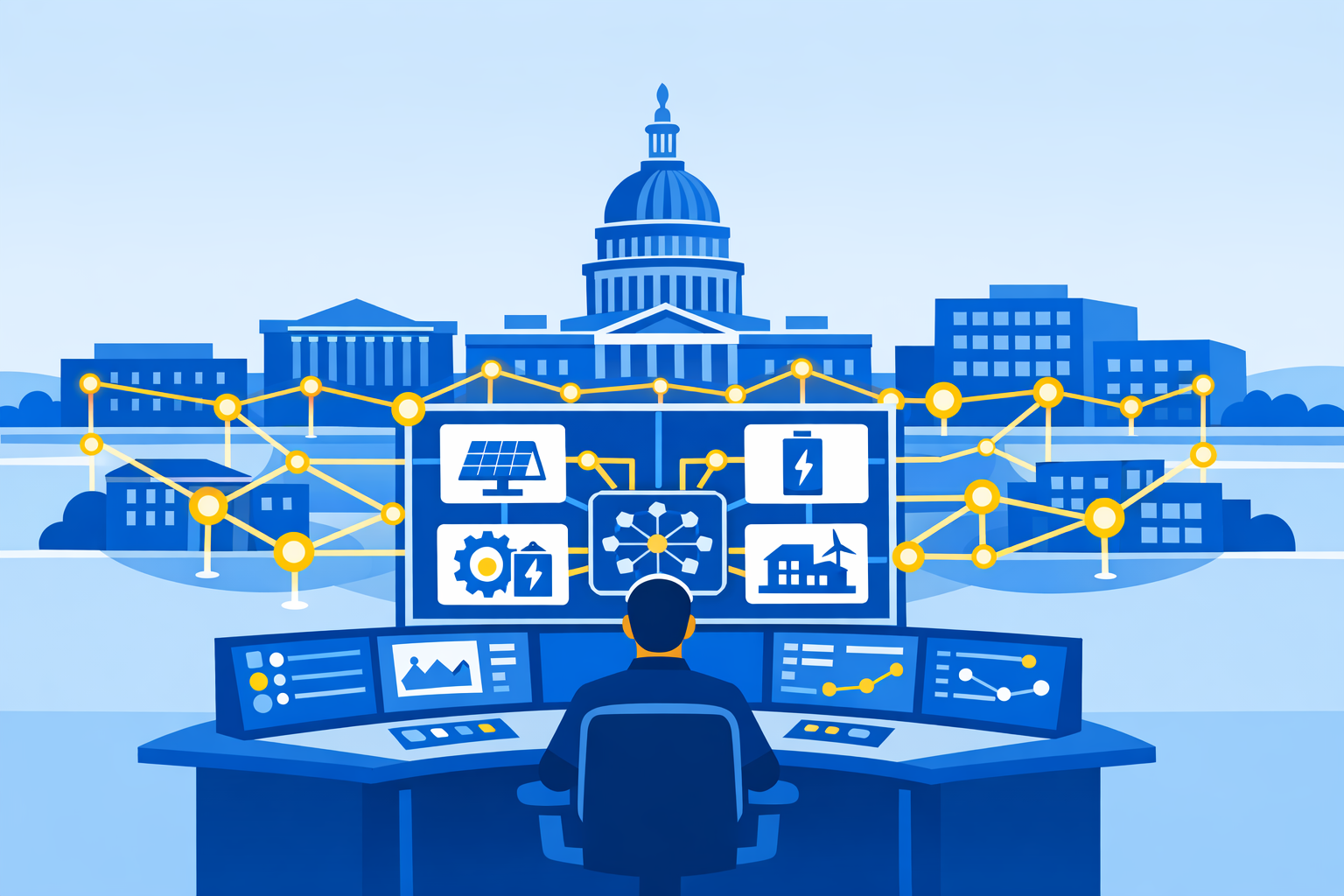
For a closer look at how federal facilities are approaching cybersecurity governance in grid-interactive deployments, see Electronics Insider's coverage of the expanded federal grid-interactive buildings pilot.
Implications for Facility Managers and System Integrators
Grid Rails is purpose-built for commercial-scale deployment. The platform supports utilities and grid operators, retail energy providers, cooperatives, municipal energy companies, DER hardware manufacturers, and third-party aggregators - providing the infrastructure needed to coordinate and manage energy assets at scale.
For facility managers and MEP consultants evaluating VPP participation, the practical implementation sequence matters as much as the platform's feature set. Successful deployment hinges on:
- BAS and EMS integration: The VPP platform must communicate reliably with existing building automation and energy management systems. Standardized protocols (BACnet, Modbus, IEEE 2030.5) reduce integration friction.
- Tenant and stakeholder consent: In multi-tenant facilities, clear data governance and participation consent frameworks must be in place before enrollment.
- Metering accuracy: Accurate, tamper-resistant metering is the foundation of both dispatch optimization and settlement integrity - particularly important in a tokenized settlement model.
- Performance and interconnection agreements: Utilities and grid operators will require documented performance baselines, interconnection agreements, and defined settlement models before a portfolio can participate in wholesale markets.
The VPP concept - where hundreds or thousands of distributed assets are aggregated and managed as one - has moved beyond the early-adopter stage into the mainstream. VPP operators in the U.S. are now winning major utility contracts, using AI and predictive analytics to dispatch energy at optimal times and sell it back to the grid. This supports decarbonization targets while creating revenue for participants.
What to Watch
Expect pilot programs to emerge across universities, hospitals, and corporate campuses in the near term - environments where on-site generation, battery storage, and flexible loads already exist and where energy cost reduction and resilience are board-level priorities.
With Grid Rails' launch, energy providers gain the ability to move beyond static, delayed systems toward a dynamic, real-time model where energy and value flow together. By combining operational intelligence with financial incentives, the platform aims to unlock new revenue streams, improve grid resilience, and accelerate participation in next-generation energy markets.
Regulatory frameworks will be a key variable. In jurisdictions actively pursuing grid-interactive buildings and demand-side market participation - including California, New York, and several European markets - policy design around data privacy, consent, and market access rules will determine how quickly portfolios can monetize VPP capabilities. Operators and procurement teams should monitor developments at both the utility and independent system operator (ISO/RTO) level.
FAQ
What is a Virtual Power Plant (VPP)? A VPP is a software-based system that aggregates distributed energy resources - including solar generation, battery storage, demand response assets, and on-site generators - and coordinates them to function as a single dispatchable power source. This allows assets individually too small to participate in energy markets to do so collectively.
How does Grid Rails' platform differ from a conventional energy management system? A conventional EMS focuses on optimizing energy use within a single building or site. Grid Rails' VPP platform is designed for portfolio-scale operation across multiple facilities, with the added capability to participate in wholesale markets and execute real-time financial settlement through Web3-based tokenized metering - functions that go well beyond standard EMS scope.
What cybersecurity standards apply to VPP deployments? IEC 62443 (industrial automation and control systems security) and NIST Cybersecurity Framework guidelines provide applicable reference points. Operators should also consider emerging obligations under frameworks like NIS2 in Europe and work with vendors to ensure clear architectural separation between grid-facing and building-facing systems.
Which facility types are best suited to early VPP adoption? Universities, hospitals, corporate campuses, and large industrial facilities with existing on-site generation, battery storage, and flexible HVAC loads offer the strongest near-term business cases. These environments combine the asset density needed for meaningful aggregation with the operational sophistication to manage integration complexity.
What is the role of demand response in a VPP? Demand response - the ability to reduce or shift electricity consumption on request - is one of the core services a VPP can deliver to grid operators or utilities. In a platform like Grid Rails, demand response is automated via device-level dispatch logic, eliminating the manual intervention that characterized earlier demand response programs.