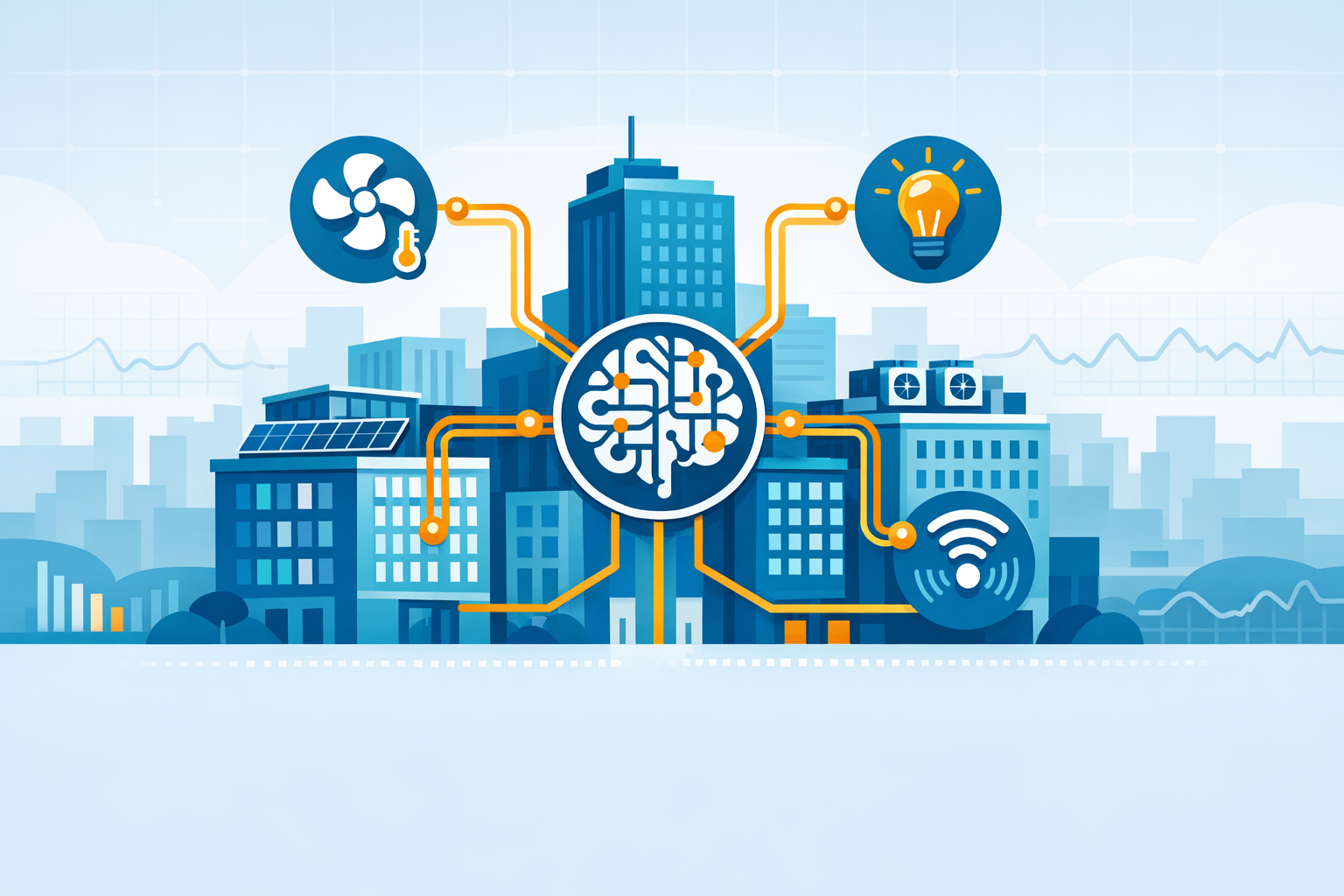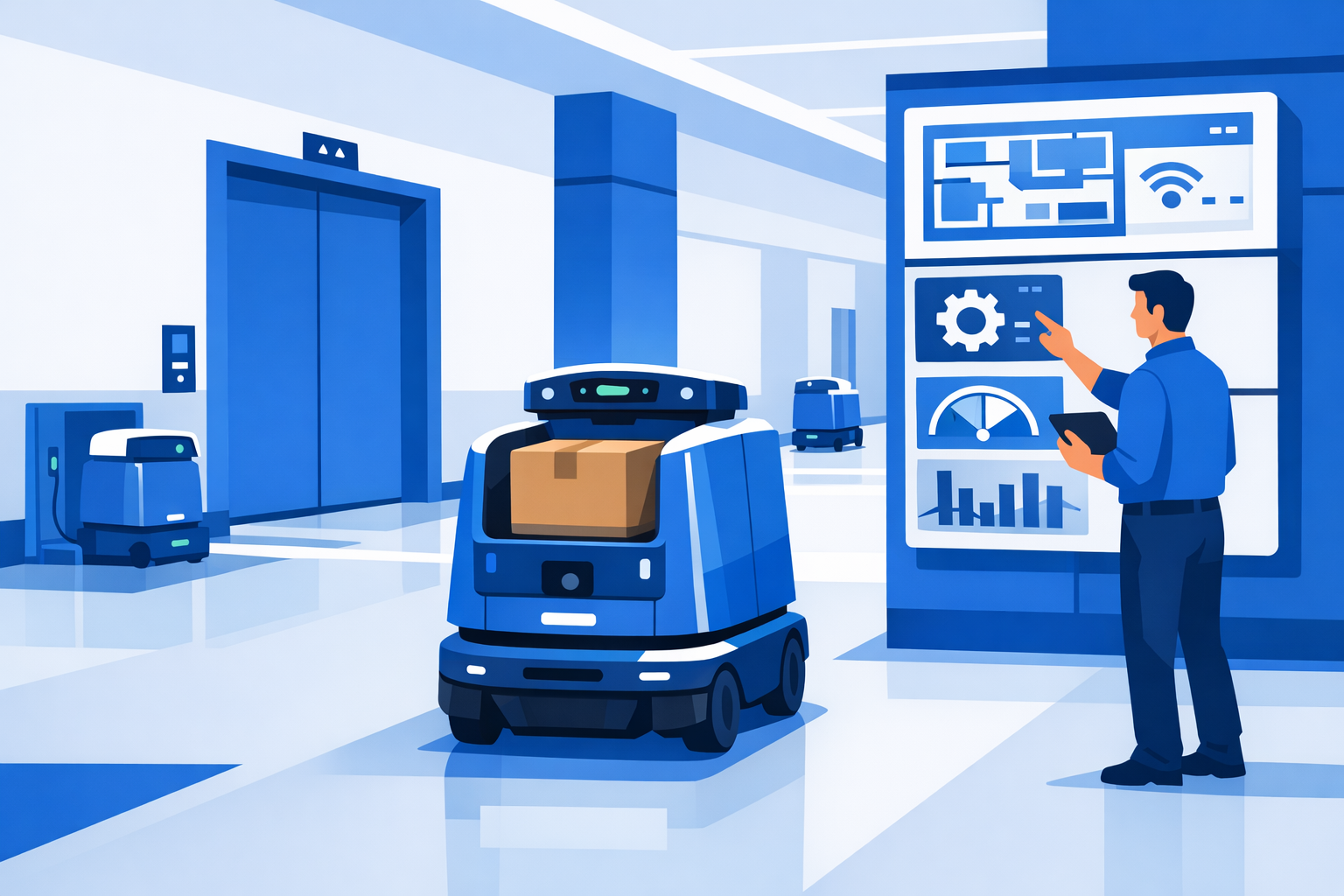
Facilities in Germany and internationally are piloting autonomous indoor delivery robots, driving significant changes in operations, spatial planning, and system integration. Since early 2026, corporate campuses, healthcare facilities, and retail environments have begun integrating robots into workflows, requiring robust interfaces with building management systems (BMS), access control, and elevator scheduling platforms.
Background
Autonomous indoor delivery robots are gaining traction as operational tools in smart buildings, especially in contexts of labor shortages or increased efficiency demands. However, market growth is challenged by high upfront costs and the complexity of system integration. A persistent barrier is interoperability, as underdeveloped standards and API frameworks hinder seamless integration with existing infrastructure. These integration challenges are heightened by new European Union requirements for building automation and control systems (BACS) in non-residential buildings. Notably, the Energy Performance of Buildings Directive (EPBD) mandates HVAC-connected control and enhanced data monitoring.
Details
Recent pilots in corporate and healthcare facilities utilize platforms built on Robot Operating System 2 (ROS 2) to enable autonomous navigation, simultaneous localization and mapping (SLAM), and real-time data exchange with BMS and computerized maintenance management systems (CMMS). These integrations support automated alerts for HVAC anomalies and equipment status. The service robotics market was valued at $47.1 billion in 2024, with a 15.9% compound annual growth rate (CAGR) projected. Building automation systems were valued at $82-97 billion in 2024, with HVAC controls comprising 34% of the market, highlighting substantial integration opportunities. Robotics vendors note that incorporating robots during the building design phase rather than retrofitting later reduces rework in areas such as elevators, access control, and HVAC zones. This early integration can reportedly cut delivery congestion by up to 63% and accelerate readiness for robot deployment.
Despite these advances, BMS interoperability standards remain limited. Vendors emphasize the need for standardized APIs to facilitate elevator scheduling, security authorization, and cross-vendor fleet coordination; without these, robots often function in isolation from operational workflows. Trials have revealed implementation challenges related to charging station locations, maintenance scheduling, software updates, and spatial planning for robot movement and docking. Initial ROI models indicate that reallocating delivery tasks to robots can reduce material movement times and free floor space for alternative uses. However, capital expenditures and compliance costs-estimated at €1,200-€1,800 per robot unit-must be included in total cost of ownership assessments.
Outlook
Facility operators are conducting interoperability and cybersecurity assessments as they consider broader robot adoption. Both standards bodies and regulators are expected to increase focus on APIs, safety certifications, and governance frameworks to guide robotic integration. Industry observers anticipate that future enhancements to EU BACS mandates will further promote unified robotic integration within smart building systems.