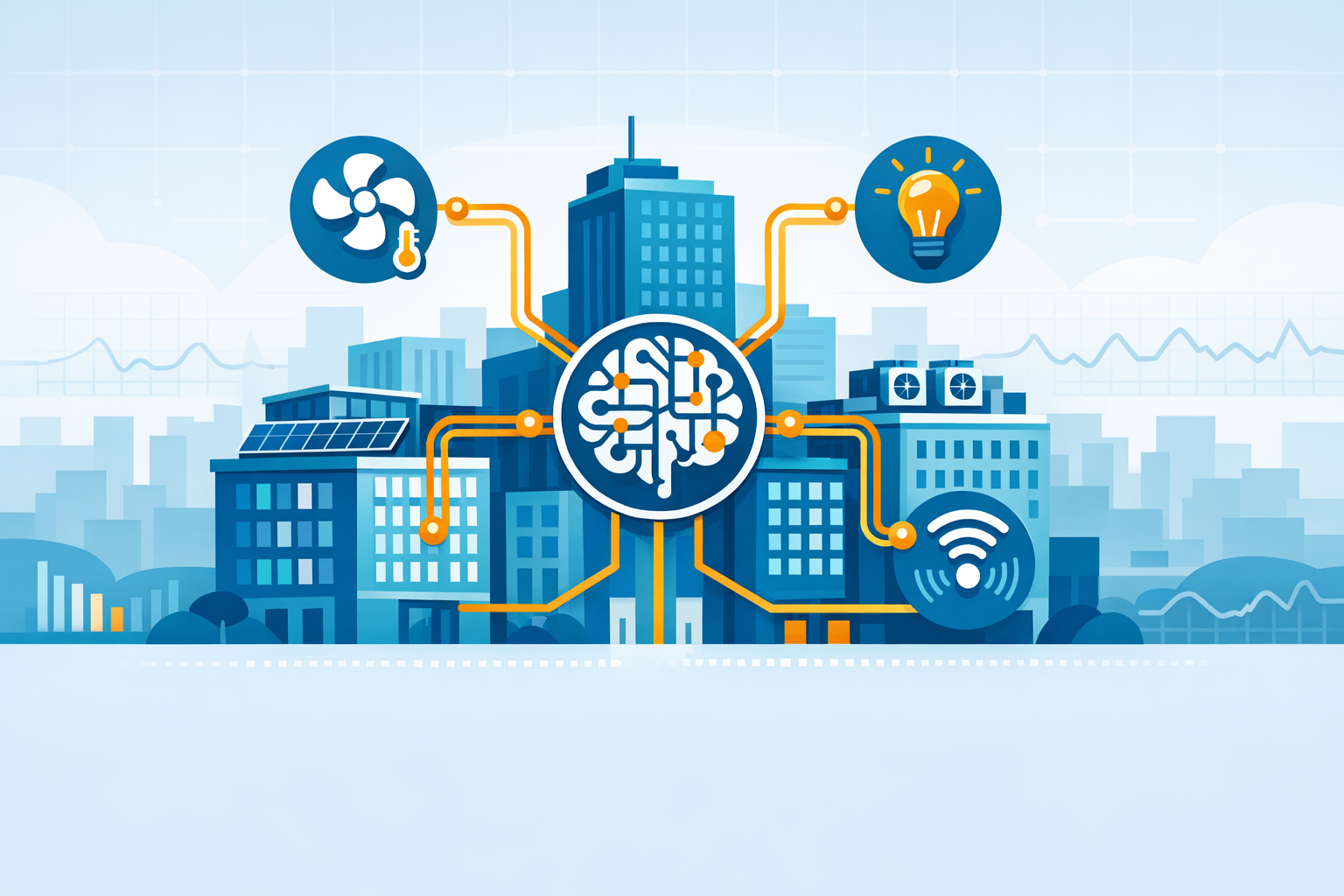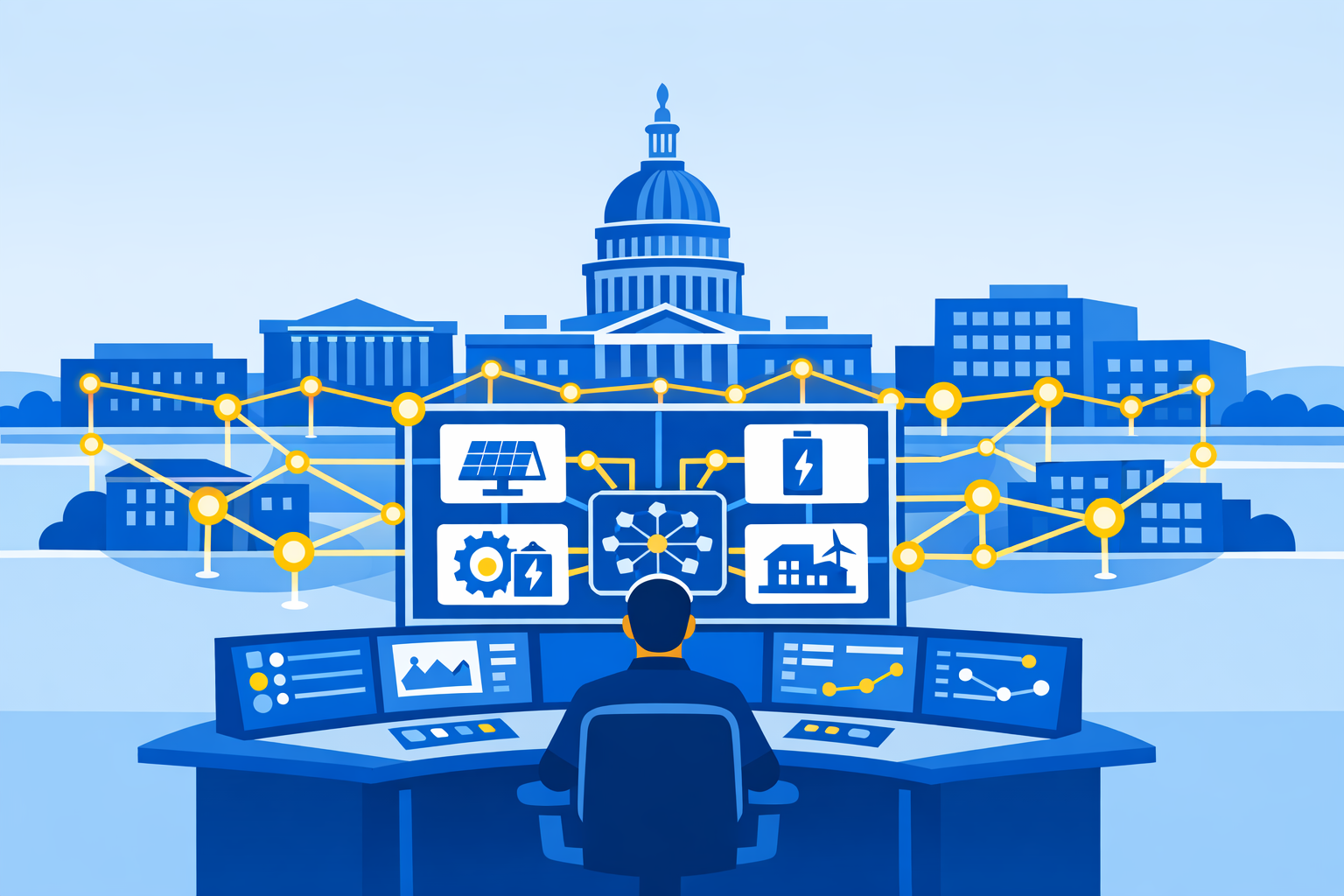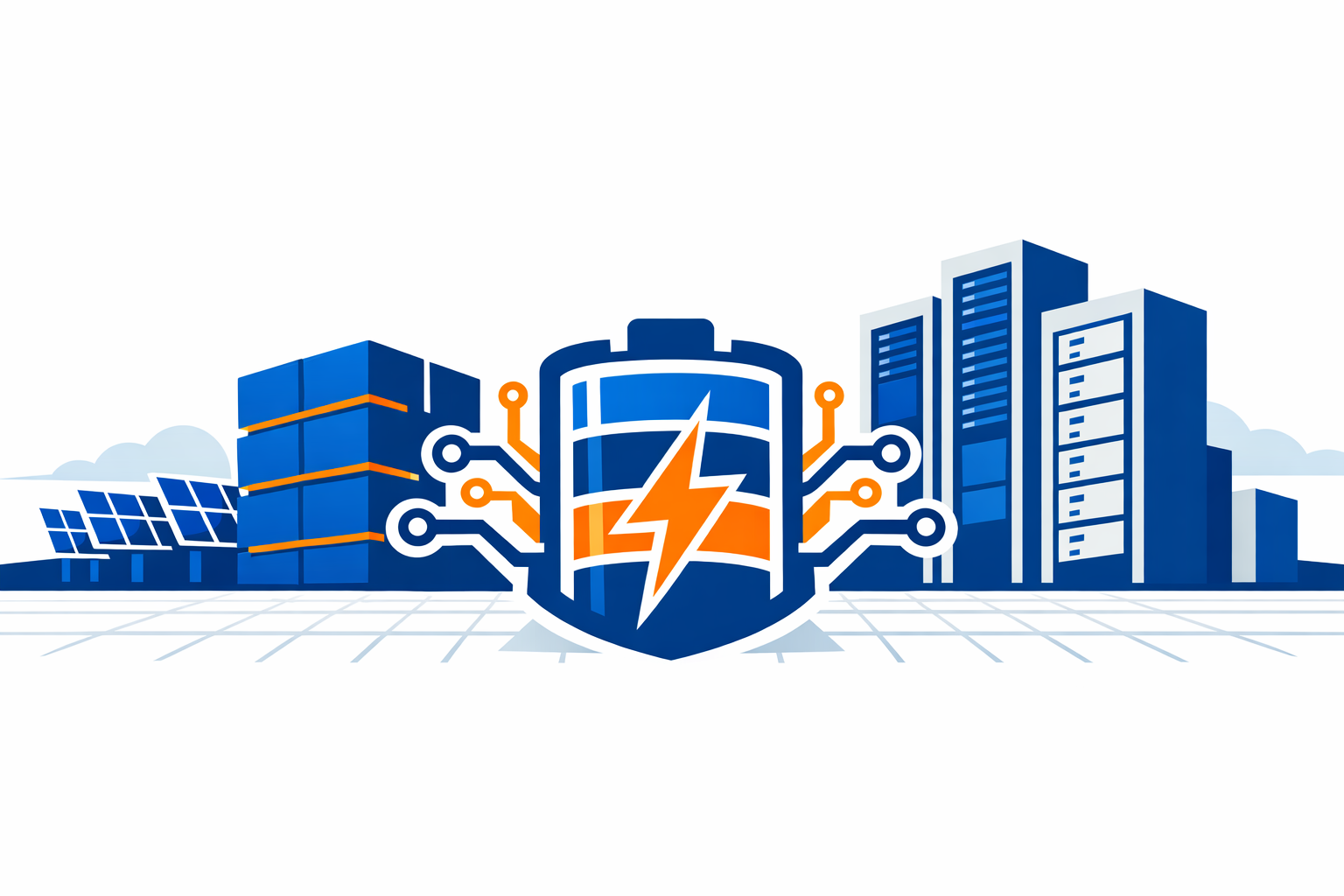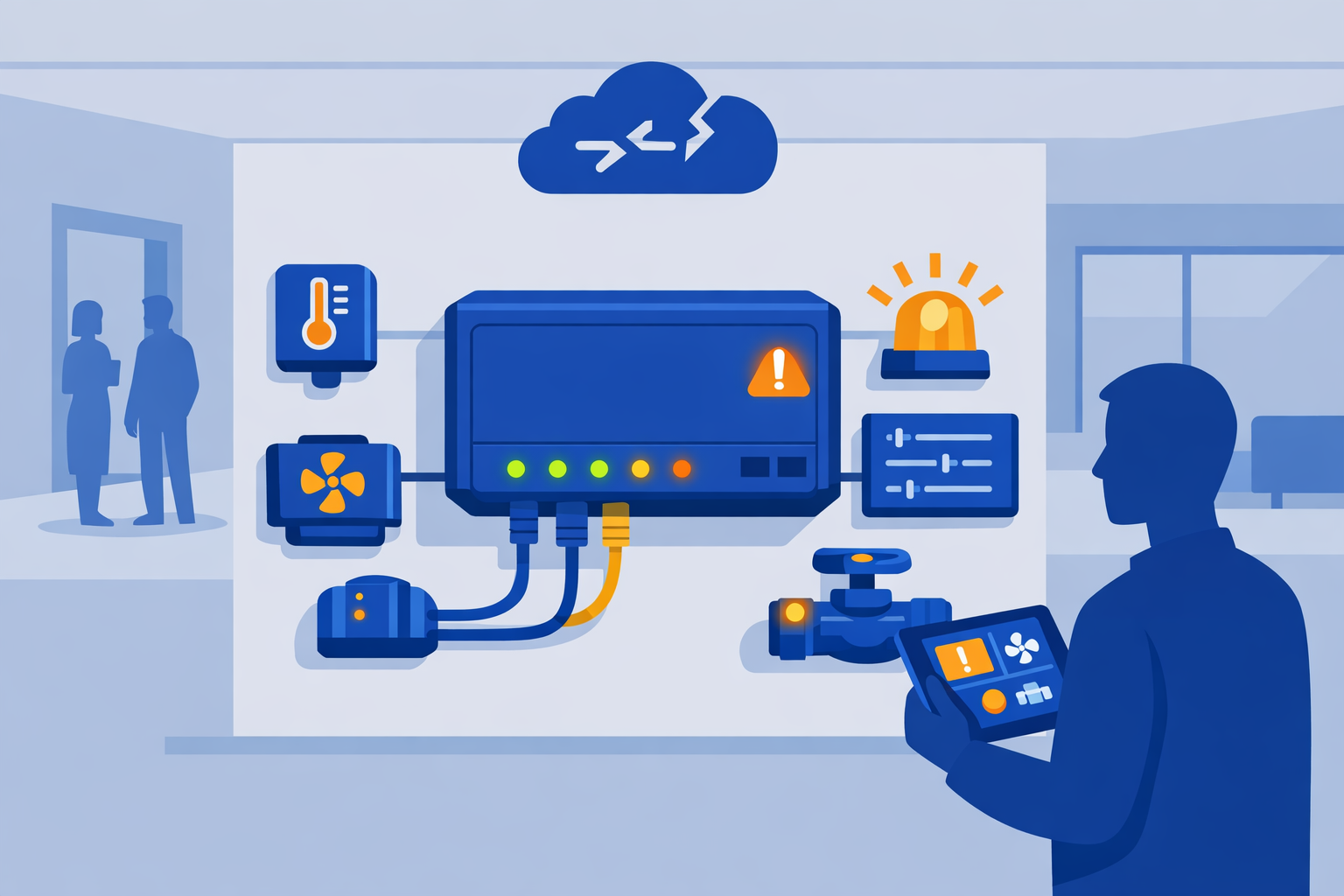
Edge-based building automation platforms preserved critical safety and operational functions during external network outages, enabling emergency systems to remain active in hospitals, data centers, and government buildings.
In these environments, edge-located controllers executed localized intelligence to manage alarms, HVAC, lighting, and evacuation systems independently when connectivity was lost. Emergency response functions-including threshold-triggered alerts and backup lighting activation-operated without dependence on cloud or central servers. Zoned fallback modes and redundant communication protocols ensured uninterrupted situational awareness.
Background
Smart buildings increasingly depend on centrally hosted analytics and control, heightening the risk of vulnerabilities during network interruptions. In critical sectors such as hospitals and data centers, where continuous operation is vital to health and safety, automation systems must remain effective even when external connectivity fails. Edge computing and embedded artificial intelligence (AI) are key to enabling resilient, fail-safe operations in these scenarios.
Details
An Eclipse Foundation survey found that 42% of Internet of Things (IoT) and edge developers identified network reliability as a primary challenge. Edge gateways addressed this by enabling sensor monitoring, local alarm triggering, and building control actions-such as valve closures or HVAC adjustments-to persist without access to cloud-based Computerized Maintenance Management Systems (CMMS), with unsent data queued for later synchronization once connectivity was restored[1].
In building security, local processing via edge computing reduced latency and limited exposure of sensitive data, minimizing the risk of interception and man-in-the-middle attacks by confining critical operations internally[2].
Micro edge data centers-compact, self-contained onsite modules-were featured in Chief Engineer magazine. These enclosures provided compute resources, uninterruptable power supply (UPS), cooling, and building management system (BMS) integration. They maintained emergency triggers and monitoring functions, including security video analytics, even during widespread network outages[3].
Unified emergency architectures in manufacturing showed that combining dual-band Wi-Fi with LoRaWAN or Zigbee mesh overlays ensured communication resiliency when one channel failed. Devices used fallback modes to buffer data locally for later syncing, and embedded logic could autonomously trigger local alarms without Supervisory Control and Data Acquisition (SCADA) server confirmation[4].
Experts cite standards such as IEC 61850 and IEEE 1613 as crucial for interoperability, reliability, and durability in operational technology (OT) and edge systems. These standards specify requirements for communication, environmental tolerance, and system isolation to maintain safe and compliant operations during emergencies[5].
Outlook
As smart infrastructure design increasingly emphasizes resilience, facility managers are expected to adopt localized compute strategies and standardized edge protocols for robust disaster preparedness. These approaches reduce dependence on external networks and help ensure operational continuity, even when cloud or IT connectivity is disrupted.