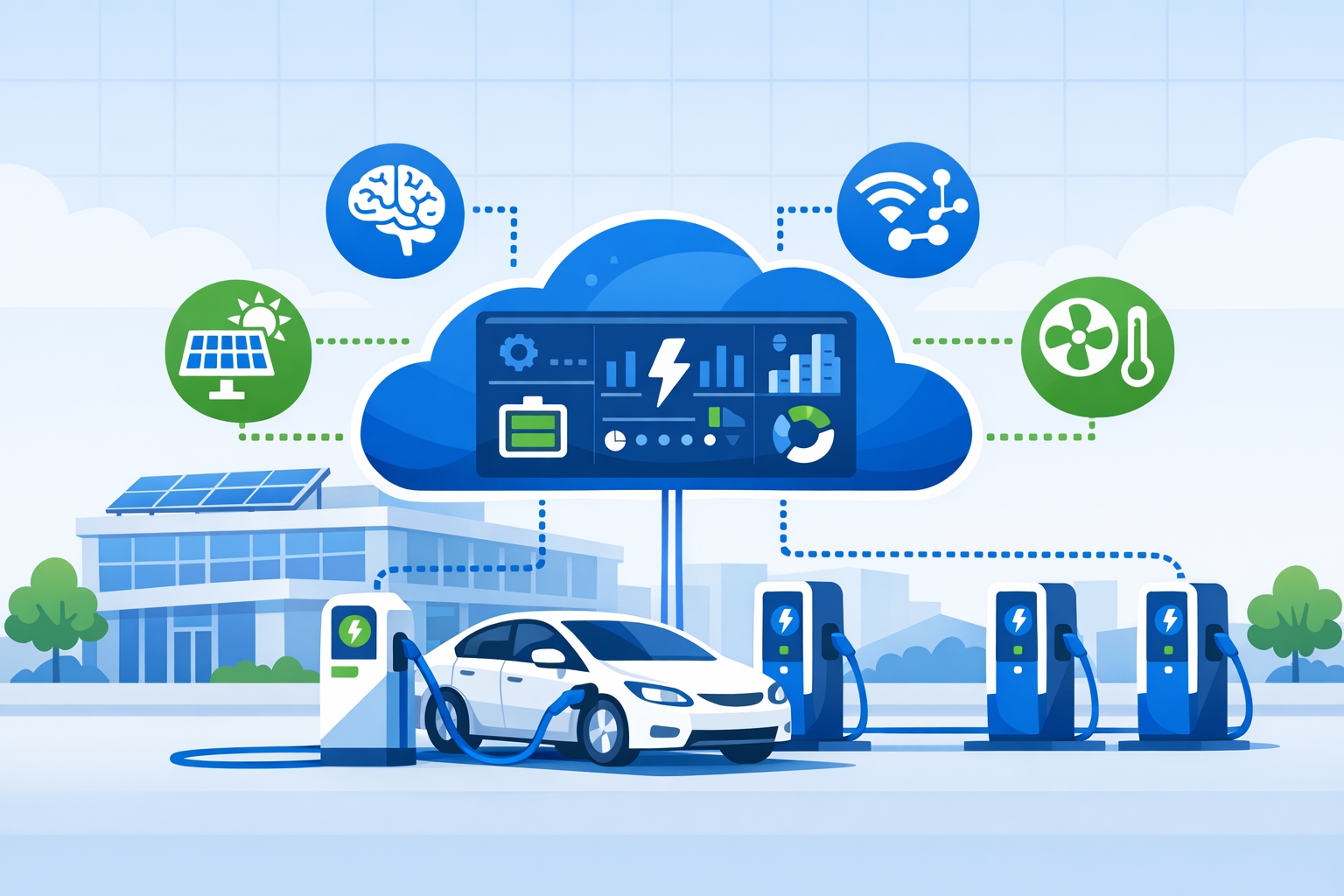
Commercial property operators are increasingly deploying advanced energy management systems (EMS) that integrate Internet of Things (IoT) sensors, artificial intelligence (AI), and edge computing to optimize electric vehicle (EV) charging loads, onsite generation, and heating, ventilation, and air conditioning (HVAC) systems. These platforms address rising EV charging demand, help reduce peak electricity charges, and enable participation in utility demand-response and grid incentive programs.
Background
Electric vehicle charging has become one of the largest electrical loads in commercial buildings, often surpassing HVAC demand. This trend increases the need for supervisory EMS to manage coincident peaks and rising utility demand charges. Networked chargers and EMS platforms now offer real-time control and integration with distributed energy resources (DERs) like rooftop solar and battery storage, supporting dynamic load coordination across building systems. Utilities and developers are expanding rebates, demand charge reductions, and make-ready funding for projects that incorporate load management technology.
Details
A demand-response pilot in Amsterdam showed that commercial buildings can earn €8-15 per kilowatt per month in availability payments and €150-350 per megawatt-hour for load reduction events. EV charging flexibility represented 25% of total flexible capacity in the pilot. Upgrading a building energy management system (BEMS) for demand response cost €15,000-40,000, with payback periods of 2.5-4 years based on flexibility revenues alone. EMS capable of coordinating EV charging with onsite DERs and HVAC can significantly lower operational costs during peak periods.
Utility programs are also incentivizing integrated EMS installations. National Grid's Load Management Technologies Incentive Program may fund up to 100% of costs for load management hardware and software at EV charging sites, while energy storage systems may qualify for up to 60% funding. The EV Phase-In Rate will introduce reduced demand charges and time-of-use pricing for commercial EV charging starting October 1, 2025. These initiatives are designed to flatten load profiles and reduce grid infrastructure strain.
Technology vendors are embedding IoT sensors, AI analytics, and edge computing into EMS platforms, facilitating rapid, localized decision-making. AI-based systems enable buildings to optimize charging schedules, integrate solar and storage assets, and participate in energy flexibility markets. The global BEMS market was valued at US$7.1 billion in 2024 and is projected to reach $20.4 billion by 2033, driven by demand for grid-interactive smart infrastructure.
Outlook
As EV charging expands across commercial real estate, EMS-enabled systems are expected to become essential for managing electrical loads, aligning with grid requirements, and accessing utility incentives. Evolving regulations and rising energy prices are expected to further drive adoption of AI-enabled EMS platforms coordinating EV charging, onsite generation, and building services.