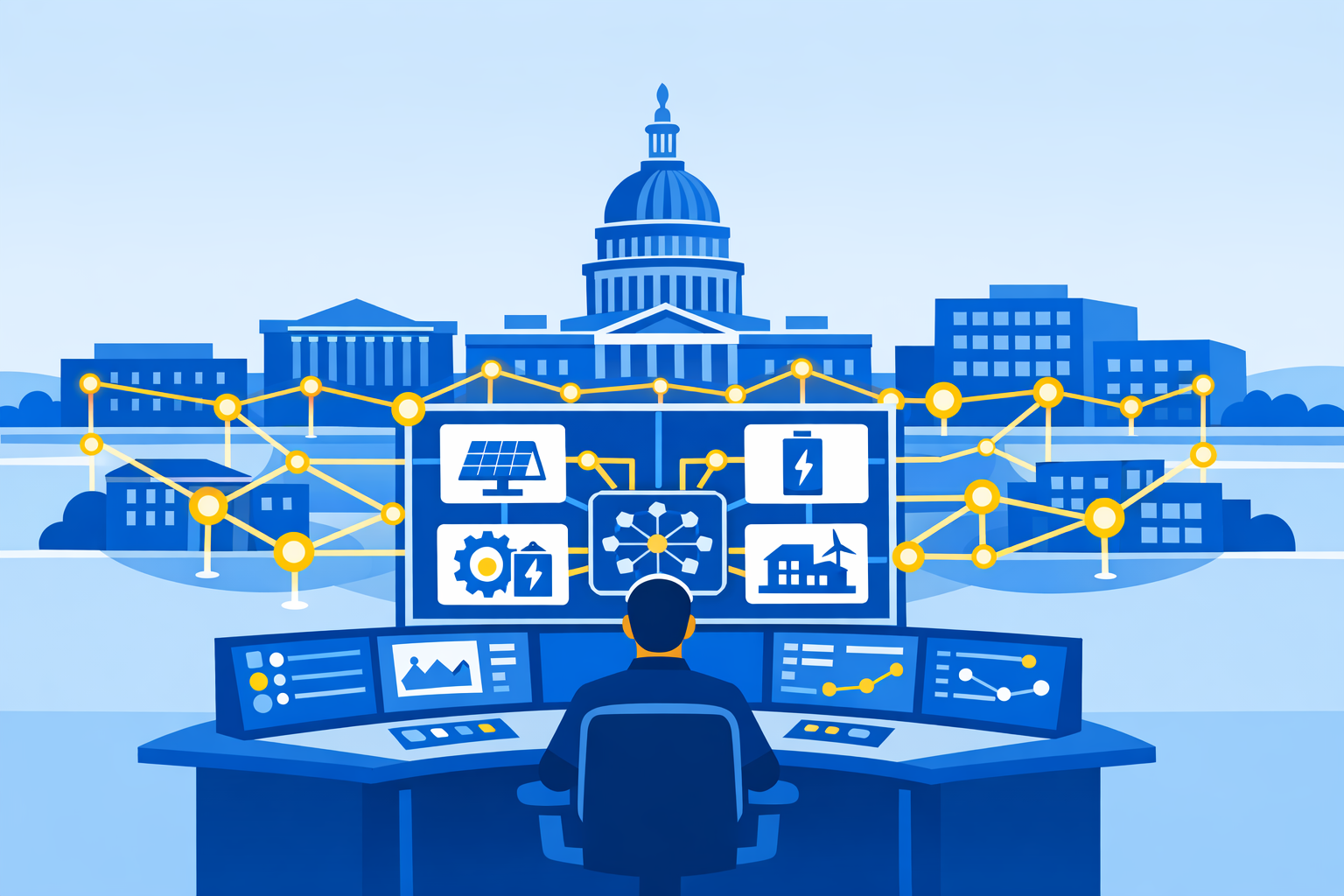
The U.S. Department of Energy's Federal Energy Management Program (FEMP) is expanding its Federal Smart Buildings Accelerator (FSBA) to deploy AI-driven energy optimization platforms across a broader set of federal agencies. The expansion adds standardized data frameworks, interoperability requirements for legacy building systems, and formal governance structures for artificial intelligence, cybersecurity, and data privacy - marking a significant step in the federal government's effort to convert its building portfolio into measurable, AI-managed energy assets.
Background
The FSBA was launched by FEMP in alignment with the Energy Act of 2020, with the goal of promoting the adoption of smart building and grid-interactive efficient building (GEB) technologies across federal facilities. The original accelerator provided technical assistance and education at participating federal campuses and concluded its initial phase in September 2024.
Findings from that phase were instructive. While agency interest in GEB and energy management information system (EMIS) software was high, FEMP assessments identified a persistent lack of implementation knowledge, limited staffing capacity, and constrained maintenance budgets as barriers to meaningful upgrades. The program now enters a broader deployment phase informed directly by those gaps.
The expanded mandate also builds on parallel federal momentum. Federal systems integrators face a familiar challenge in 2026: deliver faster mission outcomes under tighter constraints. But a new reality has emerged - agencies are shifting from AI experimentation to operational scale, and procurement pathways increasingly favor deployment-ready solutions.
Details
The expanded FSBA focuses on three operational pillars.
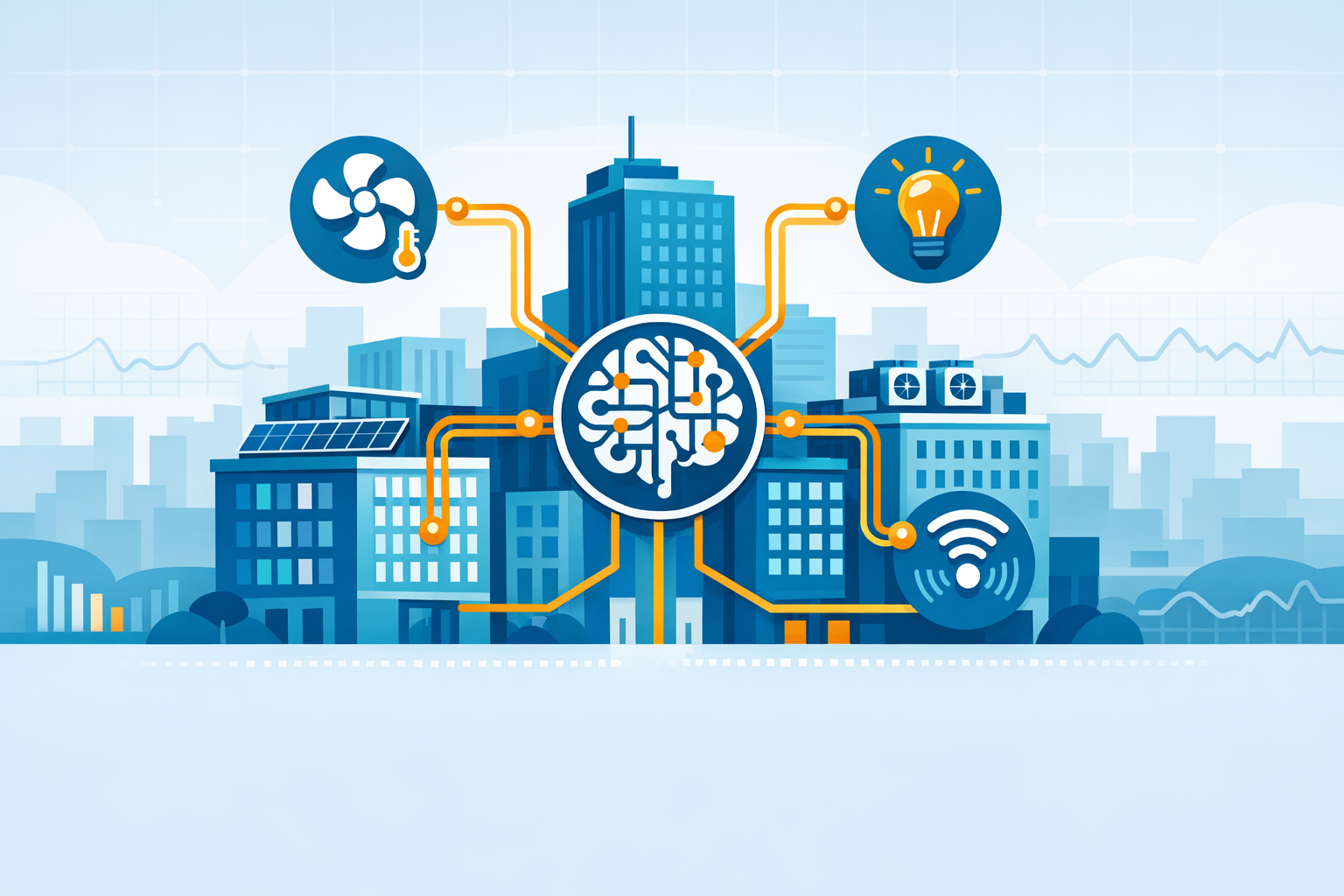
First, it targets AI-enabled analytics layered over existing building automation systems (BAS) and energy management systems (EMS), enabling predictive control of HVAC, lighting, and ancillary loads without wholesale replacement of legacy infrastructure. According to a review of published studies by the American Council for an Energy-Efficient Economy (ACEEE), organizations can reduce energy use by 10-25% and enhance operational efficiency by deploying a building energy management and control system (BEMCS).
Second, the program addresses a long-standing integration obstacle: fragmented, siloed building systems. AI-driven BEMCS platforms use advanced analytics, predictive modeling, and automation to optimize building operations. They can identify patterns and anomalies in building data that traditional systems miss, enabling dynamic responses to environmental changes. The FSBA expansion specifically targets standardized data interfaces to support these capabilities across heterogeneous federal building environments.
Third, governance frameworks for AI/OT (operational technology) convergence are being formalized. FEMP's Cybersecurity Considerations and Research Pathways for Grid-Interactive Efficient Buildings guidance describes how cybersecurity practices are essential for interconnected building systems. Agencies are being cautioned against treating AI as a single, self-contained capability. AI systems comprise models, data pipelines, code repositories, workflows, and infrastructure - each component introducing dependencies and potential vulnerabilities that must be understood and secured.
On procurement, the program aims to pre-approve reusable AI-enabled energy solutions and reference architectures. If 2025 was about AI pilots, 2026 is about data architecture that can sustain AI at scale: governance, observability, and federation. GSA's AI actions are explicitly aimed at accelerating access, with announcements adding commercial AI tools to the Multiple Award Schedule (MAS) - pointing toward "leveraging the private sector's innovation to transform government operations."
Research published in Energy Informatics in 2025 supports the economic rationale. AI-driven building energy optimization has progressed beyond proof-of-concept to practical viability, with advanced approaches demonstrating energy savings of 22-28% and a median payback period of 3.4 years.
Outlook
Procurement professionals and system integrators serving federal facilities should monitor forthcoming FEMP guidance on AI/OT security requirements and pre-approved solution architectures. Success will likely require moving beyond fragmented single-system approaches toward integrated, standardized implementations that address occupant needs, privacy concerns, and long-term performance sustainability. Case studies demonstrating ROI, implementation timelines, and risk management across diverse agency portfolios are expected to emerge as the program scales through 2026, providing reference benchmarks for both public-sector and commercial building operators.
Related coverage: Federal Expands Grid-Interactive Buildings Pilot to More Agencies · AI Forecasting in Smart Buildings Faces Scale and Governance Challenges