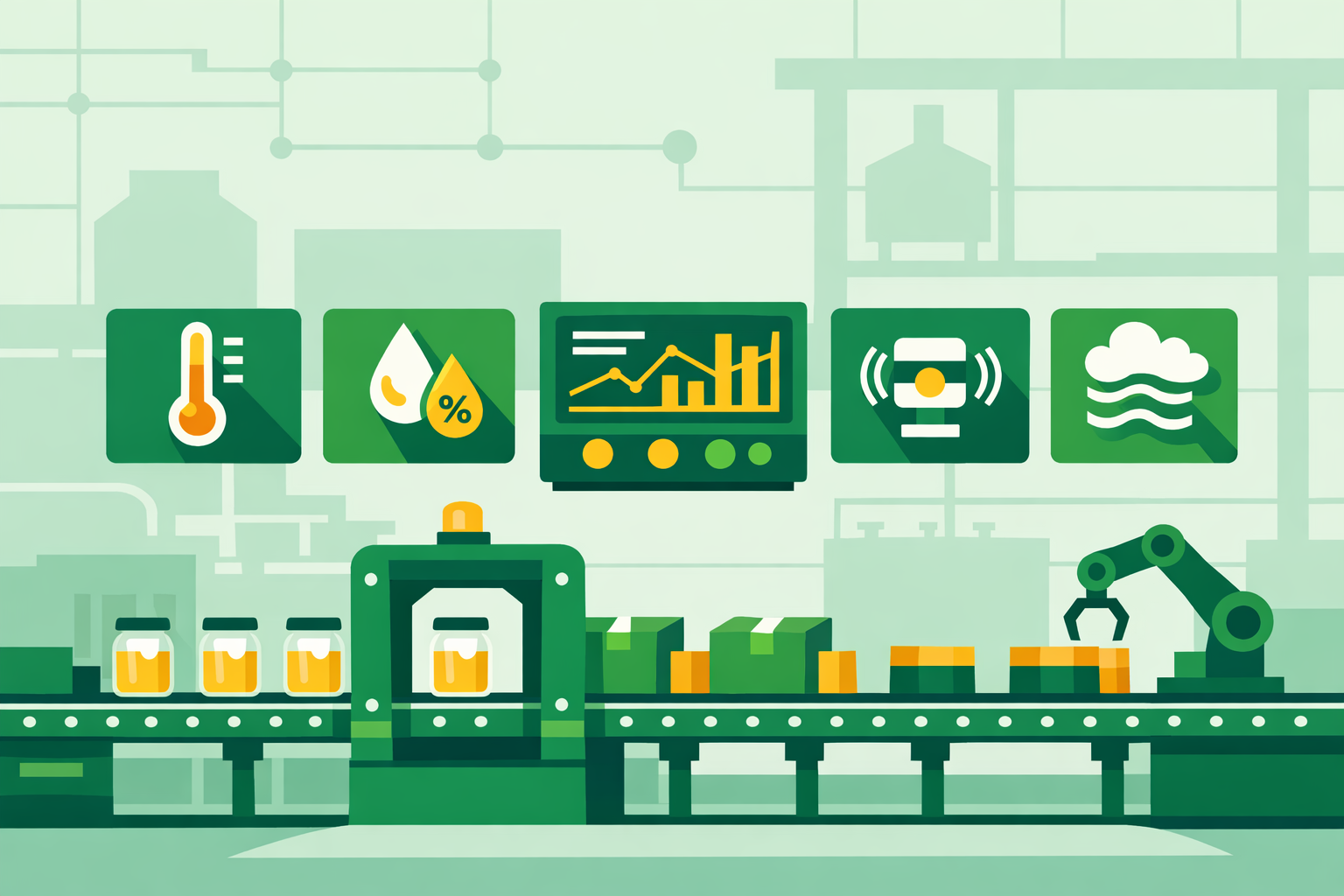
Food manufacturers are deploying integrated building automation systems (BAS) with real-time sensor networks to reduce product recalls, safety incidents, and regulatory exposure. The shift reframes smart building infrastructure - temperature, humidity, vibration, and air quality monitoring - as a risk management layer rather than a facility operations tool, according to industry analysts and technology providers.
Background
The FDA and USDA announced 320 food recalls in 2025, up from 296 in 2024, according to a U.S. PIRG Education Fund analysis. Year-to-date through Q3 2025, there were 415 FDA recalls impacting 109.74 million units, compared with 363 recalls affecting 45.02 million units in the same period of 2024, according to Sedgwick Brand Protection data reported by Food Safety News. The CDC estimates foodborne illness costs the U.S. economy $15.6 billion annually.
Regulatory pressure continues to mount. The FDA's FSMA Section 204 Food Traceability Rule, originally set for a January 2026 compliance date, was delayed 30 months to July 20, 2028, after Congress directed the FDA not to enforce the rule before that date. The extension reflects industry-wide challenges in coordinating digital traceability across supply chains but has not diminished investment urgency. The FDA emphasized it remains fully committed to FSMA 204 implementation and has no plans to alter the rule's requirements, according to Food Safety Magazine.
Details
The building automation approach extends traditional BAS functions - HVAC controls, environmental monitoring, power management - into food safety compliance. Temperature, humidity, vibration, pressure, and flow sensors are deployed across production lines and cold chain touchpoints as the foundation layer of smart food factory architecture, according to implementation guides published in 2026. Critical control point temperature alarms must be set below HACCP critical limits with sufficient buffer to allow corrective action before product safety is compromised, according to food manufacturing IoT deployment frameworks.
Predictive maintenance is a key driver. Food manufacturers implementing AI-driven predictive maintenance report 35-50% reductions in unplanned downtime and 20-35% lower maintenance costs, with ROI breakeven typically achieved within 9-14 months, according to OxMaint analysis. Equipment failures in food plants carry a dual risk: production loss and contamination exposure that can trigger HACCP non-conformances and mass recall scenarios.
A Deloitte 2025 Smart Manufacturing and Operations Survey of 600 executives found that 92% of manufacturers believe smart manufacturing will be the primary driver of competitiveness over the next three years, with more than 90% planning to maintain or increase smart factory investments in 2026.
John Robertson, Vice President of Food and Beverage at Life Cycle Engineering, has tied the shift to regulatory reality. According to Life Cycle Engineering, Robertson stated that "the increasing number of FDA inspections makes reactive maintenance an unacceptable liability for food safety and quality."
Cross-sector transferability is a notable trend. Johnson Controls noted that in 2026, interoperability in building systems will shift from aspiration to expectation, with organizations demanding platforms built on open standards that unify data across regions, facilities, and equipment types. Facilities using harmonized sensor data and centralized dashboards are applying governance models from commercial building operations to food production environments, enabling consistent monitoring across multi-site portfolios.
Outlook
Analysts project the food traceability market will triple in value by 2034, driven by demand for safety, transparency, and real-time monitoring technologies, according to Life Cycle Engineering. With FSMA 204 enforcement now set for mid-2028, manufacturers that invest in integrated building automation and sensor infrastructure during this window stand to reduce both compliance risk and recall exposure ahead of the deadline.