The global smart building market reached $141.79 billion in 2025, with commercial segments capturing 47-60% of total market share. Yet most of those buildings remain smart only in the narrowest sense - automated, connected, but not genuinely intelligent. Sensors stream data, dashboards illuminate metrics, and building management systems (BMS) execute preset schedules. What's largely missing is the analytical layer that converts continuous operational data into trusted, actionable decisions.
The distinction matters commercially and technically. As AI forecasting applications scale across building portfolios, operators are discovering that the bottleneck is rarely the algorithm - it is the quality, governance, and interoperability of the underlying data. Closing that gap separates a smart building from an intelligent one.
What Does "Intelligent Building" Actually Mean?
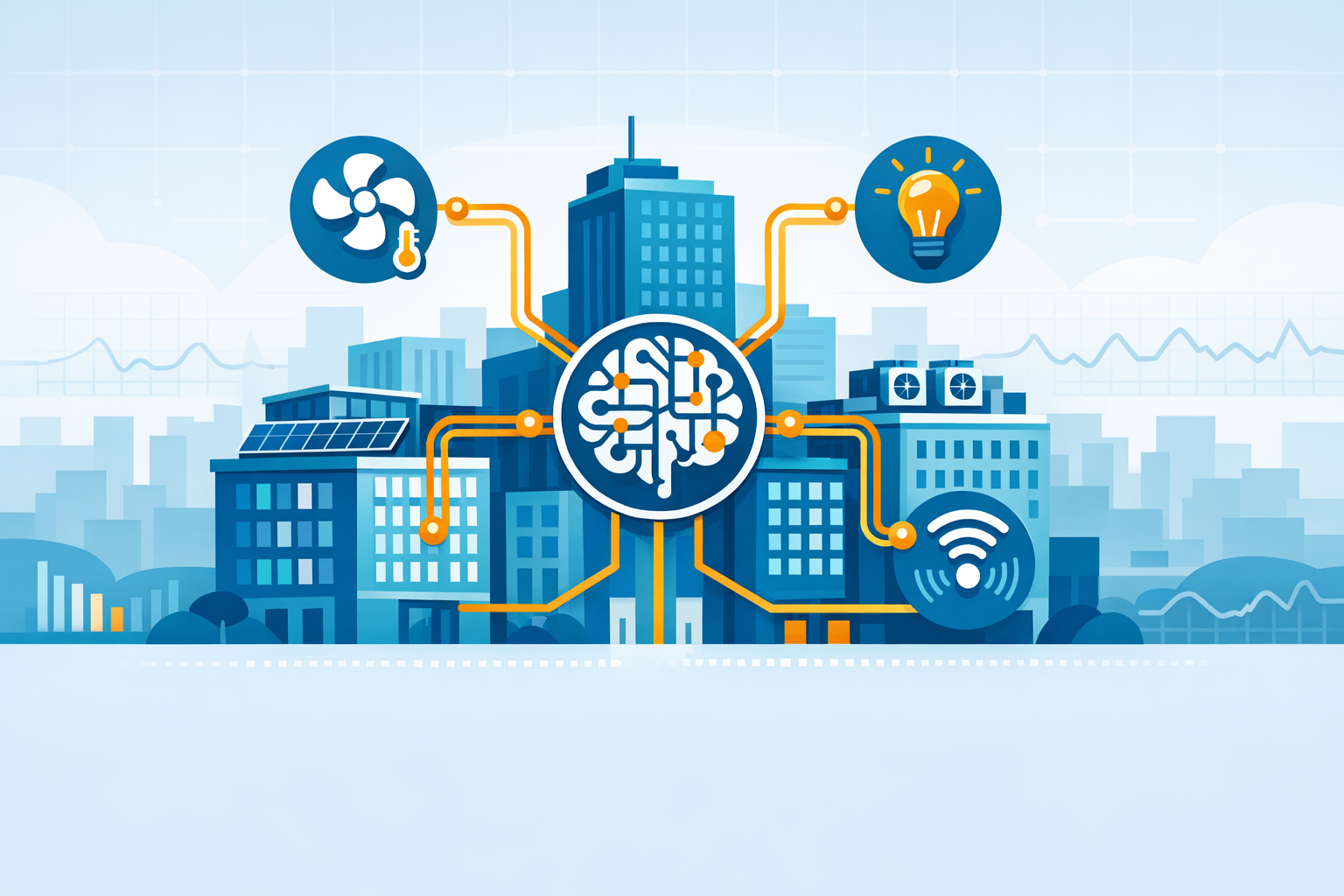
The term has been used loosely, but a working definition is emerging: an intelligent building continuously learns from multi-source data streams, generates AI-driven recommendations, and adapts systems - HVAC, lighting, security, electrical distribution - in real time, with minimal manual intervention and full governance accountability.
The comparison below maps the practical differences between a smart building and an intelligent one:
| Capability | Smart Building | Intelligent Building |
|---|---|---|
| Primary function | Automated monitoring & control | Proactive, AI-driven decision support |
| Data use | Real-time operational data | Multi-source data with governance & lineage |
| Maintenance approach | Scheduled / reactive | Predictive & condition-based |
| Integration model | Siloed systems or partial BMS | Open standards (BACnet, OPC UA, MQTT) across BMS, HVAC, lighting, security |
| Analytics layer | Rule-based alerts & dashboards | ML models, AFDD, occupancy-driven optimization |
| Occupant experience | Comfort setpoints managed manually | Adaptive, personalized environments in real time |
| Governance | Limited or ad hoc | Defined data quality, lineage, and AI model accountability |
| ROI horizon | Energy & OpEx savings | Energy + maintenance + experience + ESG compliance |
The Data Quality Problem That AI Cannot Solve Itself
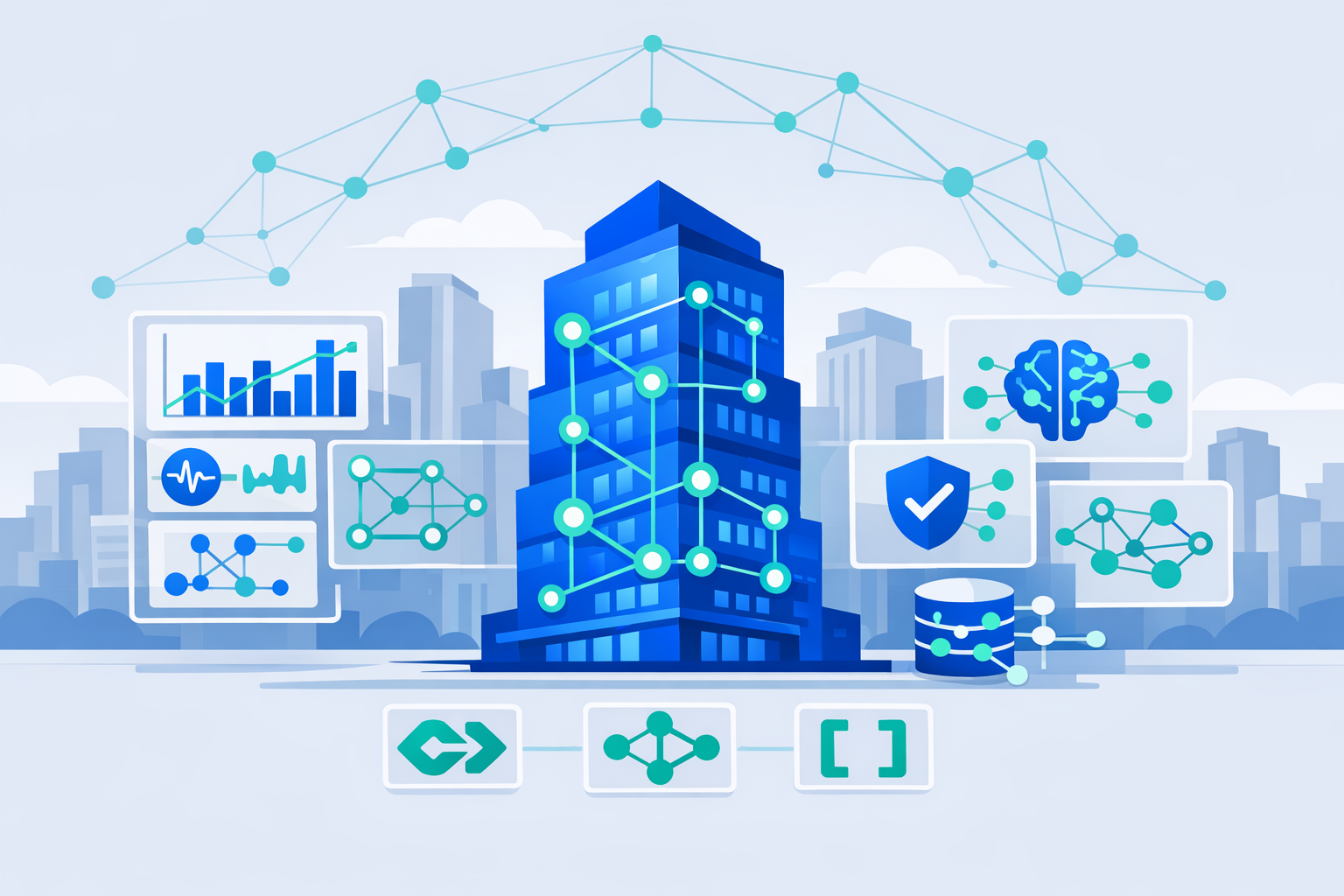
The most cited obstacle to deploying AI in building operations is not model sophistication - it is data readiness. Fewer than 5% of commercial properties currently conform to metadata schemas suitable for automated analytics. Without consistent naming conventions, reliable sensor tagging, and documented data lineage, even well-trained machine learning models produce recommendations that operators cannot trust or explain.
This creates a governance imperative that precedes any AI investment. Data quality, lineage tracking, and model explainability are increasingly cited as prerequisites for responsible deployment - particularly where AI outputs influence safety-critical decisions such as fire safety egress or electrical load management.
Key governance principles for building analytics deployments include:
- Data lineage: Every metric feeding an AI model should be traceable to a source sensor, with timestamp and quality flags.
- Model transparency: Operations teams need to understand why a recommendation was made, not just what it recommends - a principle aligned with explainable AI (XAI) frameworks.
- Bias monitoring: Occupancy-based models trained on pre-pandemic utilization patterns may systematically mismanage space and energy under hybrid-work conditions. Regular model revalidation is essential.
- Privacy controls: Occupancy sensing and behavioral data tracking raise GDPR and local regulatory obligations that must be embedded in the governance framework from day one.
Interoperability: The Infrastructure Prerequisite
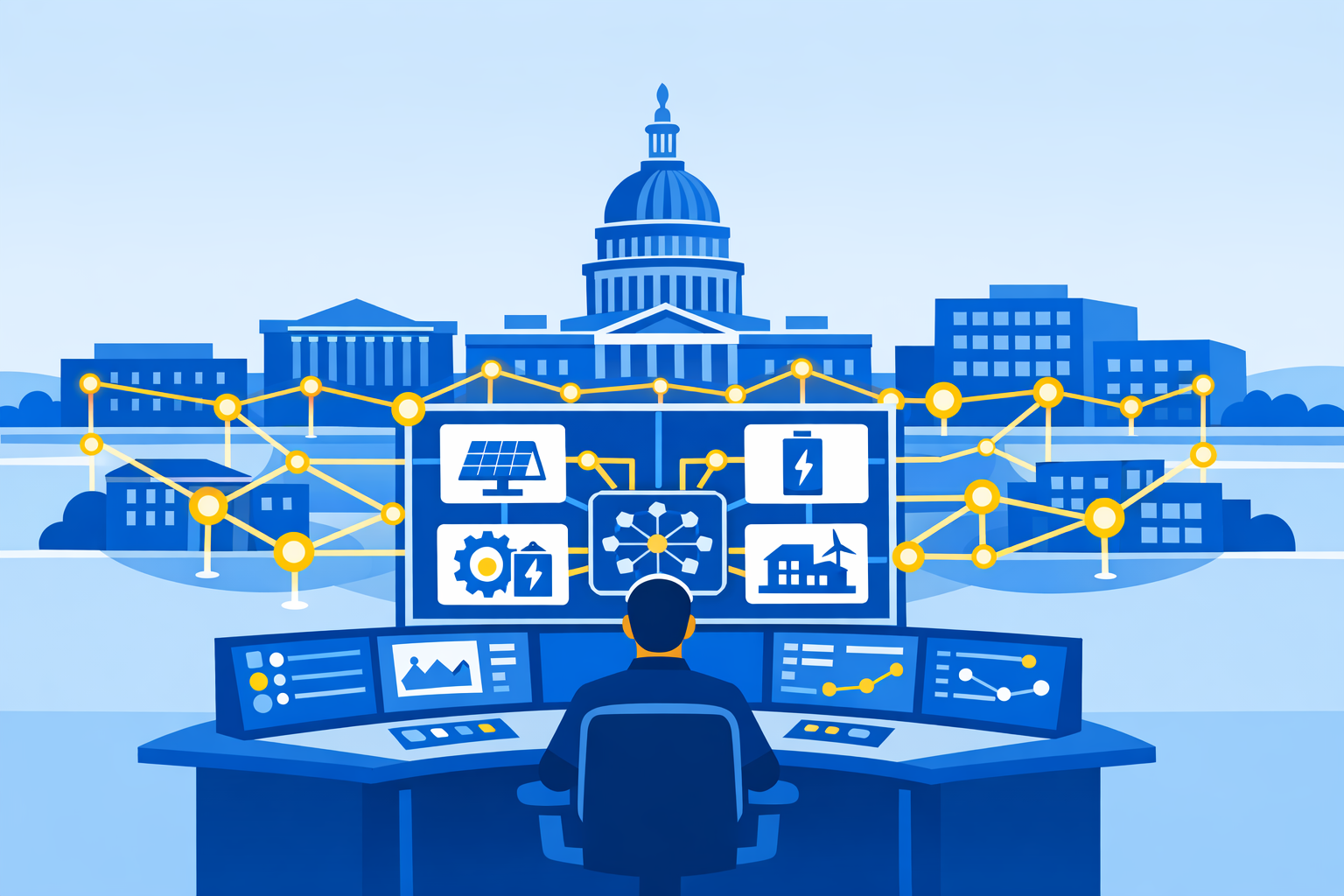
The primary challenge with traditional building management systems is a lack of interoperability. If a chiller speaks one protocol and energy meters speak another, they cannot share data - preventing a holistic view of building performance and frequently leading to wasted energy and higher operational costs.
Common open protocols like BACnet, Modbus, and LonWorks make interoperability possible but not automatic. Integration middleware such as Tridium's Niagara Framework can enable unified control across multiple manufacturers, empowering facility-wide management without locking operators into a single vendor.
For new deployments and retrofits, specifying open data interfaces is both a contractual and technical imperative. Standardized communication protocols enable devices from different manufacturers to communicate within a single building automation system (BAS), allowing building managers to select the best equipment for each function regardless of brand. They also simplify integration and reduce development costs associated with proprietary communication methods.
The emerging stack for intelligent building interoperability typically includes:
- BACnet/IP - the dominant standard for HVAC and building automation
- Modbus - for electrical metering and legacy plant equipment
- MQTT - lightweight messaging for cloud-connected IoT sensors
- OPC UA - for complex, IT-integrated and industrial control environments
- REST APIs - for cloud platform integration and third-party analytics tooling
While several protocols exist today, the need for more standardized and future-proof solutions remains. Industry collaboration and open-source protocol development will be essential for a more unified BAS landscape that enables building managers to leverage the full potential of smart building technologies.
Where AI Delivers Measurable ROI Today
Automated Fault Detection and Diagnostics (AFDD)
AFDD is the most mature AI application in building operations, and the business case is well documented. Buildings utilizing AFDD technologies report 39% shorter issue resolution times and annual energy savings of 8-13% through timely fault correction. Buildings leveraging automated diagnostics are able to reallocate approximately 35% of maintenance hours from emergency response to planned interventions. This translates directly into reduced overtime labor costs and extended equipment service life.
HVAC systems account for 40-60% of a building's energy consumption, making them a prime focus for AFDD. AI-powered analytics can pinpoint issues like coil fouling, refrigerant leaks, and sensor drift - problems that often go unnoticed but significantly waste energy.
Predictive Maintenance
Moving beyond fault detection to predictive maintenance - anticipating failures before they occur - delivers a step-change in operational economics. Properly maintained systems through predictive analytics can reduce building energy use by 15-25%, while emergency repairs cost 4.8 times more than planned fixes. Condition-based maintenance strategies can increase equipment lifespan by 15-30%.
Real-world deployments corroborate these figures. At Siemens's Erlangen, Germany campus, predictive analytics integration across 54 buildings produced a 23% decrease in total energy consumption and a 35% reduction in unplanned maintenance during the first year of operation.
Occupant-Centric Optimization
Smart environments can now adapt to occupancy levels throughout the day, automatically tuning ventilation, temperature, and lighting - guiding people to available desks and adjusting to personal comfort preferences - all while minimizing wasted energy. The measure of success is expanding beyond "uptime" to include Return on Experience (RoX): comfort, productivity, and signals that help attract and retain talent.
A Roadmap for Owners and Operators
The transition from smart to intelligent building operations does not require a single large capital program. A staged, governance-anchored approach produces faster ROI and lower execution risk.
Step 1 - Establish a Data Foundation Audit existing sensor coverage, metadata consistency, and protocol landscape. Identify gaps in data lineage and quality before deploying any analytics layer. With fewer than 5% of properties meeting the metadata standards required for automated analytics, this step frequently reveals the need for systematic sensor tagging and naming-convention remediation.
Step 2 - Adopt Open Interoperability Standards Specify open protocols - BACnet/IP, OPC UA, MQTT - across BMS, HVAC, lighting, and security subsystems. Engage a Master Systems Integrator (MSI) to unify control layers without locking into a single vendor stack. Open APIs play a pivotal role in ensuring seamless software interoperability, facilitating integration of third-party tools and enabling customization without overhauling existing systems.
Step 3 - Deploy AFDD as the First AI Use Case Implement Automated Fault Detection and Diagnostics on HVAC, lighting, and electrical systems. This delivers rapid, verifiable ROI and produces the clean operational data needed to train subsequent predictive models.
Step 4 - Build a Formal Data Governance Framework Define data ownership, access controls, quality rules, and model explainability requirements. Establish lineage tracking so AI recommendations can be audited. Include privacy controls for occupancy and behavioral data aligned with applicable regulations.
Step 5 - Scale to Predictive Maintenance and Occupant Optimization Expand from fault detection to full predictive maintenance across chillers, elevators, and electrical distribution. Layer in occupancy-driven comfort optimization and space analytics. At this stage, measure ROI across energy, maintenance costs, and occupant experience.
Step 6 - Integrate ESG and Compliance Reporting Connect the data platform to sustainability reporting frameworks (CSRD, GRESB, BREEAM, LEED). Even advanced BMS software was designed for operations, not energy compliance - it tracks whether equipment is running but does not provide the audit-ready, time-stamped utility data that frameworks like CSRD, BREEAM, or GRESB require. A dedicated utility data layer is essential.
Frequently Asked Questions
Q: What is the difference between a BMS and a BAS? While the terms are often used interchangeably, a BAS typically refers specifically to the automation of mechanical systems like HVAC and lighting. A BMS usually encompasses a broader scope, potentially including security, fire safety, and elevator management.
Q: How long does a predictive maintenance ROI payback typically take? Older buildings with aging equipment often see payback within 3-6 months, while newer, better-maintained properties might take 12-18 months to achieve returns.
Q: Does an intelligent building require a full system replacement? No. Retrofitting can deliver substantial returns by layering wireless sensors and cloud connectivity onto existing assets, starting with visibility.
Q: What are the cybersecurity implications of increased connectivity? More connected devices expand the attack surface. Governance and security controls must be built in from the start, not added as an afterthought.
Q: How does data governance relate to AI model reliability? By 2026, most organizations recognized that AI success depends far more on data engineering than on model selection. High-performing AI systems require consistent data pipelines, reliable metadata, and strong governance across the entire data lifecycle.