Xiamen-based Leelen Technology used its presence at Intersec Dubai 2026 to advance its position as a global exporter of certified smart control panels, presenting a device engineered to serve as a unified building automation hub at one of the security and smart-building sector's most prominent international trade platforms.
Background
Intersec Dubai has long stood as the premier gateway for the security, safety, and fire protection industries in the Middle East and beyond. The 2026 edition hosted 1,180 exhibitors and 44,857 visitors from 151 countries, spanning more than 65,000 square metres of exhibition space. This year's event highlighted a pronounced shift toward "Integrated Intelligence," where standalone devices are no longer considered sufficient.
Founded in 1992, Leelen has grown from a specialized intercom manufacturer into a company that ranks among the top three in China's building intercom industry, operating a 460,000 m² industrial campus in Xiamen. Since entering overseas markets in 2008, the company has exported products to more than 100 countries and regions.
Details
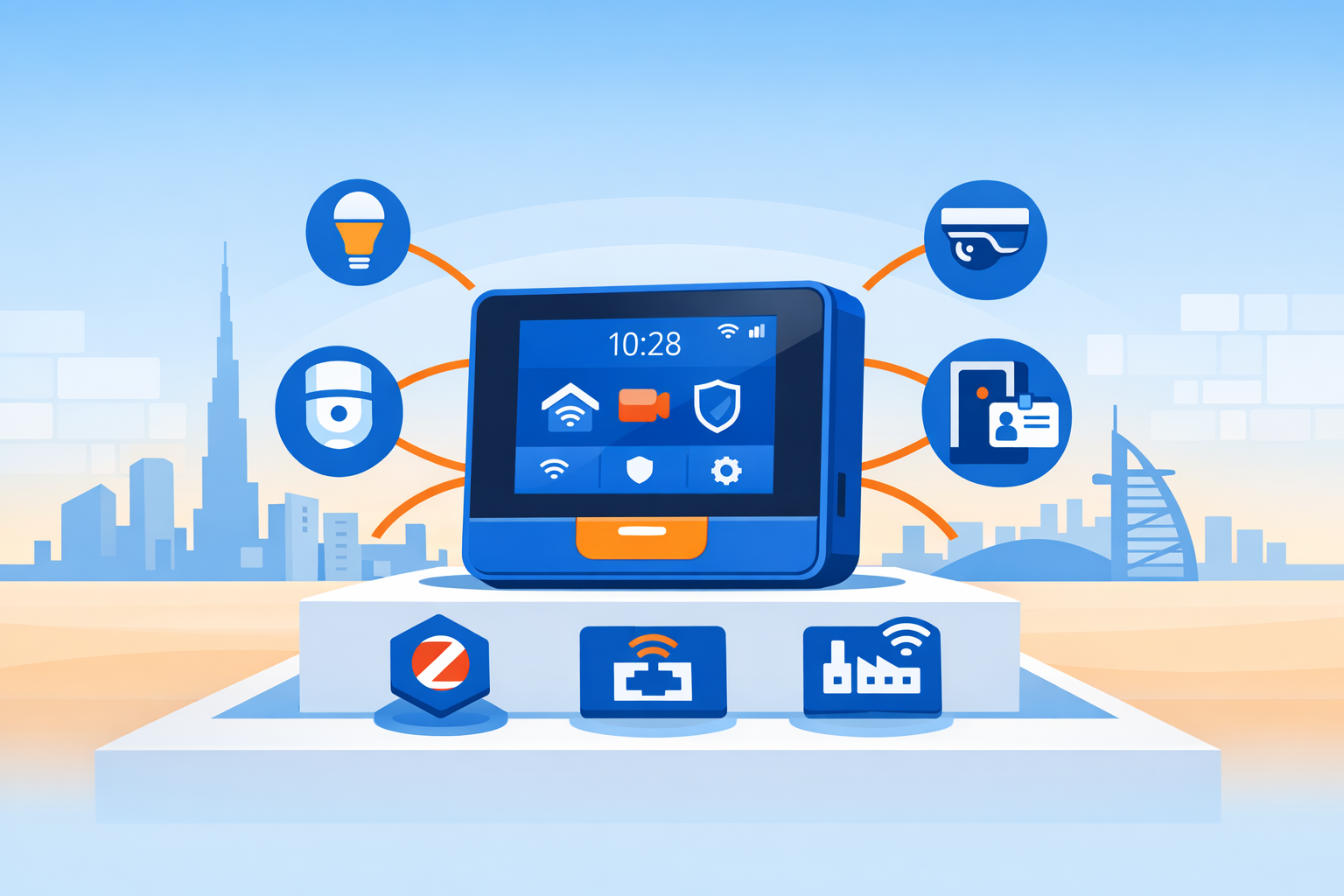
Leelen's central exhibit was its 4-inch Smart Control Panel with Hub, presented as the company's flagship smart control offering. Unlike basic touchscreens, the device integrates a Zigbee gateway capable of commanding up to 100 sub-devices simultaneously. Its architecture supports customized Scene Modes - such as "Away," "Sleep," or "Cinema" - activated by a single touch or automated triggers. Beyond proprietary technology, Leelen states the device supports mainstream protocols including Zigbee 3.0, SIP, and PoE, with gateway compatibility designed to accommodate emerging standards.
On the certification front, Leelen has announced that its latest generation of smart hubs and integrated system components have achieved CE (Conformité Européenne) certification. Products are manufactured at the Xiamen campus under quality controls that meet CE, RoHS, and ISO standards. The company also holds ISO 9001, ISO 14001, and OHSAS 18001 management system certifications, and its products carry CE and FCC marks. By aligning with European CE requirements, Leelen effectively removes technical barriers to entry in over 30 countries, signaling to international developers and government contractors that its hardware meets applicable safety and electromagnetic standards.
Leelen describes itself as the lead organization for international standards on building intercoms and the chief editor of China's national smart home standards - a role it says is reflected in the design of products such as the Smart Control Panel. In its domestic market, the company reports serving over 30 million users and holding a 20% market share in the building intercom segment.
The broader smart access platform integrates high-definition touchscreens, wide-angle cameras with night vision, and multi-level access control - including face recognition, NFC, and IC cards. It adopts an open architecture that interfaces with third-party elevators, fire alarms, and smart home controllers. Through open APIs and a flexible business middleware layer, the Smart Hub is designed to integrate with third-party software including property management systems and hotel guest room controls.
Industry experts at the event noted that the Middle East's rapid urban expansion - particularly projects tied to Vision 2030 - is generating demand for control systems that are both technically robust and architecturally versatile.
Outlook
Governments are increasingly mandating "smart-ready" infrastructure for new housing developments to meet carbon neutrality targets, a regulatory trajectory expected to sustain demand for interoperable, multi-certified control hardware across commercial and residential sectors. With a service network of over 200 stations, Leelen is positioning itself as a supply-chain partner for global distributors and real estate developers seeking to deploy large-scale smart infrastructure. The wider market is being shaped by the rise of standardized protocols such as Zigbee and Matter. Manufacturers that can demonstrate compliance across multiple certification regimes - CE for the European Economic Area, FCC for North America, and regional equivalents in the Gulf - are likely to hold an advantage in multi-market procurement decisions.