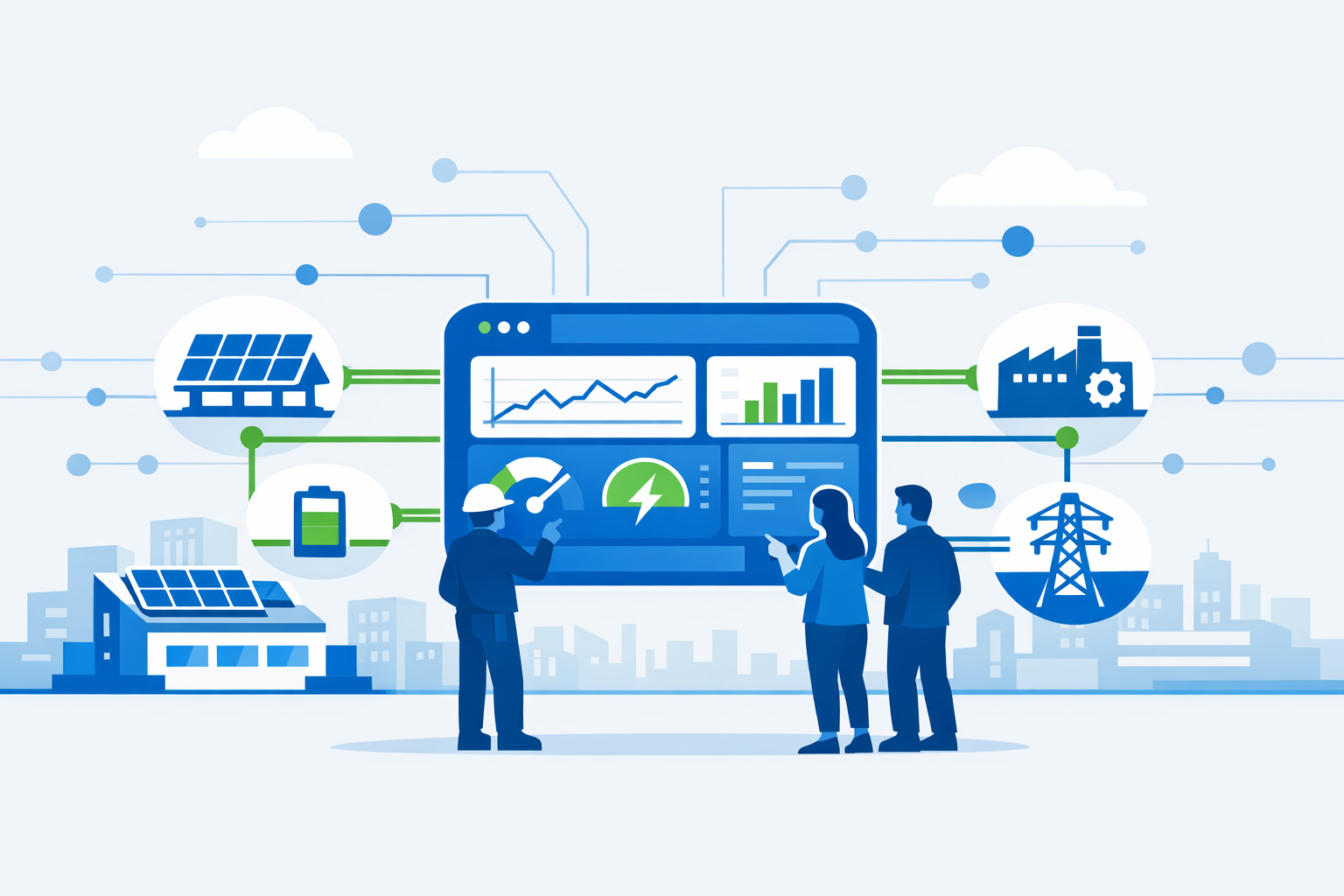
A new generation of energy management systems (EMS) is redefining how commercial buildings and utilities coordinate distributed energy resources (DERs)-including rooftop solar, battery storage, and controllable loads-with the broader grid. The shift is driven by maturing edge-computing architectures, updated interoperability standards, and tightened cybersecurity requirements.
Background
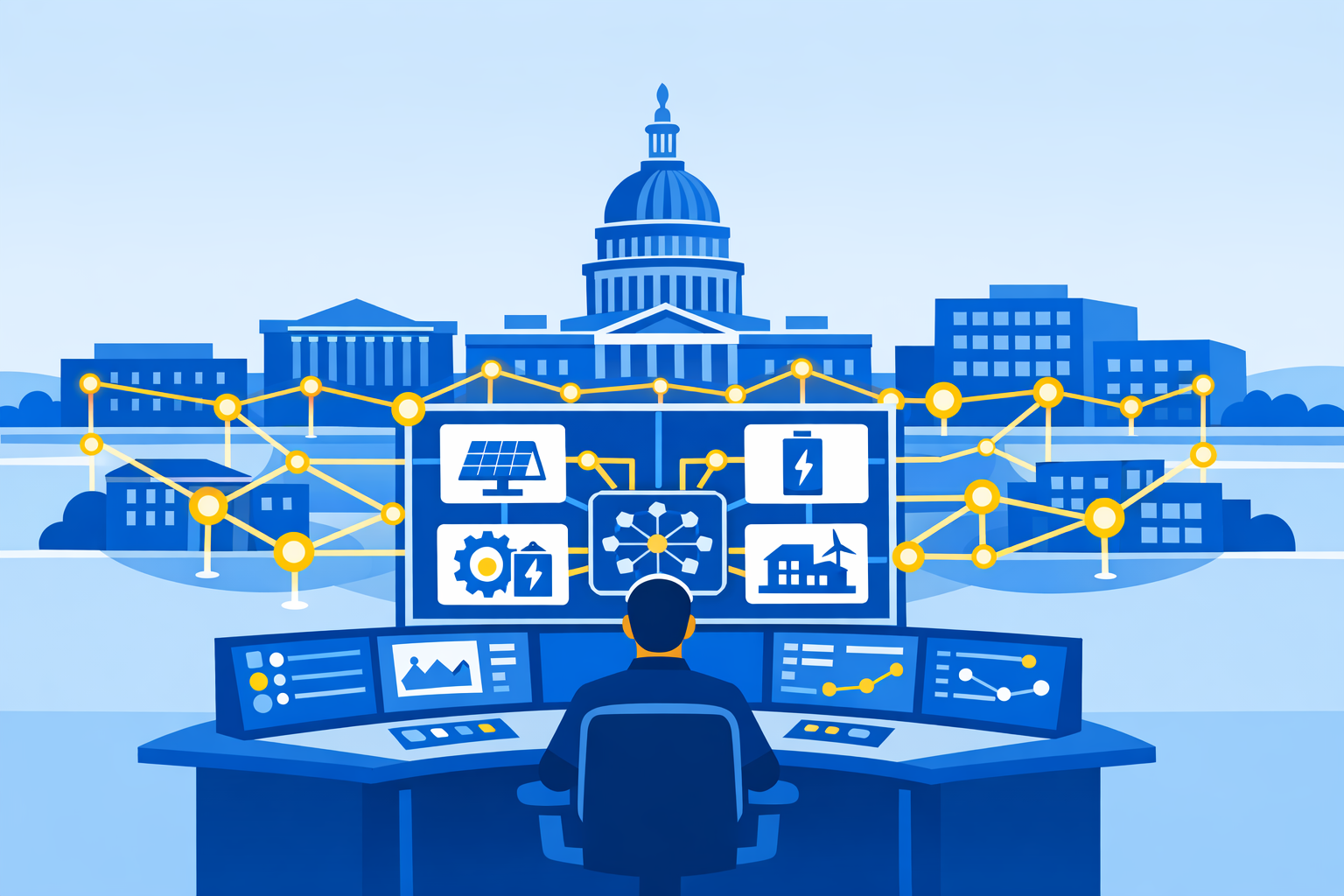
EMS platforms orchestrate generation, storage, and controllable loads for reliable, economic, and sustainable operation. By 2025, EMS design has evolved beyond simple scheduling into a multi-layered, multi-objective decision-making process that accounts for uncertainty, nonlinearity, and resilience. The shift reflects rapid growth in DER penetration: electric distribution grids face rising demands from electrification and will carry significantly higher volumes of DERs, most notably rooftop photovoltaic systems, stationary battery storage, and flexible appliances such as EV chargers, HVAC systems, and water heaters.
Regulatory frameworks have struggled to keep pace. The rapid decentralization of energy has outpaced governance structures designed for a centralized model in which utilities maintained clear control over generation, transmission, and distribution. The U.S. Department of Energy published its DER Interconnection Roadmap in January 2025, outlining a path toward streamlined interconnection studies, data transparency, and flexible interconnection arrangements that would allow DERs to defer grid upgrades.
Details
Architecture: Edge and Cloud Convergence
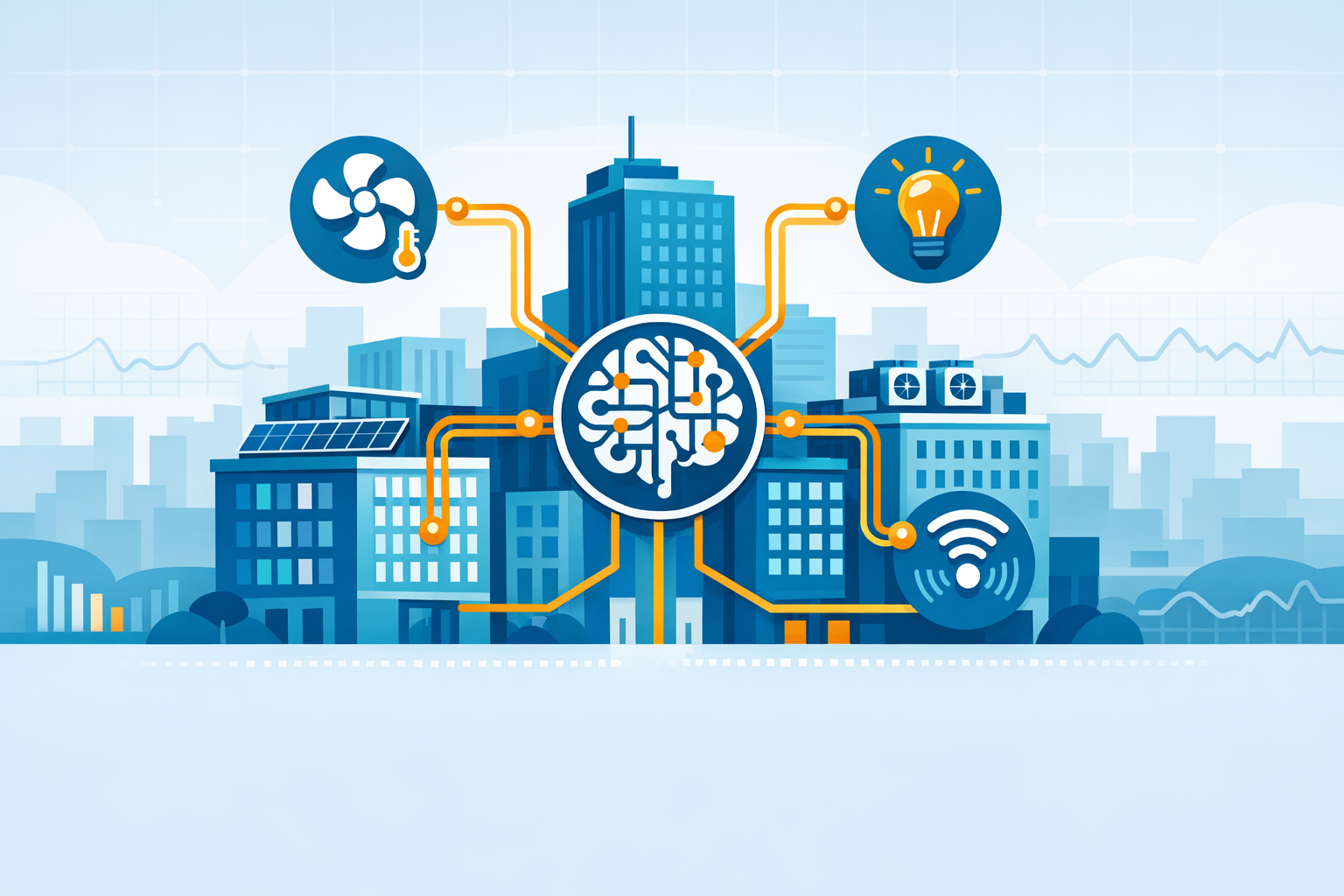
Next-generation EMS solutions leverage Internet of Things (IoT) devices and edge computing to deliver granular, real-time energy insights and automated optimization. Edge computing enables localized demand response strategies: by analyzing real-time consumption data alongside external factors such as weather conditions and energy prices, intelligent algorithms can determine optimal demand response actions for each node. However, earlier cloud-based systems introduced elevated cybersecurity risks and substantial data transmission overhead-a finding that has accelerated adoption of hybrid edge-cloud architectures in commercial deployments.
Interoperability Standards Under Pressure
Cross-vendor interoperability remains a persistent barrier. Real-world DER coordination is complicated by temporal and spatial uncertainties in loads and renewable generation, smart meter and network delays, incomplete grid information, differing consumer objectives and privacy constraints, and scalability challenges. To address the rising volume of DERs, IEEE 2030.5 (Smart Energy Profile 2.0) was designed for utilities to manage large numbers of small devices using widely adopted technologies such as TCP/IP and HTTP. IEEE 2030.5 and its underlying data model are regarded as the most advanced standard for representing and managing DERs across the utility and non-utility ecosystem in a coordinated fashion.
On the interconnection side, IEEE 1547-2018 establishes criteria and requirements for interconnection and interoperability of DERs with electric power systems and associated interfaces. The cybersecurity recommendations in the IEEE 1547.3 guide are now informing the next revision of the IEEE 1547-2025 standard.
Cybersecurity: Stricter Controls for DERs
The 2025 NERC Critical Infrastructure Protection (CIP) updates introduce expanded cybersecurity requirements for all Bulk Electric System (BES) cyber systems. The revised standards-CIP-003-9, CIP-005-7, CIP-010-4, and CIP-013-2-increase cybersecurity resilience across the industry. A significant change involves reclassifying historically "low-impact" assets, such as substations and DERs, subjecting them to stricter security controls or elevation to medium-impact classification.
Compliance gaps persist in the field. Audits suggest that 30-40% of DER devices are misconfigured-for example, with disabled firewalls or default credentials-meaning device certification alone does not guarantee operational security or NERC CIP alignment. FERC's fiscal year 2025 CIP audit report highlighted lessons including accounting for DERs when categorizing control center impacts, exercising due diligence with third-party vendors, and assessing compliance risks associated with cloud services.
Real-World Performance and ROI
Aggregated DER deployments are demonstrating measurable grid impact. In Puerto Rico on July 8, 2025, more than 70,000 batteries discharged simultaneously, providing 48 MW to the grid and averting a widespread blackout-underscoring the reliability value of coordinated DER management at scale. The Customer Battery Energy Sharing program, operated by LUMA Energy, allows residential and commercial customers with solar-connected batteries to contribute stored energy during peak demand or emergencies, with third-party aggregators managing participation, compensation, and grid event notifications.
On the commercial building side, organizations typically achieve a 10-30% reduction in energy costs through EMS implementation, with Building Energy Management Systems delivering 11-16% annual savings and commercial deployments reaching 10-19%, according to industry analysis. Beyond energy savings, EMS implementation delivers 15-30% carbon emission reductions, automated regulatory compliance, and new revenue opportunities through demand response participation.
Outlook
Efforts are underway to harmonize DER cybersecurity requirements across standards development organizations, address gaps in existing standards, and coordinate with industry stakeholders on a path forward. Regulatory tightening under NERC CIP and the ongoing IEEE 1547 revision cycle are expected to raise the compliance baseline for EMS deployments connected to the bulk power system. Research indicates that by 2050, centralized DER control could reduce transformer violations from 81% to 28% while cutting peak load by 17%-an outcome strengthening the business case for next-generation EMS investment across both utility and commercial building sectors.
Related coverage: EV Charging Networks Adopt Smart EMS for Grid Coordination