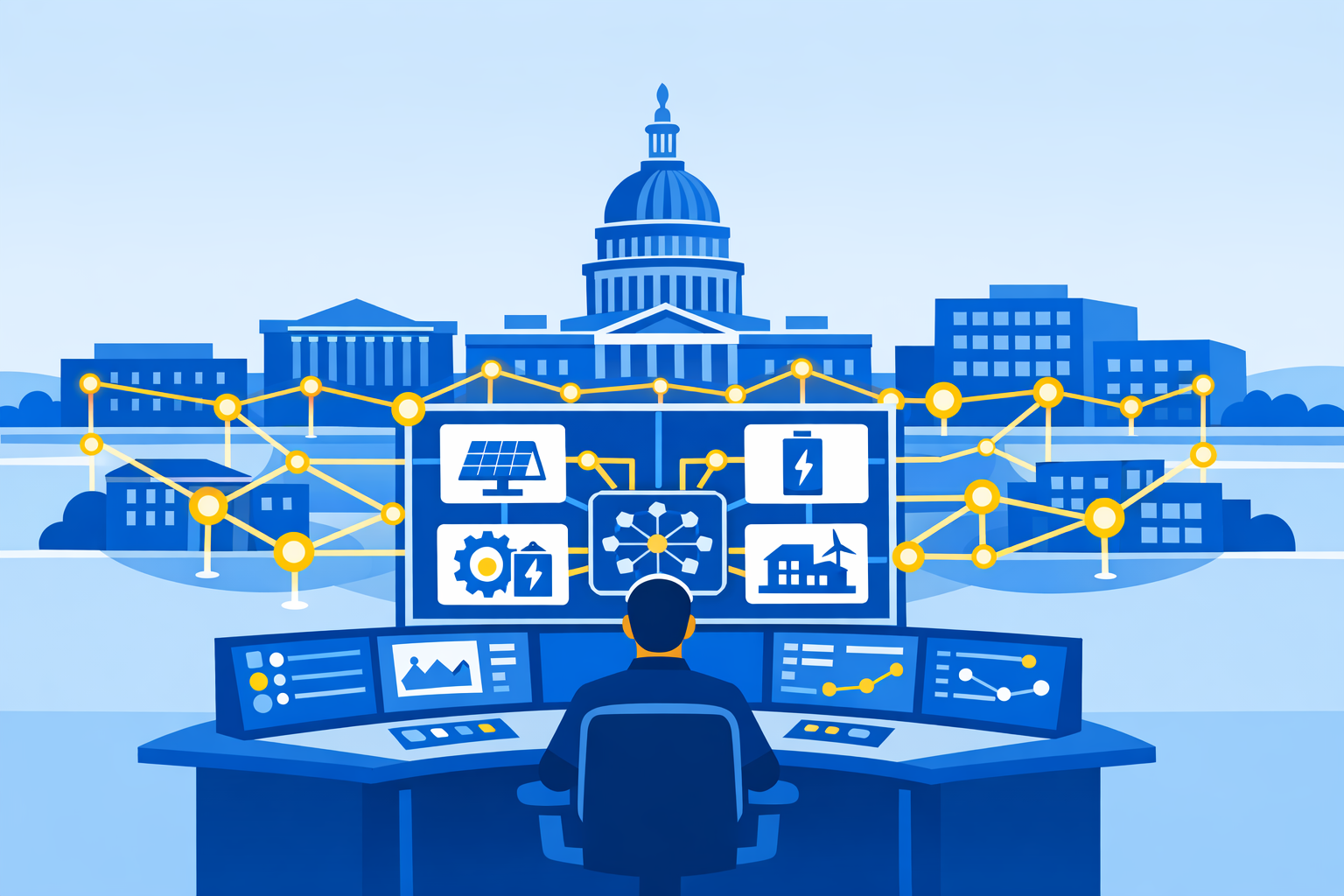
More than 370 million rentable square feet of federal real estate sits under the management of the U.S. General Services Administration (GSA) alone - and until recently, much of it ran on fragmented, proprietary building systems that could neither communicate with each other nor defend against modern cyber threats. That is changing fast.
The Federal Smart Buildings Accelerator (FSBA), launched under the U.S. Department of Energy's (DOE) Federal Energy Management Program (FEMP) and aligned with a broader wave of open-standards reform in the sector, is reshaping how federal agencies procure, deploy, and secure building technologies. The implications extend well beyond government campuses - they set procurement and compliance benchmarks that will reverberate across private-sector vendors, system integrators, and building automation specialists for years to come.
Background: The FSBA and the GSA's $80 Million Commitment
In alignment with the Energy Act of 2020, the DOE's Federal Energy Management Program launched the Federal Smart Buildings Accelerator to promote adoption of smart building and grid-interactive efficient building (GEB) technologies across federal facilities.
The FSBA, introduced at Energy Exchange 2022 and concluded in September 2024, supports government-wide goals including resilience, energy savings, electrification and decarbonization, 24/7 renewable energy use, and fleet transition to zero emissions.
The accelerator's findings were candid about the challenges ahead. The FSBA successfully promoted smart buildings and grid-interactive technologies across federal agencies, revealing high interest but persistent obstacles around funding and implementation. While demand for GEB technology is strong, a lack of knowledge about getting started points to a clear need for more education around implementation.
In parallel, GSA moved decisively on capital investment. At RealComm 2024, the GSA Administrator announced plans to invest $80 million from the Inflation Reduction Act into smart building technologies to reduce emissions, increase efficiency, lower costs, and enhance comfort across an estimated 560 federal buildings. The $80 million is part of a broader $975 million allocation to GSA for emerging and sustainable technologies - itself part of a $3.4 billion Inflation Reduction Act initiative to develop, modernize, and maintain more sustainable, cost-efficient, and high-performing federal facilities.
Specific technology deployments include: smart sensors in more than 70 federal buildings to measure indoor air quality, CO₂ levels, and other conditions, adjusting building operations based on real-time data; a new Unified User Interface for more than 150 buildings, consolidating information from separate applications to provide direct access to data on equipment operation, energy usage, and sustainability performance; and implementation of ASHRAE Guideline 36-based HVAC controls in approximately 15 buildings to reduce energy usage and greenhouse gas emissions.
Procurement Reform: Open Standards as a Non-Negotiable Baseline
Perhaps the most consequential outcome of the FSBA expansion is its effect on how federal agencies write specifications and evaluate bids. GSA's updated Smart Buildings directive and its Building Technologies Technical Reference Guide (BTTRG) v3.0, published in May 2024, codify requirements that effectively lock out proprietary, siloed architectures.
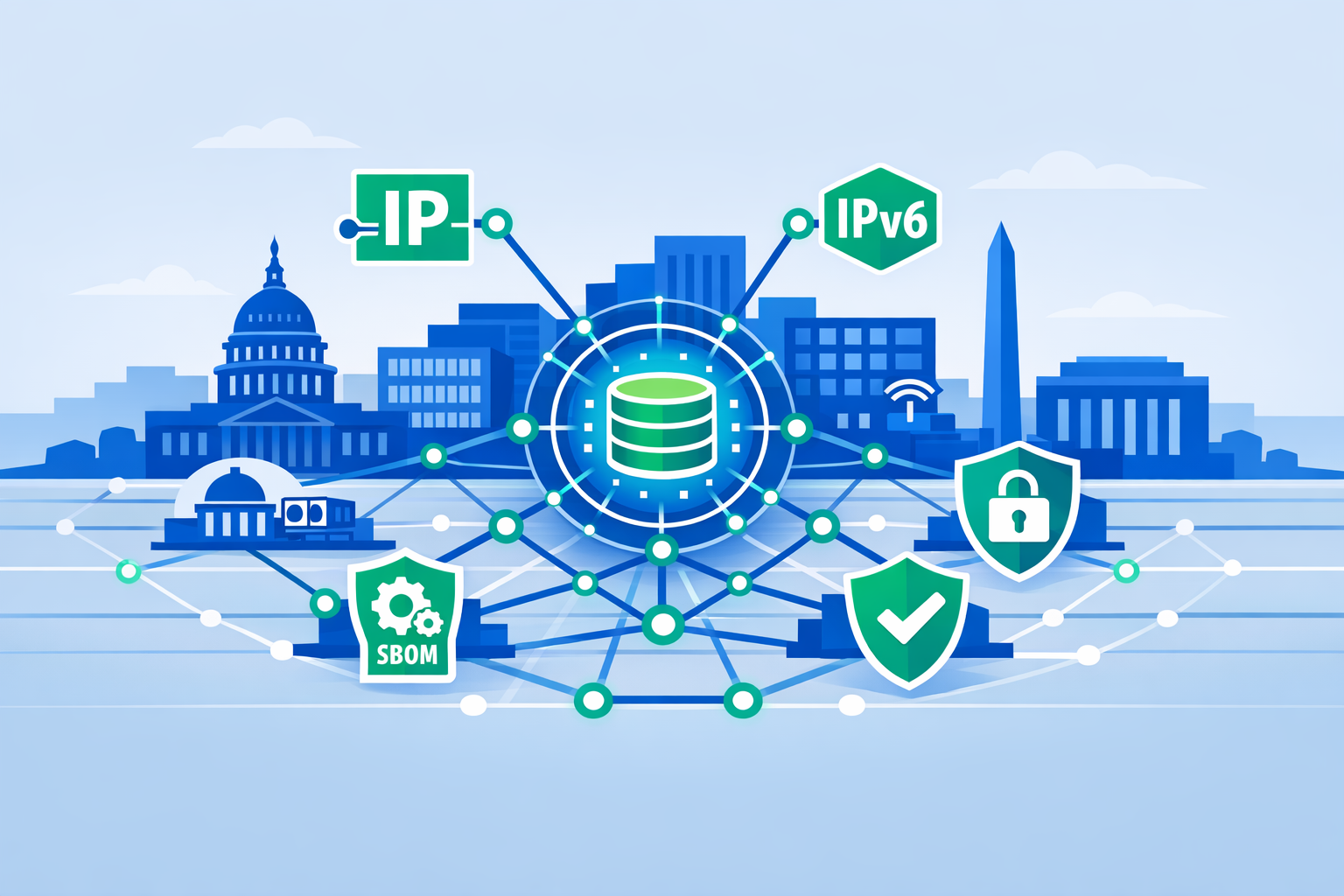
GSA policy directs agencies to promote interoperability between devices through open-protocol systems, with the objective of converging normalized data on at least a facility-wide tool; to implement and maintain cybersecurity best practices across IP network-based systems including downstream devices; and to protect against threats through the inclusion of cyber supply chain risk management (C-SCRM) principles.
At the device level, the requirements are equally prescriptive. All new networked federal building monitoring and control (BMC) systems must be IPv6-capable, with IPv4 to be phased out. Controllers that cannot meet compliance hardening and monthly OS patching requirements are explicitly disqualified.
For data interoperability, the industry is converging on a layered standards approach. Key frameworks - Brick Schema, Project Haystack, and RealEstateCore - are collaborating via ASHRAE 223P and other liaisons to enhance interoperability. ASHRAE Standard 223P provides a dictionary of semantic tags for descriptive tagging of building automation and control data. By integrating Haystack tagging and Brick data modeling concepts, the standard will enable semantic interoperability across the building industry.
For procurement officers and MEP consultants writing federal specifications, this translates into a clear preference hierarchy: open-protocol devices with BACnet/IP or equivalent, IPv6-capable infrastructure, and data layers conformant with recognized semantic standards.
Legacy vs. Current Federal Smart Building Requirements
| Requirement Area | Legacy Federal Approach | FSBA / GSA 2024-2025 Standard |
|---|---|---|
| Protocol Mandate | Proprietary BAS stacks accepted | Native BACnet/IP or open-protocol gateways required |
| Network Addressing | IPv4 accepted on BAS networks | IPv6 capability mandatory for all new BMC systems |
| Data Architecture | Siloed, per-agency repositories | Unified User Interface; normalized data convergence |
| Cybersecurity Baseline | Agency-discretionary IT policies | NIST CSF, FEMP Cybersecurity Framework, C-SCRM |
| Supply Chain | Vendor self-attestation | Full SBOM transparency required |
| OT Segmentation | Flat or minimally segmented | Risk-based segmentation; zero-trust architecture |
| Interoperability Testing | No standardized federal regime | BTL certification; GSA PB-ITS security scanning |
OT Cybersecurity: The Hardest Problem in Federal Facilities
Building automation systems (BAS) represent one of the most complex and underprotected attack surfaces in federal infrastructure. Connectivity among building systems and with outside service partners is increasing, and building services are migrating to the cloud. As more HVAC and other building systems become connected internally and externally, the challenges of keeping them secure have grown more apparent and urgent - yet cybersecurity remains outside the core expertise of most building services professionals.
The threat landscape for operational technology (OT) is deteriorating rapidly. Fortinet's State of OT Cybersecurity 2024 found that 56 percent of OT organizations experienced at least one ransomware or wiper intrusion within the preceding 12 months. Dragos' Year in Review 2025 documented an 87 percent rise in ransomware attacks directed at industrial systems.
Federal policy responses are anchored in NIST SP 800-82 Revision 3, finalized in September 2023. This revision expands scope from industrial control systems to all types of OT infrastructure and introduces topics such as supply chain security, cyber-physical systems, and cloud security. It provides an OT overlay for NIST SP 800-53, Rev. 5 security controls, offering tailored baselines for low-impact, moderate-impact, and high-impact OT systems.
NIST is also working with industry stakeholders within the Coalition for Smarter Buildings (C4SB) to establish a Digital Buildings Profile and a new Cybersecurity Working Group. The group will develop application profiles to help building owners and other stakeholders apply existing cybersecurity frameworks to secure different building types. It will draw on the NIST Cybersecurity Framework, NIST Risk Management Framework, the DOE Cybersecurity Capability Maturity Model, the FEMP Facility Cybersecurity Framework, and ISA/IEC 62443.
⚠️ Important - Vendor Alert: GSA's Building Technologies Technical Reference Guide (BTTRG) v3.0 explicitly disqualifies controllers that cannot undergo compliance hardening and monthly OS patching, and devices incapable of IPv6 connectivity on the GSA network. Any vendor targeting federal smart building contracts must audit their full product portfolio against these specifications before submission.
Risk-Based Segmentation in Practice
For building operators and facility managers, the practical implication is a shift from flat BAS networks to risk-based, segmented architectures. The recommended model separates the enterprise IT network, building management layer (BMS/EMIS dashboards), OT/control network (HVAC, lighting, access control, IoT sensors), and the physical field device layer - with data flows governed by zero-trust principles and, where appropriate, unidirectional security gateways.
The challenges agencies face in harmonizing legacy systems with modern IoT devices are well documented; the federal segmentation mandate adds a regulatory dimension that effectively forces a remediation timetable many agencies have previously deferred.
Supply Chain Transparency
One of the more demanding new requirements is supply chain transparency. GSA's C-SCRM directives require vendors to demonstrate visibility into component sourcing - a meaningful compliance lift for equipment manufacturers whose BAS controllers incorporate third-party firmware, radio modules, or embedded operating systems. Under these directives, smart building integrators and BAS contractors may be jointly liable for security failures.
Implications for Private-Sector Vendors
For vendors seeking federal smart building contracts, the FSBA expansion creates both opportunity and friction. The transition from proprietary stacks to open architectures is enlarging the addressable market, but the compliance bar is rising in step.
In 2025, an estimated 68% of new commercial construction projects in OECD countries included a specification requirement for open-protocol or standards-based building management, up from 41% in 2021. The federal government is both reflecting and accelerating this shift.
Key compliance requirements for private-sector vendors targeting federal procurement include:
- BACnet/IP and open-protocol interoperability: Controllers must expose native BACnet objects or interface via certified gateways. The BACnet Testing Laboratory (BTL) certifies hardware and software for BACnet compliance - BTL certification is increasingly a threshold criterion in federal specifications.
- IPv6 readiness: All networked BMC devices must support IPv6 natively.
- Software Bill of Materials (SBOM): Vendors must enumerate all software components in their building systems products.
- GSA PB-ITS Security Scanning: Proprietary controllers must pass GSA PB-ITS security scanning and be fully remediated before deployment.
- NIST SP 800-82r3 alignment: OT-facing products must be architecturally compatible with the risk-tiered security control baselines defined in the guide.
The security-by-design imperative now driving building automation is not optional for federal vendors - it is embedded in the procurement specification.
Legacy System Integration: The Practical Obstacle
Despite the policy clarity, the operational reality in most federal facilities is messy. Technical assistance needs span all sizes and types of facilities across all agencies. Many buildings carry decades of proprietary BAS infrastructure - pneumatic actuators, legacy DDC (direct digital control) panels, and vendor-locked energy management platforms - that cannot be replaced in a single procurement cycle.
GSA requires all new sites to be integrated into its Building Sensor Network (BSN); older integrated sites still on the legacy domain must migrate as soon as practicable, a process requiring several coordinated steps.
The most workable near-term pathway involves protocol translation gateways that bridge legacy controllers to BACnet/IP or MQTT backbones, semantic tagging layers (Haystack or Brick Schema) applied above existing data historians, and phased replacement tied to major maintenance or energy performance contract (ESPC) cycles. FEMP provides agencies with expert assistance, guidance, and training to help them implement performance contracts, including Energy Savings Performance Contracts (ESPCs) and Utility Energy Service Contracts (UESCs).
Near-Term Milestones and Budget Signals
GSA's smart building investments span 49 states, the Commonwealth of Puerto Rico, the U.S. Virgin Islands, and Washington, DC, and will help accelerate progress toward net-zero emissions in the federal building portfolio by 2045. GSA projects these efforts could reduce carbon emissions by 2.3 million metric tons - equivalent to emissions from approximately half a million gasoline-powered passenger vehicles annually.
The Climate Smart Buildings Initiative aims to leverage public-private partnerships to stimulate over $8 billion in private-sector investment by 2030. For vendors and integrators, that represents a substantial pipeline - conditional on meeting the interoperability, cybersecurity, and supply chain requirements the FSBA and GSA directives now enshrine as standard.
Key milestones to watch:
- FEMP GEB pilot expansion: The expanded Grid-Interactive Efficient Buildings pilot continues to generate performance data that will inform cross-agency procurement benchmarks.
- ASHRAE 223P standardization: Formal adoption of the semantic tagging standard will likely become a specification requirement in federal RFPs within 12-24 months.
- NIST Cybersecurity for Building Systems profiles: The C4SB Digital Buildings Profile Cybersecurity Working Group is expected to publish application profiles that will become compliance references for OT environments in federal buildings.
- C-SCRM enforcement timelines: Agencies are expected to progressively tighten SBOM and supply chain documentation requirements as CISA and GSA align enforcement frameworks.
FAQ
Q: Does the FSBA directly mandate specific products or vendors? A: No. The FSBA and associated GSA directives are technology-neutral - they mandate open standards, cybersecurity baselines, and interoperability requirements, not specific brands. This is by design, to maintain a competitive procurement environment.
Q: Is BACnet still sufficient for federal compliance? A: BACnet/IP remains the baseline protocol for building automation interoperability in federal facilities, but it must now be implemented alongside IPv6 networking, NIST-aligned security controls, and increasingly, semantic data standards such as Project Haystack or Brick Schema for analytics and cross-agency data sharing.
Q: How should vendors approach SBOM requirements? A: Vendors should begin by inventorying all third-party firmware, embedded OS components, radio modules, and libraries in their building systems products. NIST's SBOM guidance and CISA's SBOM resources provide a starting framework. Federal buyers will increasingly request this documentation at the RFP response stage.
Q: What is the role of Energy Savings Performance Contracts (ESPCs) in legacy system modernization? A: ESPCs allow agencies to fund building system upgrades - including smart building technology - through the energy savings the projects generate, without upfront appropriations. FEMP provides direct support for structuring these contracts, making them one of the most practical vehicles for agencies tackling legacy BAS replacement.
Q: What cybersecurity framework takes precedence in federal OT environments? A: NIST SP 800-82r3 is the primary OT security guide for federal facilities, supplemented by the FEMP Facility Cybersecurity Framework and ISA/IEC 62443. For supply chain risk, NIST SP 800-161 and GSA's C-SCRM requirements apply. Agencies must map their BAS architecture to the appropriate risk tier (low, moderate, or high-impact) under the NIST framework.