Safety-enhancing technologies in smart buildings are reducing workplace injuries and standardizing safety metrics across industries. Solutions including wearable devices and AI-driven risk analytics are delivering measurable results in high-risk sectors and commercial environments.
Background
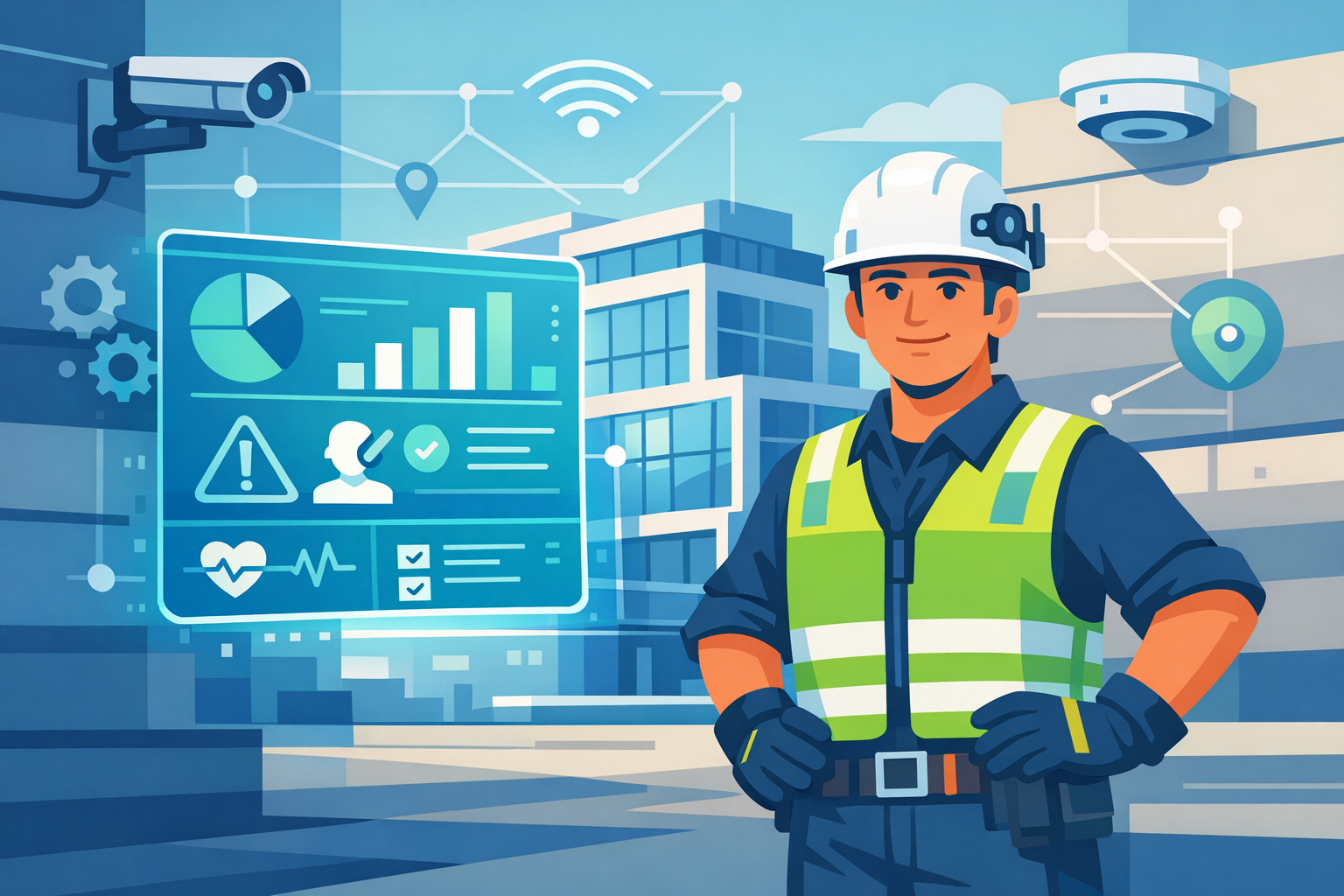
Smart digital systems-wearables, IoT-enabled sensors, and AI analytics-are being integrated into buildings to monitor worker safety in real time. These tools identify physical, ergonomic, chemical, and psychosocial risks and support proactive incident response. The European Agency for Safety and Health at Work reports increased deployment in construction and mining sectors[1]. Market demand drives convergence of interoperable safety ecosystems, wearable technologies, and centralized incident dashboards: 68% of safety upgrades now include AI, IoT, or wearable components, and cloud-based safety management adoption has reached 46% globally[2].
Details
In construction, deployments of wearable technology have produced significant safety and financial results. Turner Construction equipped 2,500 workers with smart hard hats featuring environmental sensing and fall detection, leading to a 32% reduction in recordable incidents over six months and a 287% return on investment in 18 months due to lower insurance costs, productivity gains, and accident prevention[3]. Cross-sector applications demonstrate additional return on investment. For example, a Chinese steel foundry implemented smart personal protective equipment (PPE) with gas detection, reducing annual incidents from eight to two and saving approximately $180,000 in medical and downtime costs[4].
AI and computer vision technologies also yield rapid safety improvements. At an Americold Logistics warehouse, injury rates dropped by 77%, and lost-time days were eliminated within 12 months of adopting AI monitoring for proactive hazard identification[5]. Market research supports these trends: 72% of global enterprises now use digital safety tools, and 73% of new safety equipment introduced in 2024 features smart sensors or augmented reality (AR) training support[2].
Regulatory frameworks are evolving accordingly. The European Union's AI Act, effective August 1, 2024, places risk-based requirements on AI systems deployed in safety-critical environments. High-risk systems must have documented risk assessments, transparency mechanisms, and human oversight[6].
Outlook
Stakeholders in smart building and safety technology should anticipate further regulatory alignment and standardization, especially in Europe. Procurement is expected to focus on interoperable safety ecosystems that justify investment through quantifiable safety metrics. Integration of AI-enabled safety solutions with cloud-based dashboards and wearables may become standard, particularly in construction, manufacturing, and logistics where risk reduction drives operational and financial gains.