Ericsson and Swisscom have launched a next-generation Energy & Enclosure platform across Swisscom's radio access network (RAN) in Switzerland, delivering software-driven, site-level energy optimization - including peak shaving, load shifting, and hybrid solar management - to a live commercial operator network for the first time.
The platform follows a two-year collaboration between the companies. It is a fully integrated site-energy solution combining high-efficiency power systems, intelligent energy storage, advanced enclosures, and the Controller 6610 to deliver more resilient, secure, and sustainable networks. The deployment marks a significant step in the convergence of telecom infrastructure management and enterprise energy services, with direct implications for grid reliability and decarbonization at scale.
Background
Networks must minimize energy consumption while maximizing the use of stored energy at sites - including renewables - requiring a transition toward intelligent energy setups and integrated energy management. Telecom operators face mounting pressure to reduce operational energy costs, one of the largest components of network expenditure, while meeting corporate sustainability commitments.
Swisscom's network is already fully powered by renewable energy, positioning the operator to move beyond sourcing toward active efficiency optimization at the site level. Swisscom launched a Strategic Performance Partnership with Ericsson in 2017, combining Swisscom's ambitions with Ericsson's full technology portfolio to drive measurable outcomes. The Energy & Enclosure platform is the latest output of that multi-year technical alliance.
The deployment is also relevant to the broader smart building and enterprise energy management market, where the ability to aggregate, optimize, and control distributed energy assets in real time - at the grid edge - is increasingly central to peak-shaving strategies and demand-response participation.
Platform Capabilities and Technical Details
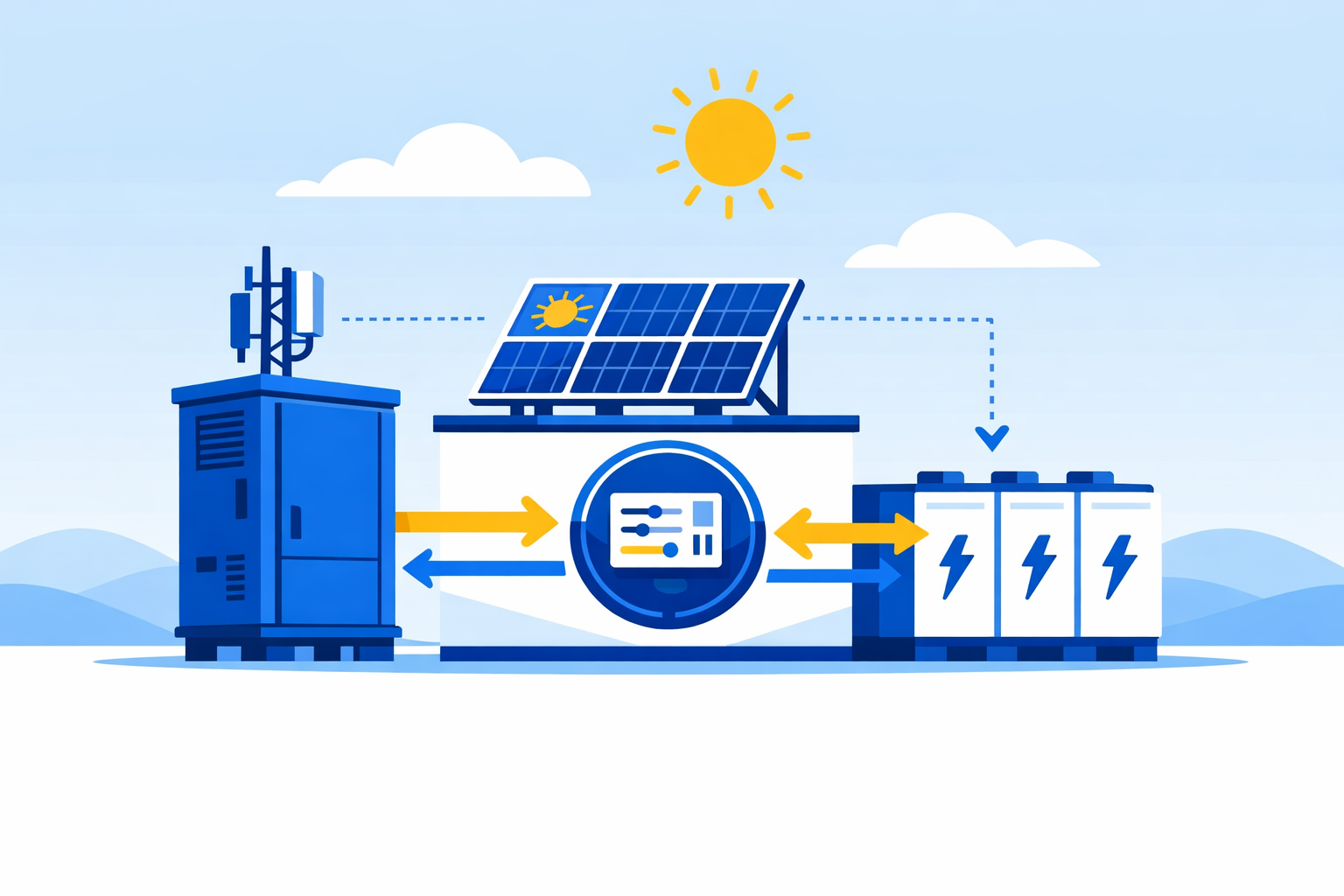
The platform gives communications service providers like Swisscom granular, software-driven control of site energy through load management, load shifting, peak shaving, and hybrid solar operation - cutting energy and operational costs while reducing carbon emissions.
At the core of the architecture is the Controller 6610, a new software platform that integrates all site power elements into centralised network management with smart diagnostics, enabling operators to leverage automation for real-time awareness and control of all RAN site assets. The system also supports predictive maintenance and remote energy management, reducing the need for manual on-site intervention.
On the hardware side, the platform's rectifier achieves an AC-to-DC conversion efficiency of 97.6 percent, according to Ericsson. A key AI feature is intelligent battery management during grid outages: the system assesses battery status, predicts consumption, and optimizes power use to prioritize critical network functions, safeguarding service continuity until power is restored.
Ericsson's Site Energy Orchestration solution uses machine learning, AI-powered RAN applications (rApps), and external data interfacing to let service providers cluster hundreds or thousands of sites and orchestrate them as a virtual power plant. This enables operators to participate in utility programs across different markets. The solution intelligently optimizes cell sites' daily energy consumption patterns to avoid peak charges, channeling energy only when and where needed.
Philipp Bichsel of Swisscom stated that the platform "supports Swisscom's ambition to operate highly efficient, resilient, and environmentally responsible mobile networks." Mårten Lerner, Head of Networks Strategy and Product Management at Ericsson, said the platform "provides security paired with RAN and site data collection in real time for efficient remote operation and control."
Outlook
Ericsson described the collaboration as yielding "a solution that enables more efficient and resilient telecom sites, empowering customers with smarter, greener, and more robust networks in Switzerland and beyond," indicating commercial availability to other operators is expected. The platform is also designed to support Swisscom in pursuing new operational models, adopting new technologies, and mitigating risk proactively. For facility managers and energy directors at enterprise sites watching the telecom sector, the Swisscom-Ericsson model signals that cross-site, software-defined energy orchestration - integrating storage, renewables, and grid-interactive controls at the edge - is moving from pilot to production deployment.