Pasqal moves Q-PLANET, its €50 million EU neutral-atom chip pilot line, into execution phase
French quantum company Pasqal has transitioned the €50 million Q-PLANET pilot line into active execution, targeting industrial-grade chip components for neutral-atom quantum systems across 11 EU countries.
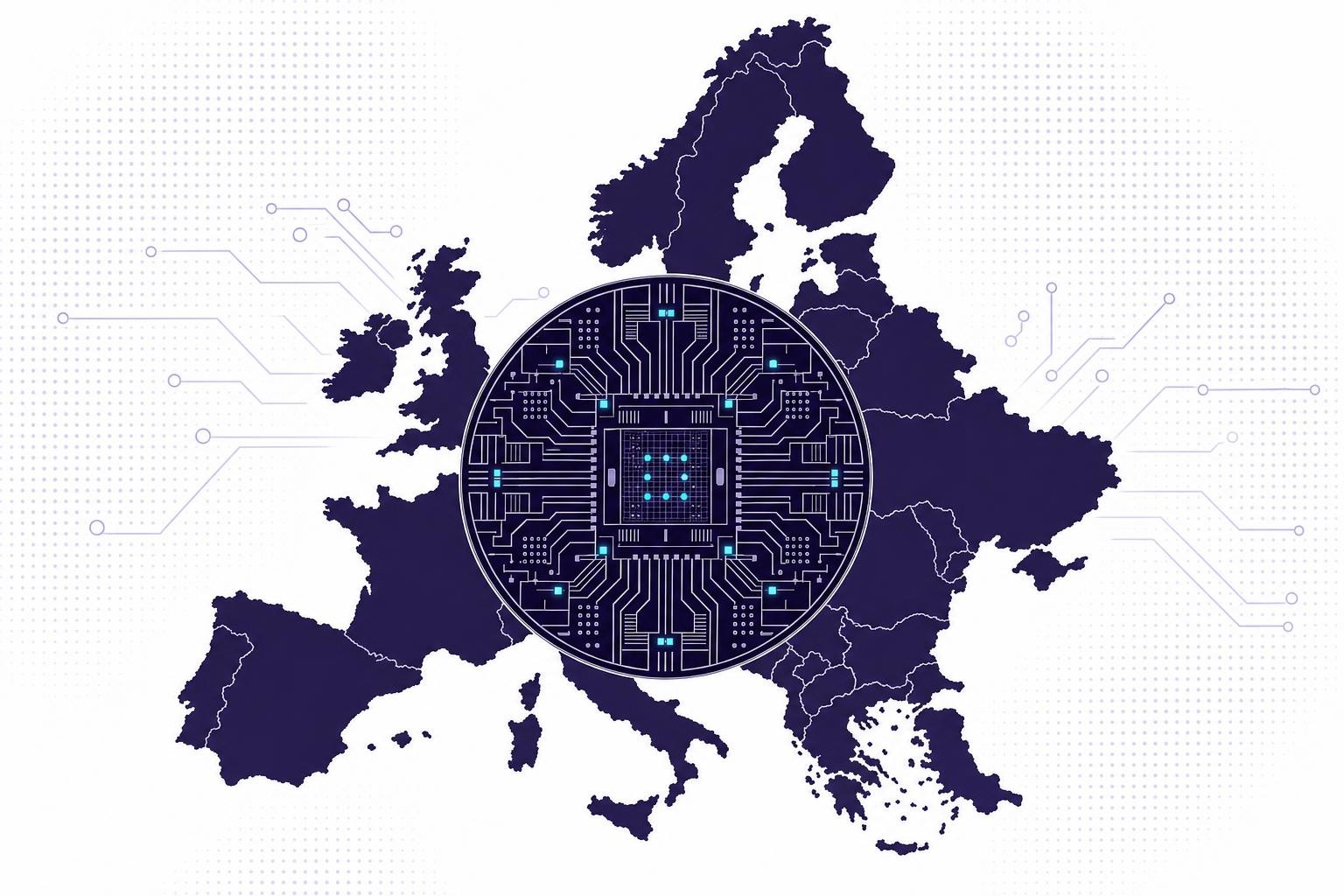
French quantum computing company Pasqal has moved the Q-PLANET initiative into its operational execution phase, roughly three months after the project's kick-off in Brussels on 8-9 July 2026[1]. The programme carries a total budget of €50 million and is structured under a six-year Framework Partnership Agreement with the EU Chips Joint Undertaking (Chips JU), with an initial three-year delivery window[1].
What Q-PLANET is building
Q-PLANET - short for Quantum Pilot Line for production of Advanced chips for Neutral atom European Technologies - is designed to move neutral-atom hardware from laboratory research into scalable industrial production[1]. The consortium of 28 partners from 11 European countries will develop four categories of components[1]:
- Integrated laser sources at four wavelengths: 461 nm, 698 nm, 795 nm and 1013 nm
- Atom chips for quantum sensing and computing
- Microfabricated vapor cells for atomic clocks and field sensors
- Standardized Process Design Kits (PDKs) and Assembly Design Kits (ADKs) to bridge the gap between research prototypes and repeatable manufacturing
Pasqal will lead development of the chip-based laser sources operating at 1013 nm, one of the project's core technology streams, and will simultaneously act as an end user for the laser sources and vapor cells produced by other partners - defining specifications and supporting testing and validation[1].
The PDKs and ADKs are the project's most structurally significant output for the broader semiconductor and photonics industries. Nothing equivalent currently exists for neutral-atom quantum hardware, where fabrication processes remain largely confined to individual laboratory notebooks. Publishing open-standard design kits would lower entry barriers for startups and SMEs and give the supply chain a common language.
Reducing external dependence
The initiative is co-funded by Chips JU and national and regional authorities across the 11 member states[1]. One explicit goal is reducing Europe's reliance on external suppliers for critical quantum components - an objective that sits within the European Quantum Strategy and anticipates the proposed EU Quantum Act[1].
Targeted applications for the components include drug discovery, advanced materials research, quantum sensing and communications[1].
Pasqal's existing European footprint
Q-PLANET builds on hardware Pasqal has already deployed under the EuroHPC Joint Undertaking. The company has delivered three quantum processing units to European high-performance computing centres: at CEA/TGCC in France, Forschungszentrum Jülich in Germany, and CINECA in Bologna, Italy[1]. The Italian system, named SOL, is a 140-qubit Orion QPU integrated with the Leonardo pre-exascale supercomputer. Pasqal now supplies three of the eight quantum computers deployed under EuroHPC JU.
Loïc Henriet, CTO of Pasqal, said the project has "moved from ambition to execution" and is "bringing quantum industrialization closer to concrete user needs"[1].
The near-term milestone to watch is whether Q-PLANET publishes its first draft PDKs on schedule and whether the laser-source work at 1013 nm yields components that meet Pasqal's own system specifications - a test that will determine whether the foundry-model approach can hold for neutral-atom hardware.

Written by Electronics Insider's automated desk from the sources above and published automatically. How we work.
Related
 Design & EDA
Onto Innovation extends FAaST platform to map residual surface charge across wafers and panels in advanced packaging
Onto Innovation published details on 8 October 2026 of how its FAaST non-contact electrical metrology platform addresses residual charge buildup in advanced packaging flows.
13 Oct 2026 Design & EDA
CPO test equipment is chasing a device target that keeps moving
Test vendors are building CPO production tooling while connector standards, laser sources, and optical-engine designs are still in flux - a structural mismatch the industry has not yet resolved.
13 Oct 2026 Semiconductors
Galileo wins permits for two 125 MW battery storage projects in Italy, totalling 1.5 GWh
Zurich-based developer Galileo has secured planning consent for 250 MW / 1.5 GWh of battery storage in Italy, with a further ~100 MW expected in the coming weeks.
13 Oct 2026