India's fifth SEMICON India opens 17 September with Semicon 2.0 and three plants already in production
SEMICON India 2026 runs 17-19 September in New Delhi with 500+ exhibitors and a new six-pillar Semicon 2.0 programme, as three Sanand facilities reach commercial production.
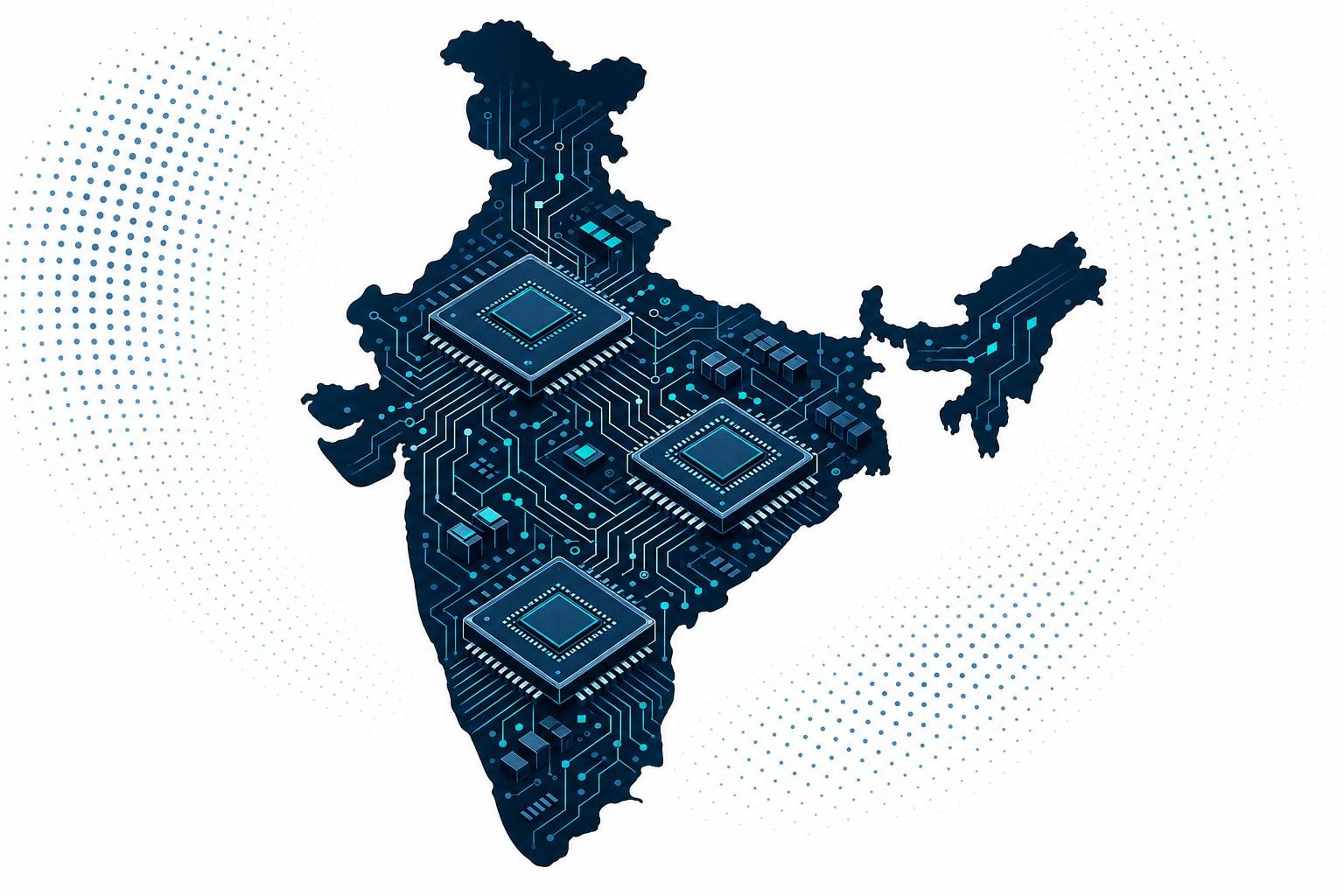
Prime Minister Narendra Modi will inaugurate the fifth edition of SEMICON India on 17 September 2026 at Yashobhoomi in New Delhi, with the three-day event running through 19 September[1]. The backdrop is concrete: three of the 12 semiconductor projects approved under Semicon 1.0 - Micron, Kaynes Semicon, and CG Semi - have reached commercial production, all at Sanand in Gujarat[1].
What the event covers
SEMICON India 2026 is expected to bring together more than 500 exhibitors, including 243 international companies, along with more than 150 speakers and delegates from over 40 countries[1]. The exhibition floor will span roughly 18,000 sq m and include six country pavilions and ten state government pavilions, alongside dedicated areas for startups, workforce development, and hackathons.
The conference programme covers manufacturing and technology, AI and digital transformation, supply chains, chemicals, gases and materials, and chip design. A new feature this year is the "Sand to Silicon to Systems" value-chain experience, intended to show India's capabilities running from raw materials through to complete electronic systems[1].
Three plants in production, more expected
The three facilities now shipping commercial chips are all back-end operations - assembly, packaging, and test - rather than front-end wafer fabrication:
- Micron's assembly and test facility in Sanand, Gujarat, built with a $2.75 billion investment, began shipping DRAM and NAND memory modules in late 2025 and was formally inaugurated on 28 February 2026
- Kaynes Semicon's packaging and testing plant in Sanand reached commercial operation in early 2026
- CG Semi, a joint venture between CG Power, Renesas Electronics, and Stars Microelectronics, commenced commercial production in mid-2026
MeitY Secretary S. Krishnan said a further two to three projects could reach production by the end of calendar year 2026. India's first front-end silicon wafer fabrication plant - Tata Electronics' Dholera facility, developed with Taiwan's Powerchip Semiconductor Manufacturing Corporation at a planned capacity of 50,000 wafer starts per month - is under construction and expected to begin commercial production in mid-2028.
Semicon 2.0 broadens the target
The Union Cabinet has approved a second phase of the programme, Semicon 2.0, structured around six pillars[1]:
- Chip design
- Machines and materials
- Setting up additional fabs
- Further development of the ATMP/OSAT sector
- Research and development
- Talent development
The shift matters because the three operating plants expose a structural gap: more than 90% of the equipment and 85-90% of the specialty chemicals consumed by India's new semiconductor facilities are still imported. Semicon 2.0 is explicitly aimed at closing that dependency by building domestic supply in equipment, materials, and design IP.
The government is also distributing design tools to more than 332 academic institutes and 105 startups to widen the talent pipeline.
International dimension
SEMICON India 2026 is organised by SEMI alongside the India Semiconductor Mission (ISM) and MeitY. Country delegations from Japan, South Korea, Singapore, Germany, and the Netherlands are expected, along with the United States. India formally joined the US-led Pax Silica coalition in February 2026, a supply-chain cooperation framework spanning critical minerals, chip fabrication, and AI deployment.
SEMI President and CEO Ajit Manocha framed India's position plainly: "India's opportunity is not simply to join the global supply chain, but to become integral to it."[1]
The event will also include a CEO roundtable chaired by the Prime Minister on 16 September, the day before the formal opening. The names of participating executives have not been disclosed.
What to watch at and after the event: whether Semicon 2.0 attracts firm commitments from equipment and materials suppliers - the segment where India's dependency is most acute - and whether the Tata-Powerchip Dholera fab timeline holds as the first test of front-end manufacturing on Indian soil.
Written by Electronics Insider's automated desk from the sources above and published automatically. How we work.
Related
 Semiconductors
Token spend is becoming a line item in EDA project budgets, DAC roundtable finds
A closed-door DAC 2026 roundtable with Cadence, Synopsys, Siemens EDA, Keysight, and ChipAgents found token cost has moved from an afterthought to a formal budget concern in chip design projects.
10 Sept 2026 Design & EDA
Cadence's Amol Borkar explains why AI voice at the edge demands a rethink of SoC architecture, not just faster processors
Semiconductor Engineering's interview with Cadence's Tensilica DSP lead lays out why NLP is reshaping audio SoC design - and why raw clock speed is the wrong lever to pull.
10 Sept 2026 Design & EDA
French gendarmerie researchers show voltage glitching bypasses eMMC password locks on 3 of 10 commercial parts, with measurable evidence alteration
A paper from France's Institut de Recherche Criminelle quantifies both the success rate and the data-integrity cost of fault-assisted eMMC access in forensic investigations.
10 Sept 2026