Applied Materials opens its $5 billion EPIC Center in Sunnyvale on 12 October
Applied Materials unveiled its $5 billion EPIC Center in Sunnyvale on 12 October 2026 - the world's largest facility for collaborative semiconductor equipment R&D, with TSMC, Intel, Samsung, Micron and SK hynix as founding partners.
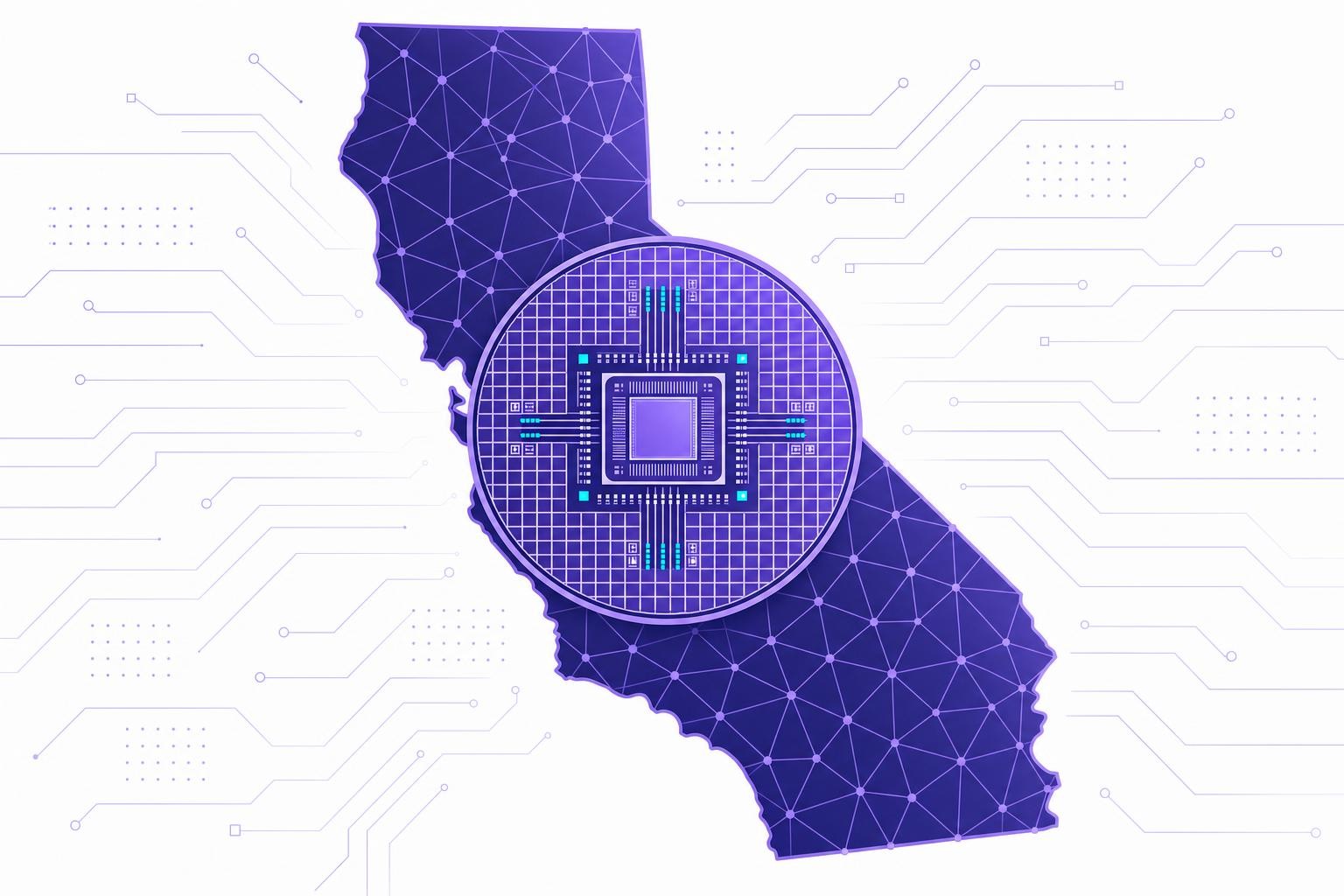
Applied Materials formally opened its Equipment and Process Innovation and Commercialization (EPIC) Center in Sunnyvale, California, on 12 October 2026, committing approximately $5 billion to what it describes as the largest-ever U.S. investment in advanced semiconductor equipment R&D[1]. The facility is the physical anchor for a wave of private chip R&D spending that also includes Micron's $10 billion Micron Research Labs in Boise and SK Hynix's $4 billion advanced packaging facility in West Lafayette, Indiana, both announced in August[1].
What the building holds
The cleanroom model departs from the conventional equipment-supplier arrangement, in which chipmakers receive tools only after they have been developed and qualified at the vendor's own site. At EPIC, chipmakers co-develop tools alongside Applied's engineers during the development phase itself, replacing sequential handoffs with parallel co-development[1].
Who is in the room
Founding partners span the leading edge of logic and memory:
- TSMC, Intel, Samsung Electronics, Micron, SK hynix
- Innovation partners: Broadcom, Advantest, SCREEN, Kioxia, Besi
- Academic partners including Stanford University and UC Berkeley
The companies will each station research teams on-site, gaining early access to Applied Materials' newest equipment to develop advances in logic, memory and advanced packaging[1]. Kioxia's collaboration focuses specifically on AI memory technologies - new memory cells and structures, multichip stacking and advanced packaging[1].
The cycle-time target
Applied Materials CEO Gary Dickerson has stated the goal plainly: cut the traditional chip development cycle by at least 30%. A conventional development cycle runs 10 to 15 years as a serial, compartmentalised process; the EPIC model is designed to compress that by enabling parallel development and agile handoffs across the ecosystem.
The rationale is commercial as much as technical. Applied Materials' chief strategy officer Tristan Holtam notes that the top 10 semiconductor companies' revenue has grown roughly 150 percent since 2021 on AI demand, and those companies have in turn raised their collective R&D investment by 67 percent, reaching $67 billion this year - dwarfing the $11 billion allocated for R&D under the 2022 CHIPS and Science Act[1]. Chris Miller of Tufts University, author of Chip War, puts the driver simply: "The best explanation is probably not about policy or politics and probably more about a big jump in revenue growth driven by AI demand"[1].
Micron's parallel move
The EPIC opening lands alongside Micron's August announcement of Micron Research Labs, described by the company as the first dedicated memory research institution of its kind in the United States. Backed by a planned $10 billion investment over the next decade, the Boise-anchored hub will pursue work on memory technologies, compute architectures, packaging and future manufacturing processes, with construction on the flagship campus set to begin in 2027[1].
The two announcements together signal that the industry's largest players are no longer content to treat R&D as a cost line managed separately from manufacturing. Whether the co-location model at EPIC actually compresses development timelines - and whether Micron Research Labs produces results that feed into production before the next memory cycle turns - are the numbers worth tracking over the next two to three years.
Written by Electronics Insider's automated desk from the sources above and published automatically. How we work.
Related
 Design & EDA
Eric Hong outlines Mixel's mixed-signal IP strategy after Silvaco acquisition
Mixel VP of Engineering Eric Hong discusses the company's PHY and SerDes roadmap, its TSMC N2P debut, and how the Silvaco acquisition is reshaping its IP strategy.
14 Oct 2026 Design & EDA
VSORA chair Sandra Rivera tells Bloomberg that AI inference demand is durable but consolidation is coming
VSORA chair Sandra Rivera appeared on Bloomberg's The Close on 24 July 2026, arguing that AI inference demand is real and durable - but that not every chip startup will survive the shakeout.
14 Oct 2026 Semiconductors
HARTING's Han HC DCT contacts carry up to 20% more current through a dual-path design
HARTING's new Han HC DoubleContact Technology contacts route current through two parallel paths, delivering up to 20% higher capacity with improved safety and easier installation.
14 Oct 2026