IBM joins two cryogenic modules in a step toward a 1,000-qubit system by 2027
IBM connected and cooled two modular cryogenic systems on 19 August 2026, reaching below 15 millikelvin - a hardware milestone on its path to the Quantum Starling system in 2029.
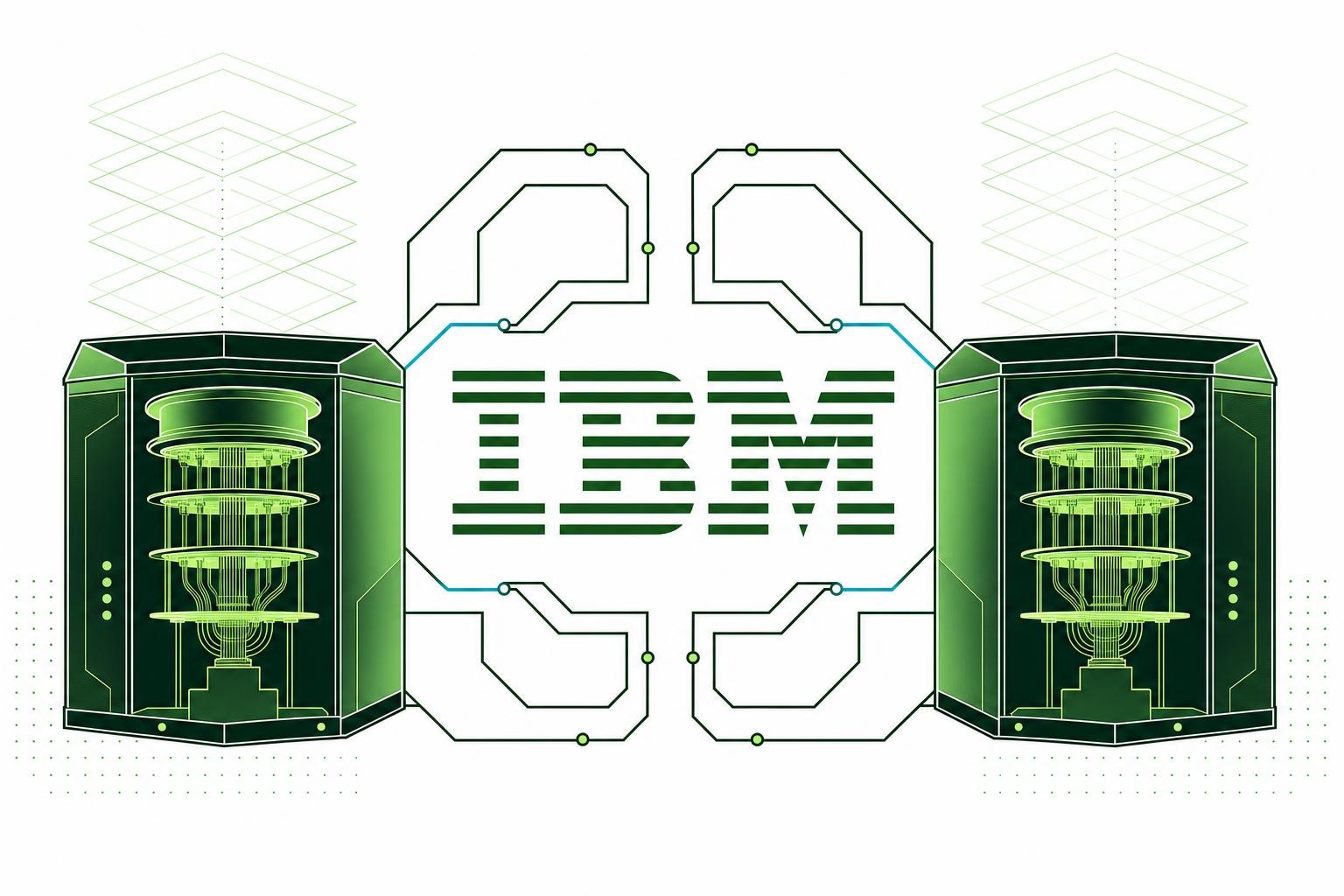
On 19 August 2026, IBM announced it had successfully joined and cooled two modular cryogenic systems into a single operating environment[1], reaching a base temperature of below 15 millikelvin - more than 180 times colder than deep space. The demonstration is a hardware milestone on IBM's roadmap to deliver IBM Quantum Starling in 2029, which the company describes as the world's first fault-tolerant quantum computer[1].
What the new modules look like
The two connected modules together stand more than 8 feet tall and 8 feet wide[1], and initial tests showed the assembly can cool from room temperature to 4 Kelvin - the temperature of liquid helium - in under five days before reaching its sub-15 millikelvin operating point[1].
The physical design departs from the cylindrical cryostats used in IBM's existing deployed systems. The new modules take the form of box-shaped cryogenic cells made of solid aluminum panels and framing, each a complete cryogenic environment; where cylindrical cryostats require long and noisy connections between processors, the box format allows cells to sit tightly side-by-side with short interconnect paths. Each module's vacuum enclosure provides up to 12 times more wiring space than the enclosures in IBM's most widely deployed quantum systems[1], creating room for denser chip-to-chip connections both within and between modules.
How processors will be linked
The key interconnect is IBM's L-coupler technology. Oliver Dial, IBM Fellow and vice president of quantum systems, described the mechanism: "What the L-couplers let us do is perform the same feat [as on-chip couplers], but over an aluminum superconducting cable that can be up to about a meter long. It is really critical to us because it forms a foundation of our modular designs. The ability to get the processors far apart gives us more space for wiring, gives us the ability to independently test and debug and replace them." L-couplers were first proven on Flamingo, IBM's 2024 multi-chip processor.
Each cell provides 2.75 cubic meters of internal vacuum volume and 0.53 square meters of wiring surface area, and is engineered to house and cool at least 2,000 physical qubits.
The roadmap from here
IBM has set out three near-term milestones for the modular cryogenic architecture:
- Late 2026: Install IBM Quantum Nighthawk processors - a 120-qubit chip with 218 next-generation tunable couplers arranged in a square lattice - into the new modules to begin system-level operational testing[1].
- 2027: Use L-couplers to link multiple processors into a unified system with at least 1,000 programmable qubits[1].
- 2029: Deliver Quantum Starling, with each cryogenic module housing thousands of qubits and the full system integrating advances in error correction, processor design, and decoding[1].
The modular design also separates the three core subsystems - cryogenics, wiring, and processor connections - so each can be tested and upgraded independently[1]. IBM says that separation should allow faster iteration as system complexity grows.
"Bringing fault-tolerant quantum computers to industries depends on several fundamental advances," said Jay Gambetta, Director of IBM Research and IBM Fellow. "The successful connection and operation of these cryogenic modules signals a leap forward in that direction."[1]
The near-term indicator to watch is whether Nighthawk processors installed later this year demonstrate stable multi-chip entanglement across the L-coupler link at operating temperature - that result will determine how quickly IBM can move from a two-module proof of concept to the multi-processor cluster the 2027 qubit target requires.
Written by Electronics Insider's automated desk from the sources above and published automatically. How we work.
Related
 Semiconductors
Token spend is becoming a line item in EDA project budgets, DAC roundtable finds
A closed-door DAC 2026 roundtable with Cadence, Synopsys, Siemens EDA, Keysight, and ChipAgents found token cost has moved from an afterthought to a formal budget concern in chip design projects.
10 Sept 2026 Design & EDA
Cadence's Amol Borkar explains why AI voice at the edge demands a rethink of SoC architecture, not just faster processors
Semiconductor Engineering's interview with Cadence's Tensilica DSP lead lays out why NLP is reshaping audio SoC design - and why raw clock speed is the wrong lever to pull.
10 Sept 2026 Design & EDA
French gendarmerie researchers show voltage glitching bypasses eMMC password locks on 3 of 10 commercial parts, with measurable evidence alteration
A paper from France's Institut de Recherche Criminelle quantifies both the success rate and the data-integrity cost of fault-assisted eMMC access in forensic investigations.
10 Sept 2026