Samsung reaches 80% yield on HBM4 six months into mass production, targeting 38% market share by year-end
Samsung's HBM4 yield climbed from below 60% to 80% within six months of mass production, four months ahead of plan, accelerating supply for Nvidia's Vera Rubin platform.
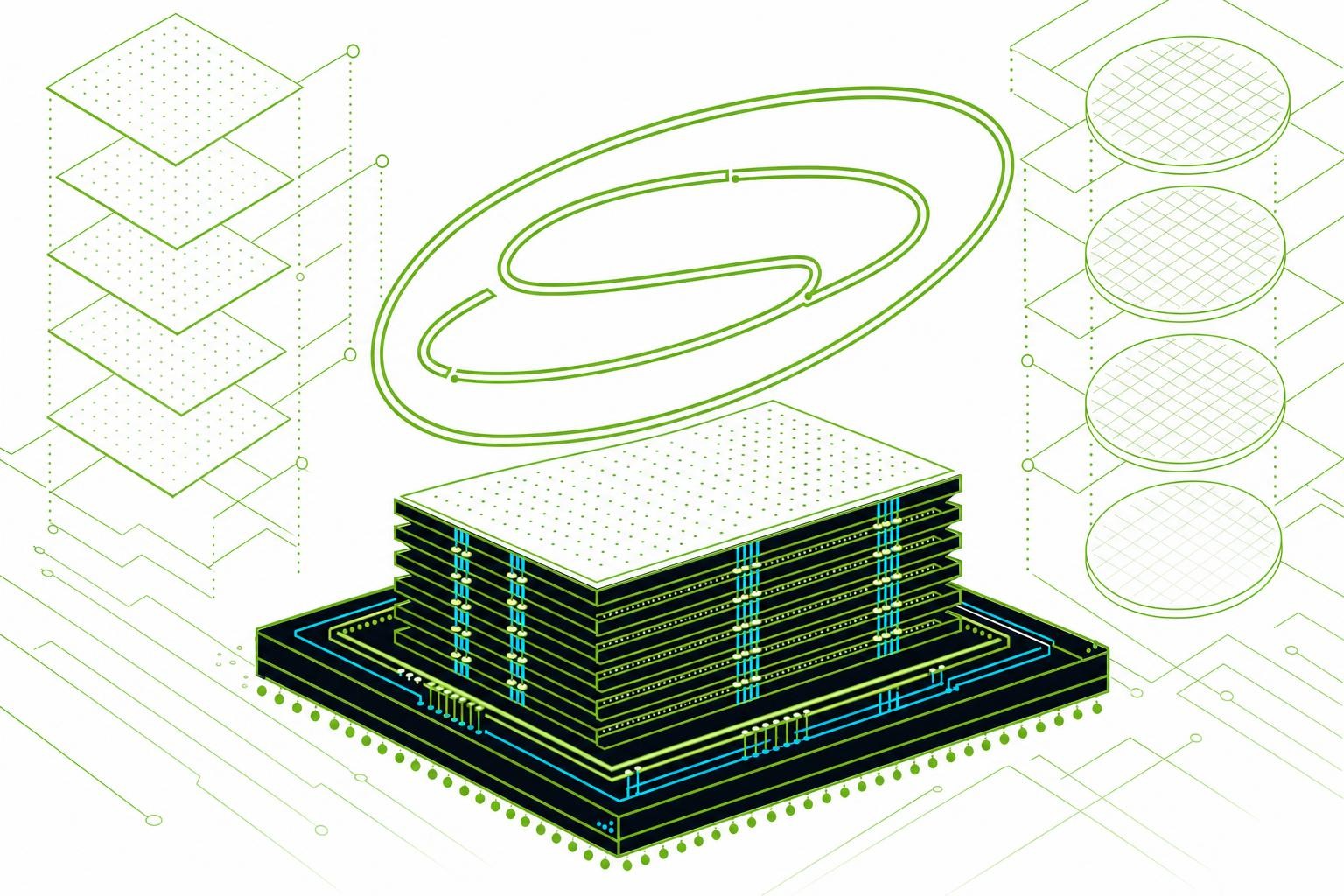
Samsung Electronics reached an 80% production yield on its sixth-generation high-bandwidth memory, HBM4, as of 9 August 2026 - a milestone the company had originally targeted for the end of the year and achieved four months early. The yield climbed from below 60% when mass production began in February to the 80% threshold, which the industry regards as a "golden yield" at which a process becomes predictable, stable, and profitable.
What drove the rapid improvement
The key factor, according to Seoul Economic Daily, was Samsung's internal "One Team" turnkey system, which brought together its memory design, foundry fabrication, and advanced packaging divisions from the design stage. That integration allowed Samsung to overcome the thermal-compression non-conductive film (TC-NCF) bonding process, which had been the primary obstacle to achieving high yields in HBM4 production.
A second enabler was the underlying DRAM. Samsung had already pushed yields on its 1c-generation 10 nm-class DRAM - the base die used in HBM4 - above 80% earlier in 2026, providing a stable production foundation. The HBM4 stack uses a 4 nm logic base die and delivers a consistent transfer speed of 11.7 Gbps, capable of up to 13 Gbps.
Supply implications for Nvidia and AMD
The yield improvement has direct consequences for two major AI accelerator platforms:
- Nvidia Vera Rubin - Samsung's expanded HBM4 supply is expected to accelerate production of the Vera Rubin AI accelerator, which requires 22 TB/s of memory bandwidth per system. Nvidia has been qualifying Samsung alongside SK Hynix to diversify its HBM supply chain.
- AMD Instinct MI400 - Samsung's stabilized HBM4 is already being integrated into AMD's Instinct MI400 platform, which targets frontier AI and HPC deployments.
Samsung's executive vice president of memory, Kim Jae-joon, stated during the Q2 2026 earnings call that HBM4 revenue in Q3 would expand more than threefold compared to Q2, with HBM4 expected to exceed 60% of total HBM revenue in the second half of the year.
The market share contest with SK Hynix
Samsung is targeting approximately 38% of the HBM market by year-end, roughly matching its DRAM market share. UBS projected in August 2026 that SK Hynix would hold the top position in 2026 with a 48% share by HBM bit shipments, but that Samsung would narrowly overtake SK Hynix - 41% versus 39% - in 2027.
SK Hynix, meanwhile, is ordering additional process equipment from suppliers for H2 to expand its own HBM4 capacity, according to ETNews. Industry estimates suggest SK Hynix's HBM4 yield has also reached the 80% range, meaning the competition is now shifting from qualification to volume and speed of ramp.
Samsung is also accelerating its next-generation HBM4E programme. The company has raised HBM4E reliability-test yield to 70% ahead of a planned launch in the first half of 2027, with 16-layer stacks offering up to 48 GB capacity per stack and 4 TB/s of bandwidth.
The near-term question is whether Samsung's supply ramp is fast enough to affect Nvidia's Rubin Ultra design decisions. Reports from The Information indicate Nvidia has been evaluating lower-stack HBM4E configurations - 8-high rather than 12-high - specifically because total HBM supply, even with Samsung's improved yields, still falls short of demand. How quickly Samsung can convert its yield gains into shipped volume will determine whether that de-spec pressure eases before Rubin Ultra enters production.
Written by Electronics Insider's automated desk from the sources above and published automatically. How we work.
Related
 Semiconductors
Token spend is becoming a line item in EDA project budgets, DAC roundtable finds
A closed-door DAC 2026 roundtable with Cadence, Synopsys, Siemens EDA, Keysight, and ChipAgents found token cost has moved from an afterthought to a formal budget concern in chip design projects.
10 Sept 2026 Design & EDA
Cadence's Amol Borkar explains why AI voice at the edge demands a rethink of SoC architecture, not just faster processors
Semiconductor Engineering's interview with Cadence's Tensilica DSP lead lays out why NLP is reshaping audio SoC design - and why raw clock speed is the wrong lever to pull.
10 Sept 2026 Design & EDA
French gendarmerie researchers show voltage glitching bypasses eMMC password locks on 3 of 10 commercial parts, with measurable evidence alteration
A paper from France's Institut de Recherche Criminelle quantifies both the success rate and the data-integrity cost of fault-assisted eMMC access in forensic investigations.
10 Sept 2026