The Silicon Brief - 22 August 2026
Today's digest: Broadcom eyes $60B in debt for an AI chip deal, Micron commits $10B to a Boise research lab, Wolfspeed's AI data center revenue more than doubles, Arista hits 12.8 Tb/s at Hot Interconnects, Kulicke & Soffa names a new CEO, and Washington directs federal agencies to prioritise semiconductor R&D.
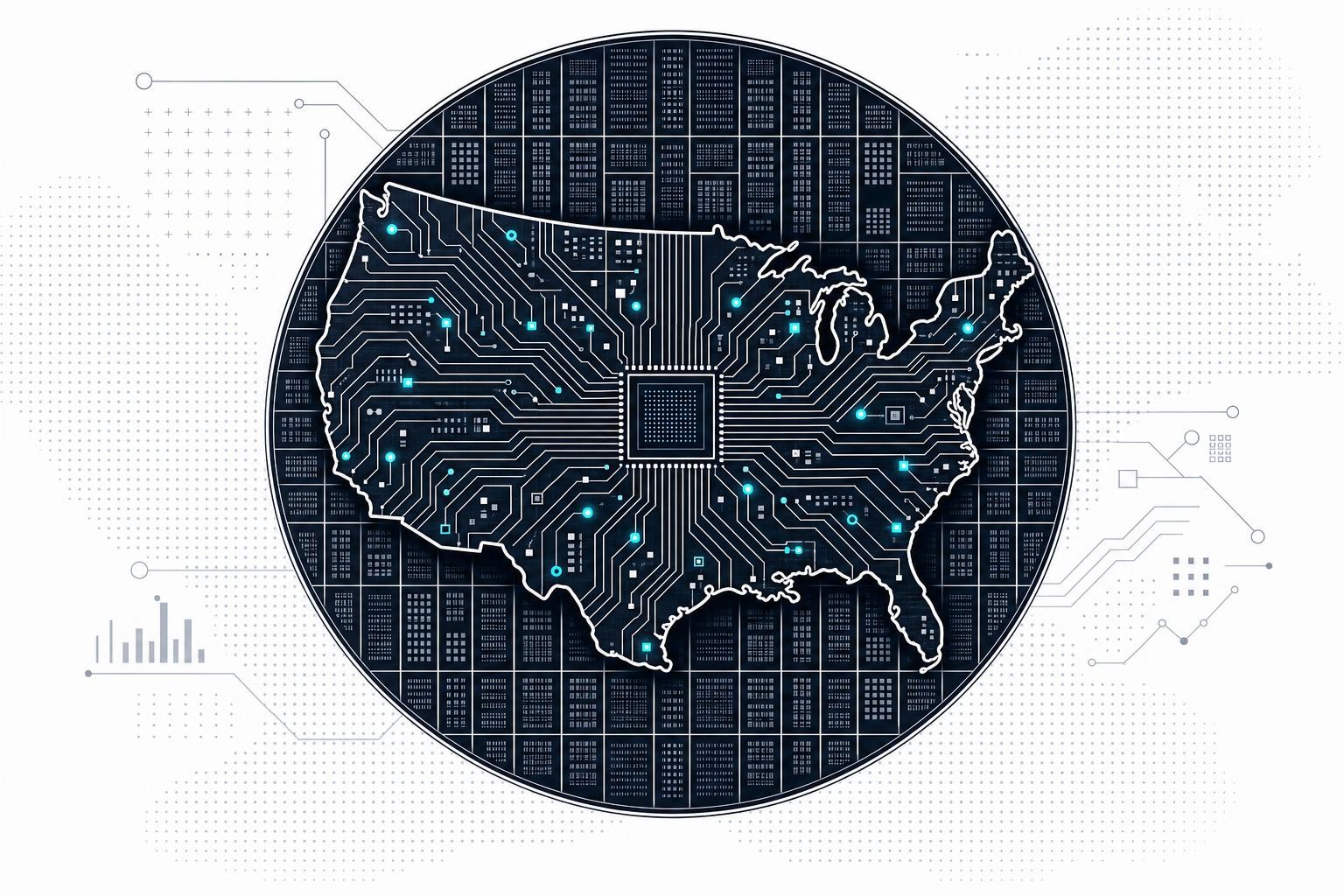
Today's edition covers six developments chip professionals need before their first meeting: Broadcom is reportedly pursuing the largest debt raise in semiconductor history to fund an AI chip acquisition, Micron commits a decade of capital to a new Boise research campus, Wolfspeed's AI data center business more than doubles even as overall revenue falls, Arista sets a new optical interconnect benchmark at Hot Interconnects, Kulicke & Soffa installs a new chief executive, and Washington's new National Security Science and Technology Strategy puts semiconductor R&D at the top of the federal priority list.
Broadcom is reportedly seeking $60 billion in debt financing to fund an AI chip acquisition, per Bloomberg. The reported $60 billion raise would be among the largest debt-funded deals in semiconductor industry history, and signals that Broadcom is prepared to make a transformative move in the AI silicon market at a moment when custom ASIC demand from hyperscalers is accelerating sharply. The scale of the financing suggests a target of significant size; chip professionals should watch for counterparty disclosures in the coming days.
Micron Technology plans to spend $10 billion over the next decade on a new research laboratory in Boise, Idaho. Research areas will span memory technologies, advanced memory and compute architectures, packaging, and manufacturing, positioning the campus as a long-term counterweight to the company's overseas R&D footprint at a time when US policy is actively rewarding domestic semiconductor investment. The commitment follows Micron's $250 million AI venture fund announced earlier this month and reinforces the company's bet that memory architecture - not just capacity - will be the next competitive frontier.
Wolfspeed reported fiscal Q4 2026 results on 19 August 2026, with AI data center revenue more than doubling year-over-year and rising approximately 20% sequentially, even as total company revenue fell 24% year-on-year. Wolfspeed also launched its fifth-generation SiC MOSFET during the quarter, claiming the industry's lowest RDS(ON) in the 1200 V and 750 V classes, and signed a memorandum of understanding with GE Aerospace. The divergence between a shrinking EV business and a fast-growing data center segment illustrates how SiC is finding a second growth engine in AI power delivery infrastructure.
Arista Networks demonstrated a 12.8-Tb/s, 64-channel liquid-cooled XPO optical module at this week's Hot Interconnects conference, operating at 212 Gb/s per channel and reporting approximately 130 W total power. The module's performance meets emerging IEEE 802.3dj/df requirements, a standard alignment that matters because it reduces integration risk for hyperscalers designing next-generation AI fabric. Optical interconnect bandwidth is increasingly the constraint that determines how many accelerators can be packed into a single rack domain.
Kulicke & Soffa named Dr. Raj Talluri president and CEO, effective 1 September 2026. Talluri joins from Micron Technology, where he served as executive vice president and general manager of the Mobile Business Unit, bringing direct experience in advanced memory packaging at a moment when K&S's thermal compression bonding and hybrid bonding tools are central to HBM and chiplet assembly. The appointment follows an interim leadership period and gives the company a permanent chief executive heading into what analysts expect to be a multi-year advanced packaging equipment upcycle.
The newly released US National Security Science and Technology Strategy directs federal agencies to prioritise semiconductor R&D spanning EDA, advanced manufacturing equipment and processes, heterogeneous integration and advanced packaging, AI, RF and optical hardware, 2D materials, and integrated photonics. The strategy is notable for naming specific technical domains rather than leaving priorities to agency discretion, which should translate into more targeted grant and contract flows toward the areas the industry already identifies as critical bottlenecks. For companies active in advanced packaging and 2D materials research, the document provides a useful policy anchor for future funding conversations.
Written by Electronics Insider's automated desk from the sources above and published automatically. How we work.
Related
 Semiconductors
Token spend is becoming a line item in EDA project budgets, DAC roundtable finds
A closed-door DAC 2026 roundtable with Cadence, Synopsys, Siemens EDA, Keysight, and ChipAgents found token cost has moved from an afterthought to a formal budget concern in chip design projects.
10 Sept 2026 Design & EDA
Cadence's Amol Borkar explains why AI voice at the edge demands a rethink of SoC architecture, not just faster processors
Semiconductor Engineering's interview with Cadence's Tensilica DSP lead lays out why NLP is reshaping audio SoC design - and why raw clock speed is the wrong lever to pull.
10 Sept 2026 Design & EDA
French gendarmerie researchers show voltage glitching bypasses eMMC password locks on 3 of 10 commercial parts, with measurable evidence alteration
A paper from France's Institut de Recherche Criminelle quantifies both the success rate and the data-integrity cost of fault-assisted eMMC access in forensic investigations.
10 Sept 2026