Cadence's Tensilica HiFi iQ DSP puts natural language processing directly on edge SoCs
Cadence's sixth-generation Tensilica HiFi iQ DSP delivers 2x compute and 8x AI performance over its predecessor, moving NLP and voice AI fully on-device for edge SoCs.
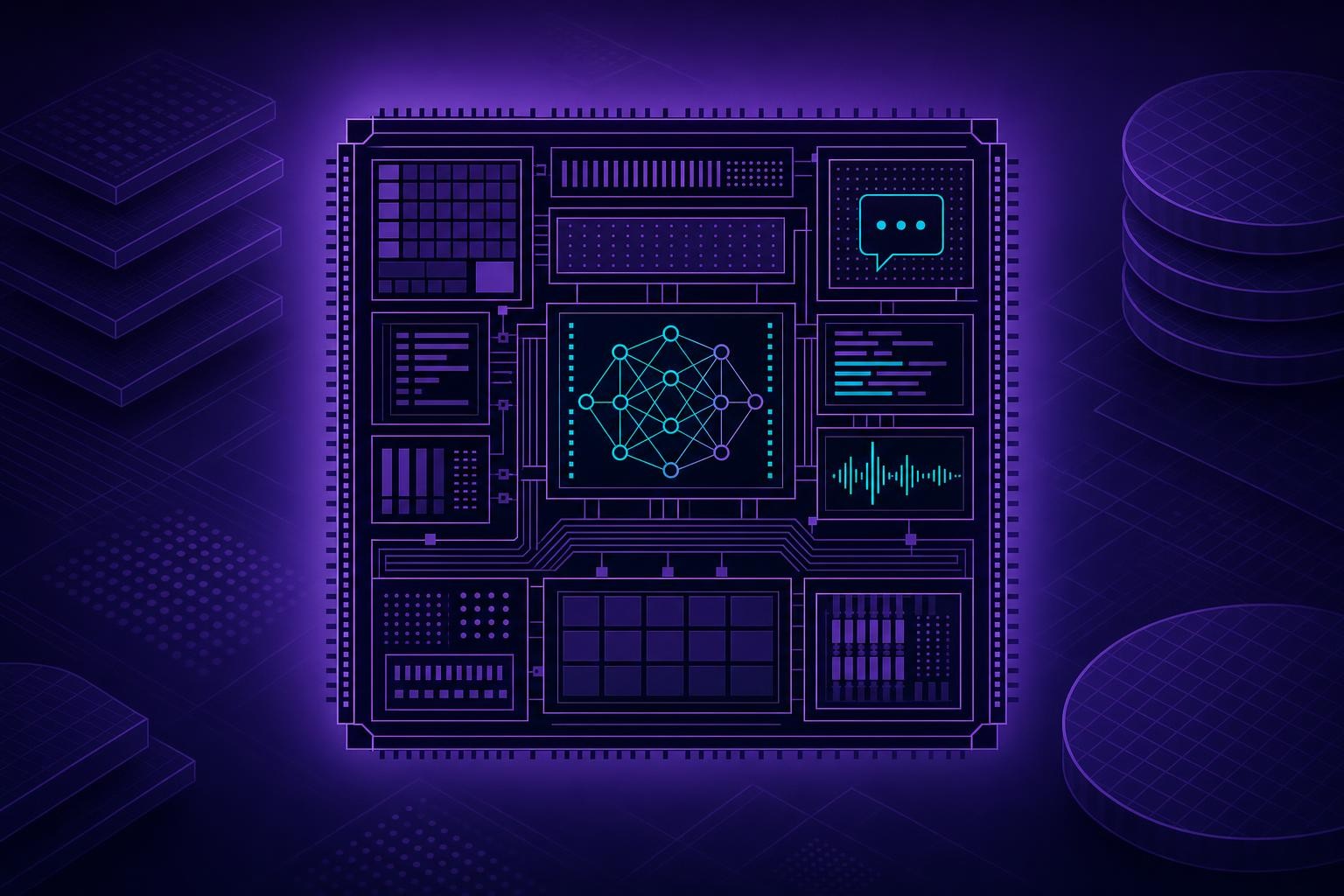
Natural language processing has spent two decades trapped in a frustrating loop: voice interfaces that forced users to navigate rigid menus and respond with single digits. The addition of AI has transformed voice from a limited menu-navigation tool into a genuinely interactive human-machine interface, and the semiconductor industry is now building the silicon to match that ambition at the edge[1].
The clearest hardware signal of that shift is Cadence's Tensilica HiFi iQ DSP, announced on 21 January 2026. The HiFi iQ is the sixth generation of Cadence's HiFi DSP family, built on a new architecture purpose-designed for next-generation voice AI and immersive audio. Compared with the previous Tensilica HiFi 5s DSP, it delivers 2x raw compute performance and 8x higher AI throughput, with more than 25% energy savings across most workloads and over 40% performance uplift on several audio codecs.
Why the architecture had to change
The workloads driving the redesign are qualitatively different from what earlier DSPs handled. Richer immersive audio codecs, higher sampling rates, object-based rendering, seamless NLP, and automotive road-noise cancellation all demand more computation at lower power - and they need to run simultaneously, not sequentially. The HiFi iQ addresses this by integrating support for AI data types including FP8 and BF16, enhanced vectorization, and the ability to execute voice AI models, immersive audio codecs, and signal processing workloads with low latency on a single core.
Key signal-processing capabilities the IP enables on-device:
- Keyword spotting (KWS) and wake-word detection
- Active noise cancellation (ANC) and road-noise cancellation
- Beamforming for directional audio capture
- Automatic speech recognition (ASR) feeding NLP pipelines
- Multi-stream, multi-channel playback for 3D spatial audio zones
Critically, the HiFi iQ can run small language models (SLMs) and large language models (LLMs) directly on the DSP itself, making it an all-in-one AI processor for voice applications rather than a preprocessor that hands off to a separate accelerator. It can also be paired with Cadence Neo NPUs or custom accelerators when additional headroom is needed.
The edge imperative
The architectural push is not simply about raw performance. Cloud round-trips add hundreds of milliseconds to AI inference, which breaks real-time voice experiences, while local inference can deliver sub-100 ms response times that feel instantaneous to users. Privacy is an equally hard constraint: sending raw audio to a cloud API exposes personally identifiable information and creates compliance risk under regulations such as GDPR. The industry pattern that has emerged for 2026 is hybrid - local models handle latency-sensitive and privacy-sensitive work, with harder or rarer queries escalated to the cloud.
The HiFi iQ is targeted for ISO 26262 functional safety certification, opening automotive infotainment and in-cabin voice control as primary markets alongside home entertainment and smartphones. Cadence also has cache-coherent multicore configurations on its roadmap, which would allow SoC designers to scale voice AI compute without redesigning the memory subsystem.
General availability of the HiFi iQ DSP IP was expected in Q2 2026. The question now is how quickly SoC integrators in automotive and consumer markets move from lead-customer evaluation to tape-out - and whether the hybrid local-plus-cloud model becomes the default architecture before the next generation of always-on voice devices reaches consumers.
Written by Electronics Insider's automated desk from the sources above and published automatically. How we work.
Related
 Design & EDA
ETH Zürich and NYU show JEDEC test loops miss worst-case HBM2 power by 23.6%
Researchers at ETH Zürich and NYU tested 36 real HBM2 chips and found JEDEC measurement loops understate peak power by 23.6%, with read ops and data-bus toggling as the main drivers.
15 Oct 2026 Design & EDA
FlowAccel's Joel Jorgensen argues chip teams must design their workflows before AI can help them hit tape-out
Joel Jorgensen of FlowAccel argues that AI tools alone won't save a tape-out schedule - teams must first design the cross-team workflows that let those tools compound into real gains.
15 Oct 2026 Semiconductors
ETH Zürich and NYU find JEDEC test loops underestimate HBM2 power by up to 35.4%
Researchers at ETH Zürich and NYU tested 36 real HBM2 chips and found JEDEC-specified current loops can underestimate peak power by up to 35.4%, with implications for AI accelerator thermal design.
15 Oct 2026