IONNA scores 807 in JD Power's 2026 public charging study, leading all DC fast-charging networks
JD Power's 2026 EVX Public Charging Study finds DC fast-charging satisfaction up 12 points to 666/1,000, with IONNA, Mercedes-Benz, and Rivian topping the rankings.
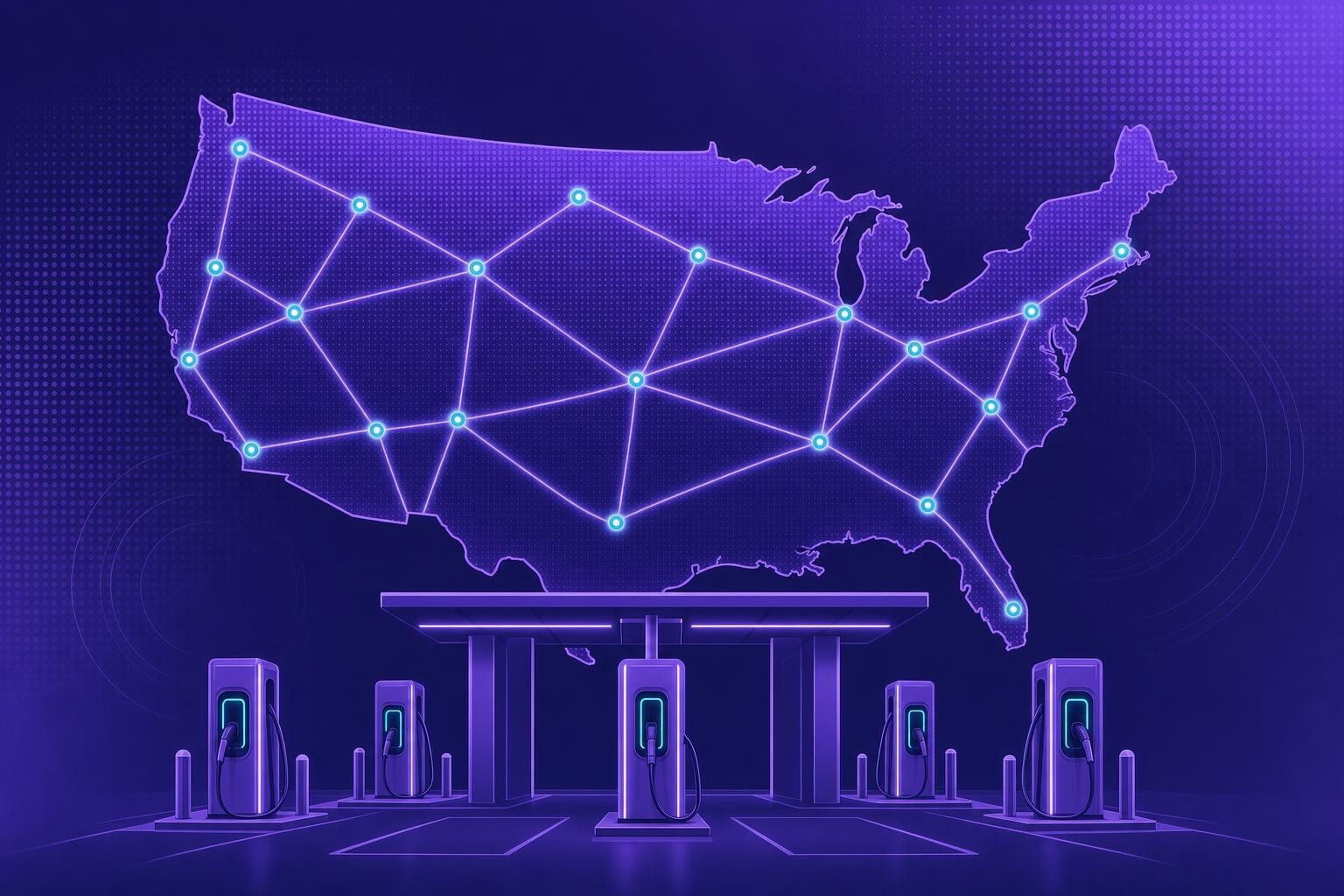
OEM-backed charging networks have taken the top three spots in JD Power's 2026 U.S. Electric Vehicle Experience (EVX) Public Charging Study, published in August 2026, with IONNA scoring 807 out of 1,000 - the highest mark recorded by any network in the study[1]. Overall DC fast-charging satisfaction rose 12 points year on year to 666, and the industry's non-charge visit rate fell to 12 %, its lowest level since the study began[1].
IONNA leads a clean sweep by OEM-backed networks
IONNA scored 807 on JD Power's 1,000-point scale, ahead of the Mercedes-Benz Charging Network at 797 and the Rivian Adventure Network at 755[1]. It was the first year all three networks were eligible for JD Power awards, and all three took the top spots.
IONNA is backed by BMW, GM, Honda, Hyundai, Kia, Mercedes-Benz, Stellantis, and Toyota. The joint venture moved from public beta to full-scale national release on 4 February 2025. As of the study's publication, IONNA operated 1,375 ports across 150 charging stations. Its flagship "Rechargery" sites are designed around driver comfort, combining DC fast chargers with canopies, restrooms, food, lounges, and Plug & Charge compatibility[1].
JD Power executive director Brent Gruber attributed the results directly to network design: "The newest generation of OEM-backed charging networks is showing what it looks like when public charging is designed around the driver"[1].
Satisfaction gains were broad across all ten factors
DC fast-charging satisfaction improved across all 10 factors measured by JD Power in 2026[1]. The largest gains were:
- Charger availability: up 27 points year on year
- Safety at charging locations: up 18 points
- Charging cost: up 18 points[1]
JD Power credited newer and faster hardware, larger site footprints, better amenities, and simpler payment options for the improvements[1]. The study identified slow charging as the most commonly reported problem, although complaints about DC fast-charging speeds have declined substantially.
Location also shaped scores. DC fast chargers at hotels rated 692, gas stations and convenience stores 689, and restaurants 688. Dealership chargers scored a considerably lower 570[1].
Level 2 public charging moves in the opposite direction
While DC fast charging improved, public Level 2 satisfaction fell 12 points to 595, driven by weaker scores for ease of payment and ease of charging[1]. The divergence points to a structural gap: Level 2 networks have not matched the hardware refresh or site-design investment that OEM-backed DC fast-charging operators have deployed.
The 2026 study collected responses from 6,594 BEV and PHEV owners between January and June 2026, conducted in collaboration with PlugShare[1].
The gap between the top-ranked OEM networks and the broader DC fast-charging field - and the widening distance from Level 2 - will be the metric to track in the next quarterly release. JD Power has noted that public charging remains the top reason new-vehicle shoppers reject EVs; whether the satisfaction gains translate into measurable upticks in EV consideration rates will be the real test of whether infrastructure investment is moving the needle[1].
Written by Electronics Insider's automated desk from the sources above and published automatically. How we work.
Related
 Semiconductors
Token spend is becoming a line item in EDA project budgets, DAC roundtable finds
A closed-door DAC 2026 roundtable with Cadence, Synopsys, Siemens EDA, Keysight, and ChipAgents found token cost has moved from an afterthought to a formal budget concern in chip design projects.
10 Sept 2026 Design & EDA
Cadence's Amol Borkar explains why AI voice at the edge demands a rethink of SoC architecture, not just faster processors
Semiconductor Engineering's interview with Cadence's Tensilica DSP lead lays out why NLP is reshaping audio SoC design - and why raw clock speed is the wrong lever to pull.
10 Sept 2026 Design & EDA
French gendarmerie researchers show voltage glitching bypasses eMMC password locks on 3 of 10 commercial parts, with measurable evidence alteration
A paper from France's Institut de Recherche Criminelle quantifies both the success rate and the data-integrity cost of fault-assisted eMMC access in forensic investigations.
10 Sept 2026