Quanta Computer and Quantinuum sign a joint development agreement to industrialise large-scale quantum hardware
Quanta Computer and Quantinuum signed a collaborative development agreement on 13 August 2026 to co-develop the manufacturing infrastructure needed for fault-tolerant quantum computers at commercial scale.
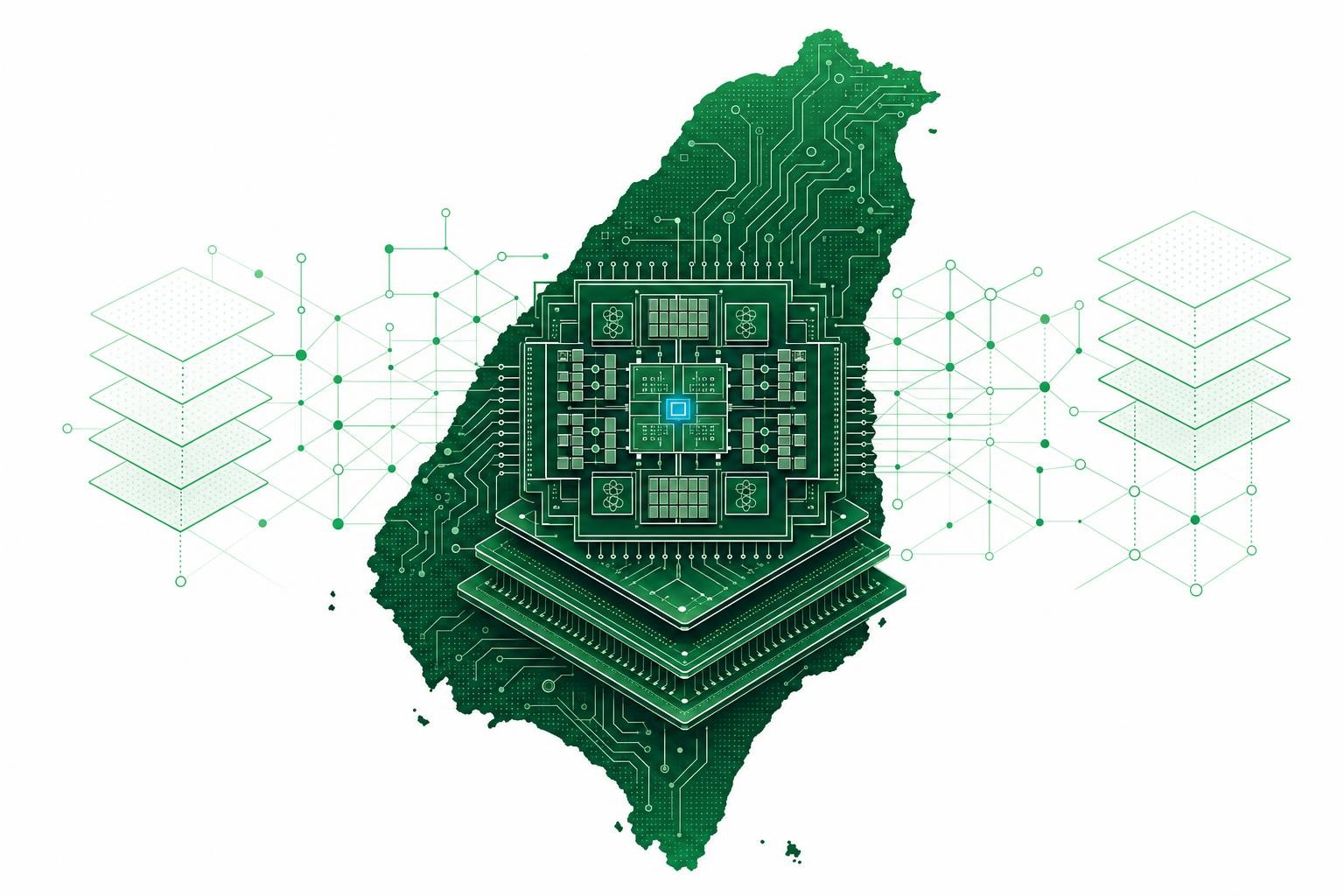
Quanta Computer and Quantinuum signed a collaborative development agreement on 13 August 2026 to jointly build the hardware infrastructure needed for future generations of quantum computers[1]. The deal pairs Quantinuum's trapped-ion quantum technology with Quanta's experience industrialising advanced computing and cloud platforms at global scale[1], and joint engineering work is already underway according to the companies.
What the agreement covers
Under the agreement, the companies plan to co-develop critical hardware infrastructure, systems engineering, and manufacturing capabilities for future generations of Quantinuum's quantum systems[1]. The stated goal is hardware that is more modular, manufacturable, and scalable - qualities that have so far been secondary to raw qubit performance in most quantum development programmes.
The scope covers three interconnected areas:
- Systems engineering for next-generation quantum platforms
- Repeatable manufacturing processes suited to volume production
- Supply chain development to support commercial deployment
Quanta, headquartered in Taipei, is a Fortune Global 500 manufacturer whose existing business spans servers and cloud infrastructure. Bringing that kind of industrial discipline into quantum hardware construction is the explicit rationale for the deal[1].
Where Quantinuum's roadmap stands
Quantinuum builds full-stack quantum systems on the quantum charge-coupled device (QCCD) trapped-ion architecture[1]. Its current flagship, Helios, is a 98-qubit processor that achieved 99.921% two-qubit gate fidelity, exceeding the widely cited three-nines threshold. In Q2 2026, the company demonstrated near five-nines logical fidelity on Helios using a novel quantum error-correction code family.
The roadmap beyond Helios runs in two further steps:
- Sol (targeted 2027): approximately 100 logical qubits approaching five-nines logical fidelity; Sol's trap chip has returned from fabrication and is in product validation.
- Apollo (targeted 2029): hundreds of logical qubits with up to ten-nines logical fidelity, meaning roughly 10 billion operations before an error.
Quantinuum's Q2 2026 revenue reached $8 million, up 279% year-over-year, and the company raised full-year 2026 guidance to $28-$32 million. It ended the quarter with $2.1 billion in cash following its Nasdaq IPO.
Manufacturing as a bottleneck
The Quanta agreement reflects a broader recognition that qubit fidelity is no longer the only constraint on quantum computing's commercial trajectory. As systems grow in size and complexity, repeatable manufacturing, modular hardware design, and reliable supply chains become equally critical[1]. Quantinuum has also entered a letter of intent with the US Department of Commerce's CHIPS R&D Office to strengthen onshore supply chains for trapped-ion quantum computing.
The Quanta deal is the most concrete step yet toward treating quantum hardware construction as an engineering and manufacturing discipline rather than a laboratory exercise. Whether Quanta's server and data-centre production expertise translates cleanly to cryogenic and optical subsystems - the components that make trapped-ion systems difficult to build at scale - will determine how quickly the partnership moves from co-development to volume production.
Written by Electronics Insider's automated desk from the sources above and published automatically. How we work.
Related
 Semiconductors
Token spend is becoming a line item in EDA project budgets, DAC roundtable finds
A closed-door DAC 2026 roundtable with Cadence, Synopsys, Siemens EDA, Keysight, and ChipAgents found token cost has moved from an afterthought to a formal budget concern in chip design projects.
10 Sept 2026 Design & EDA
Cadence's Amol Borkar explains why AI voice at the edge demands a rethink of SoC architecture, not just faster processors
Semiconductor Engineering's interview with Cadence's Tensilica DSP lead lays out why NLP is reshaping audio SoC design - and why raw clock speed is the wrong lever to pull.
10 Sept 2026 Design & EDA
French gendarmerie researchers show voltage glitching bypasses eMMC password locks on 3 of 10 commercial parts, with measurable evidence alteration
A paper from France's Institut de Recherche Criminelle quantifies both the success rate and the data-integrity cost of fault-assisted eMMC access in forensic investigations.
10 Sept 2026