SEMI sets SEMICON West 2026 program around the industry's $1 trillion revenue milestone
SEMI announced the full SEMICON West 2026 program on 27 August, placing the industry's $1 trillion revenue milestone and AI-driven chip design at the center of three days in San Francisco.
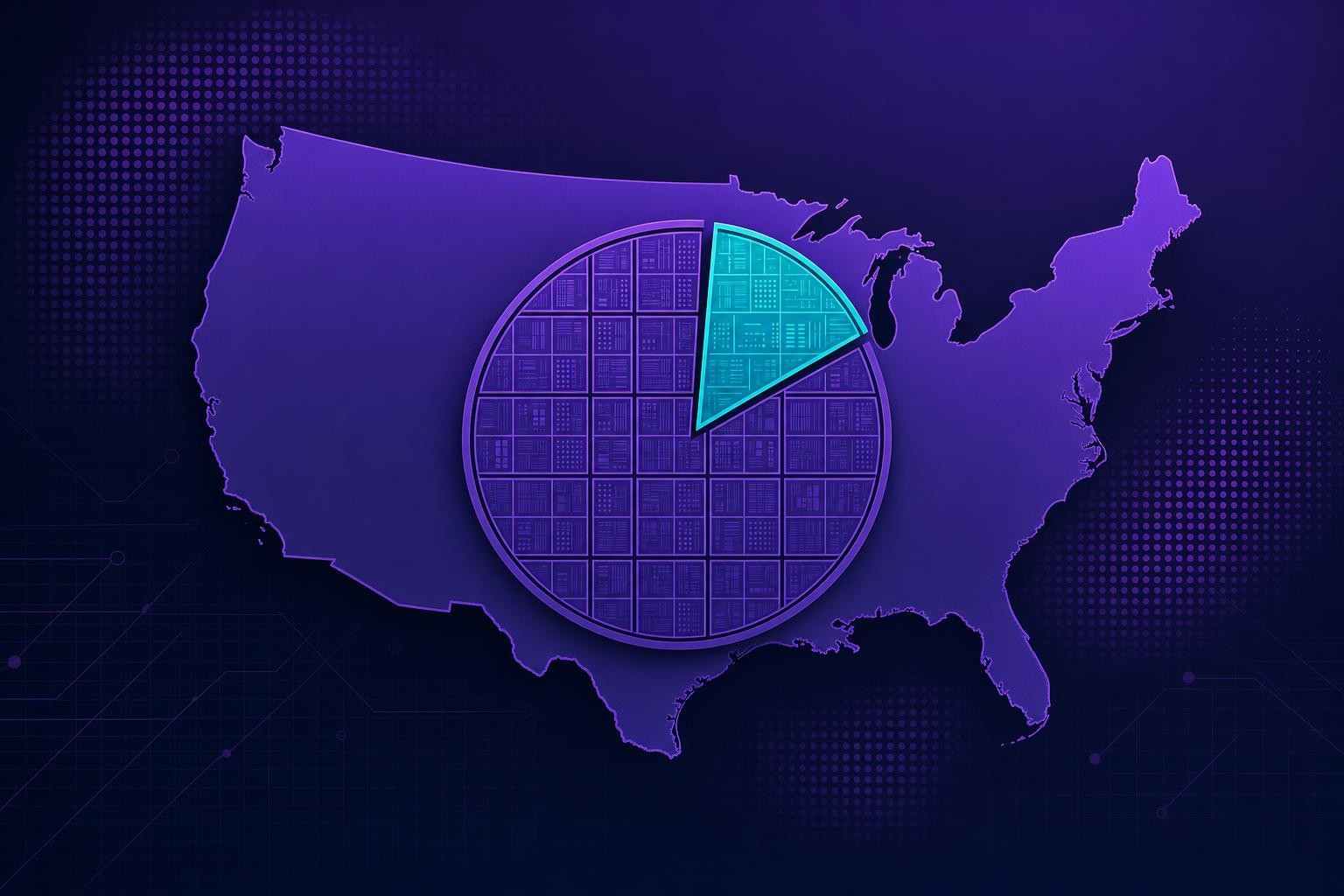
SEMI announced the full keynote and program lineup for SEMICON West 2026 on 27 August 2026, with the event running 13-15 October at the Moscone Center in San Francisco.[1] The organizing theme is "Transform Tomorrow," and the program is explicitly structured around the semiconductor industry crossing $1 trillion in annual revenue - a threshold that analysts at TechInsights say arrived roughly four years ahead of earlier projections, driven almost entirely by AI demand.
What the $1 trillion milestone means for the program
SEMI Americas president Joe Stockunas framed the milestone as evidence of "remarkable demand" that also "presents new challenges the industry must tackle together." The 2026 program is designed to celebrate the achievement while "strategizing for the $2 trillion and beyond future," with sessions addressing how the industry scales beyond traditional Moore's Law and expands U.S. manufacturing infrastructure.
Global semiconductor revenue reached $298.5 billion in Q1 2026 alone, up 25% from the prior quarter, according to the Semiconductor Industry Association. IDC projects full-year 2026 revenue at $1.29 trillion, up 52.8% year over year from $842.8 billion in 2025.
Design and EDA get a dedicated track
For readers focused on chip design and EDA, the most relevant addition to the 2026 agenda is a structured Design forum alongside the broader technical program. Focused forums will cover Design, Cybersecurity, Smart Manufacturing, Smart Mobility, and Sustainability, with technical tracks including the Test Vision Symposium and the Advanced Packaging and Heterogeneous Integration (APHI) Summit.
A session titled "Bridging Design and Manufacturing with AI" will bring together design houses, foundries, systems companies, and equipment makers to present new strategies on how AI can enable bespoke design and shorten design-to-silicon cycles. NVIDIA's keynote, titled "The Next Generation of Chips Starts With AI," will be presented by Tim Costa, General Manager of Industrial and Computational Engineering, focusing on how AI-driven supercomputing is transforming the future of chip design.
Synopsys president and CEO Sassine Ghazi is confirmed for a CEO Summit fireside chat hosted by Semiconductor Engineering editor-in-chief Ed Sperling.
What the technical sessions cover
Technical programs include the APHI Summit, the Test Vision Symposium, and the Materials and Advanced Substrates track, alongside future technology sessions covering AI computing, quantum computing, photonics, flexible hybrid electronics, and smart MedTech.
The agenda topics most relevant to design and EDA practitioners are:
- Advanced packaging and heterogeneous integration, including chiplet architectures and 2.5D/3D design
- AI-driven design-to-silicon flows and design-manufacturing co-optimization
- Signal integrity, power delivery, and thermal management in advanced packages
- Test strategy for chiplet-based systems
- Quantum computing and next-generation photonics outlooks
More than 734 companies exhibit at SEMICON West each year; this year's show is expected to feature more than 1,500 booths and draw over 35,000 attendees.
The session to watch most closely is the APHI Summit, where the gap between chiplet design intent and packaging process reality has been the sharpest point of industry friction in 2026. Whether the program produces concrete movement on interoperability standards - or remains a showcase of competing proprietary approaches - will be the clearest signal of where the industry actually stands on heterogeneous integration at scale.
Written by Electronics Insider's automated desk from the sources above and published automatically. How we work.
Related
 Design & EDA
ETH Zürich and NYU show JEDEC test loops miss worst-case HBM2 power by 23.6%
Researchers at ETH Zürich and NYU tested 36 real HBM2 chips and found JEDEC measurement loops understate peak power by 23.6%, with read ops and data-bus toggling as the main drivers.
15 Oct 2026 Design & EDA
FlowAccel's Joel Jorgensen argues chip teams must design their workflows before AI can help them hit tape-out
Joel Jorgensen of FlowAccel argues that AI tools alone won't save a tape-out schedule - teams must first design the cross-team workflows that let those tools compound into real gains.
15 Oct 2026 Semiconductors
ETH Zürich and NYU find JEDEC test loops underestimate HBM2 power by up to 35.4%
Researchers at ETH Zürich and NYU tested 36 real HBM2 chips and found JEDEC-specified current loops can underestimate peak power by up to 35.4%, with implications for AI accelerator thermal design.
15 Oct 2026