Tuple Technologies brings a three-product AI infrastructure stack to DAC 2026 booth 1569
Tuple Technologies showed its Stratos, Nitro, and Avestra products at DAC 2026 in Long Beach, targeting IC startups that need cloud EDA infrastructure without a dedicated IT or CAD team.
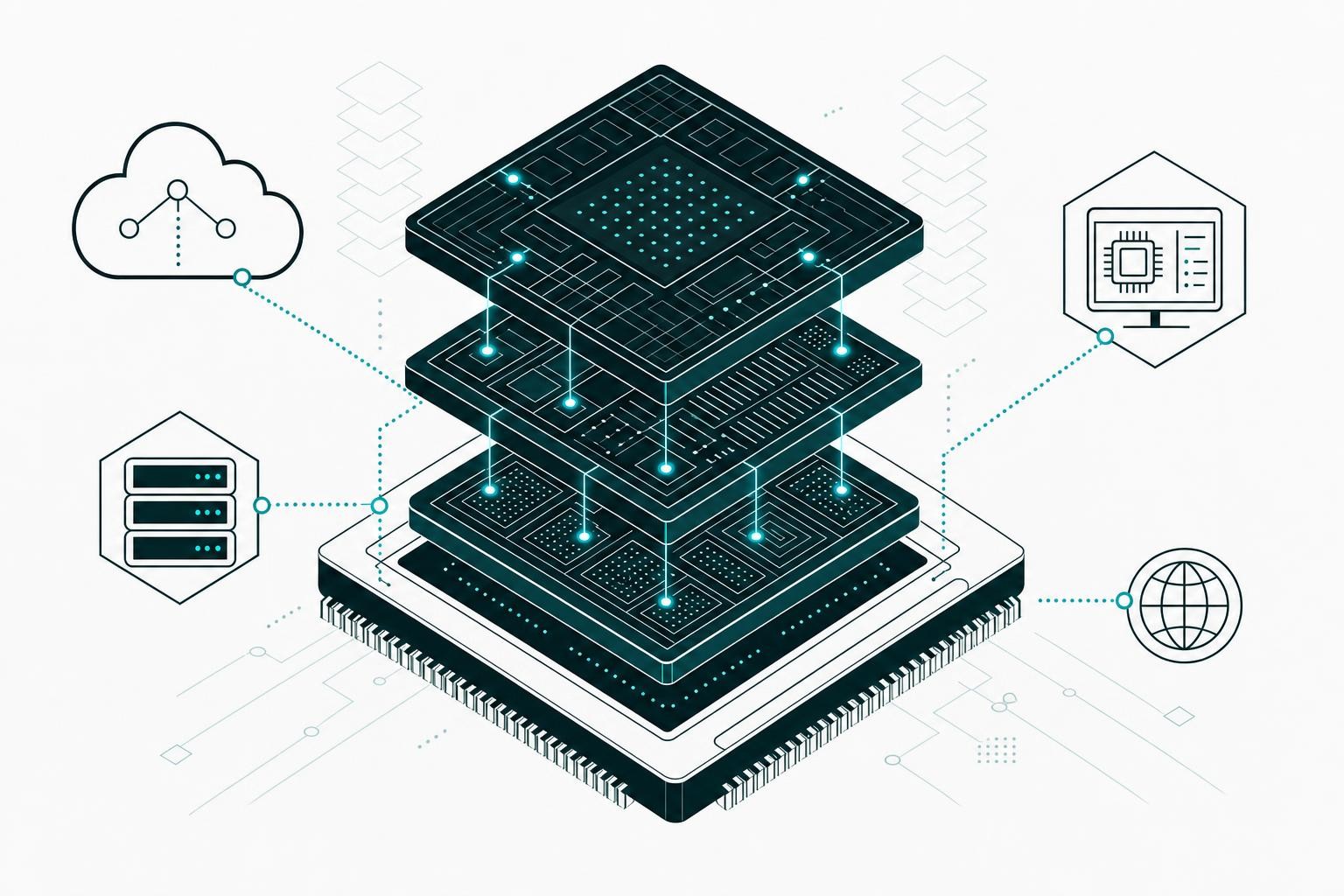
Tuple Technologies used DAC 2026 in Long Beach (26-29 July 2026) to demonstrate three products aimed at IC design teams that need cloud and hybrid EDA infrastructure without building a dedicated IT or CAD organisation[1]. The headline claim from the booth: Stratos cuts simulation costs by up to 38% through auto-termination of idle EDA instances and spot-instance management, while the Nitro License Monitor claims to reduce engineering software spend by up to 25% through data-driven renewal decisions[1].
What Tuple is and who it targets
Tuple was founded in 2017 and has grown to about 45 people, headquartered in New Jersey[1]. The company positions itself squarely at IC startups and small design teams: once a startup is funded and buys EDA tools, it still faces the problem that tools from competing vendors cannot share a common license environment out of the box[1]. Tuple's platform resolves that by letting teams mix Cadence and Siemens tools - and tools from other EDA vendors - on the same network without manual licence-server workarounds[1].
The three compute options facing any IC team - cloud, on-premise, and hybrid - each carry different IT management burdens[1]. Tuple's pitch is that its software stack removes the need to staff up for any of them.
The Stratos platform and its multi-cloud orchestration
Stratos is described as a scalable, secure, location-agnostic, and vendor-neutral infrastructure platform built so IC design teams can run anywhere without lock-in. Its Omni module handles multi-cloud orchestration across AWS, Azure, GCP, and GPU-optimised neo-clouds such as Nebius and RunPod[1], switching between providers when GPU allocations are exhausted or when spot-instance pricing is favourable[1].
Security is handled by a module called Shield, which Tuple says covers end-to-end protection from laptops to servers, targeting ransomware and malware in public cloud infrastructure[1]. Compliance coverage claimed includes Foundry, SOC 2, ISO 27001, and ISO 27017.
Nitro: EDA license analytics with job-scheduler integration
Nitro License Monitor handles EDA license tracking and job management integration, and is integrated with job schedulers and queue visibility to provide holistic usage of EDA licenses and compute resources. It supports FlexLM, RLM, and custom license servers, and surfaces utilisation percentiles - P50, P95, and P99 - to classify features as critical, optimal, or under-utilised.
Real-time seat utilisation spans all EDA vendors including Cadence, Siemens, Keysight, and Xilinx, with job scheduler integration for SLURM, LSF, and SGE. An "Ask AI" interface lets engineers query usage, denials, and demand forecasts in plain English rather than navigating dashboards.
Avestra: an 8-agent pipeline for SystemVerilog Assertions
The most technically specific product shown at the booth was Avestra, a verification tool that generates SystemVerilog Assertions (SVA) from natural language specifications and RTL[1]. Avestra uses an 8-agent pipeline that covers spec parsing, assertion generation, simulation, and coverage closure[1].
The motivation Tuple gave is concrete: using a general-purpose LLM such as Claude for SVA generation produces roughly 30% hallucinations that yield incorrect assertions[1]. Avestra's pipeline is trained specifically to eliminate that error class, and the company claims a sub-1% hallucination rate. The pipeline is LLM-agnostic and works with Questa, VCS, and Xcelium. Initial Avestra users include a large foundry and a memory design company[1].
The key question for Avestra going forward is whether the sub-1% hallucination claim holds at scale across diverse RTL styles and specification formats - something only broader customer deployments will confirm. Tuple's Stratos cost-reduction figures (38% on simulation, 25% on EDA licensing) are similarly vendor-stated and have not been independently verified. Both numbers are worth tracking as the company moves beyond its current early-access customer base.
Written by Electronics Insider's automated desk from the sources above and published automatically. How we work.
Related
 Semiconductors
Token spend is becoming a line item in EDA project budgets, DAC roundtable finds
A closed-door DAC 2026 roundtable with Cadence, Synopsys, Siemens EDA, Keysight, and ChipAgents found token cost has moved from an afterthought to a formal budget concern in chip design projects.
10 Sept 2026 Design & EDA
Cadence's Amol Borkar explains why AI voice at the edge demands a rethink of SoC architecture, not just faster processors
Semiconductor Engineering's interview with Cadence's Tensilica DSP lead lays out why NLP is reshaping audio SoC design - and why raw clock speed is the wrong lever to pull.
10 Sept 2026 Design & EDA
French gendarmerie researchers show voltage glitching bypasses eMMC password locks on 3 of 10 commercial parts, with measurable evidence alteration
A paper from France's Institut de Recherche Criminelle quantifies both the success rate and the data-integrity cost of fault-assisted eMMC access in forensic investigations.
10 Sept 2026